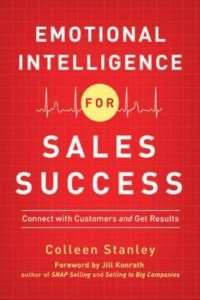
Emotional Intelligence (EI) for Sales Success by Colleen Stanley is a must-read for anyone in the sales profession. This book is a comprehensive guide that offers valuable insights and strategies to help salespeople connect with customers on a deeper level and achieve better results.
“Sales success is not about being the best at selling; it’s about being the best at connecting.”- Colleen Stanley
One of the key themes of the book is the importance of emotional intelligence in sales. Stanley emphasizes that sales success is not just about having the right product or service, but also about understanding and connecting with the emotions of your customers. By developing emotional intelligence, salespeople can build stronger relationships, establish trust, and ultimately close more deals.
The writing style is engaging and conversational, making it easy to read and understand. Stanley provides real-life examples and practical advice that can be applied in any sales situation. I found her to be relatable and down-to-earth, making it easy to connect with the material.
One of the most important takeaways from the book is the concept of “empathetic listening.” Stanley explains that this involves not just hearing what your customers are saying, but truly understanding their needs, concerns, and emotions. By practicing empathetic listening, salespeople can build trust and establish themselves as trusted advisors, rather than just another salesperson pushing a product.
Another important aspect of the book is its direct application to the sales profession, whereas other EI materials can seem abstract. Stanley provides practical strategies for applying emotional intelligence in a sales context, such as how to handle objections, build rapport, and close deals. She also provides tips for managing stress and maintaining a positive attitude in the face of rejection and setbacks.
As a sales professional myself, I can attest to the impact that this book has had on my sales results. By applying the strategies and techniques outlined in Emotional Intelligence for Sales Success, I have been able to build stronger relationships with my customers, close more deals, and ultimately achieve greater success in my sales career. This is a book that I share will all of my sales teams.
While the book is certainly a valuable resource, there are a few areas where it falls short. For example, some of the concepts and strategies presented in the book may be familiar to those who have already studied emotional intelligence or sales techniques. Additionally, the book focuses primarily on business-to-business (B2B) sales, so those in other types of sales roles may perceive some of the advice inapplicable. Having done both B2B and B2C, I didn’t find it too difficult to connect the dots across various roles.
Overall, Emotional Intelligence for Sales Success is a valuable resource for anyone in the sales profession. By focusing on the importance of emotional intelligence and providing practical strategies for applying it in a sales context, Colleen Stanley has created a book that is both informative and engaging. Whether you are a seasoned sales professional or just starting out in your sales career, this book is definitely worth a read.
Below are 10 reflection questions based on the insights from Emotional Intelligence for Sales Success:
- What are some examples of situations where you have demonstrated empathy in your sales interactions? How did it impact the outcome?
- How do you typically handle objections from customers? How could you apply the concept of empathetic listening to improve your approach?
- Reflect on a recent sales interaction where you felt you could have done better. What emotional intelligence strategies could you have applied in that situation?
- How do you typically manage stress in your sales role? What techniques have worked well for you, and what could you improve on?
- Reflect on your current sales goals. How could developing your emotional intelligence help you achieve these goals?
- What are some examples of times when you may have made assumptions about a customer’s needs or emotions? How could you have used empathetic listening to better understand their perspective?
- Think about a sales interaction where you felt you established a strong rapport with a customer. What strategies did you use to build that connection?
- How do you typically follow up with customers after a sale? How could you use emotional intelligence to strengthen those customer relationships?
- Reflect on a recent rejection or setback in your sales career. How could you apply emotional intelligence to maintain a positive attitude and keep moving forward?
- What are some examples of ways you could apply the strategies and techniques from this book in your day-to-day sales interactions? How could you measure the impact of these efforts?
Want to connect on Goodread ?

 Catalyst Consulting