
#motivationmonday

Prospecting can help almost any salesperson enhance their performance. Prospecting takes up a substantial portion of a salesperson’s time when they are completely new to the company because they have no ongoing transactions to work on. However, if salespeople aren’t engaged and focusing on prospecting activities, they may fall out of the habit of prospecting on a regular basis. The difficulty is that being busy does not always generate more sales, leaving salespeople unhappy as to why their results aren’t increasing.
When asked how much their income would grow over the following 12 months if they invested 10-12 hours a week prospecting, the majority of salespeople believe it would double, some say triple, and nearly everyone believes it would increase by at least 25%.
So, if you’re wondering if you’re prospecting enough in your business right now, keep an eye out for these three warning signs that may suggest that you need to up your prospecting game.
Warning Sign #1
You’re still doing a lot of cold calling, not warm calling, after many years in the business.
If, after years in the industry, individuals still don’t know who you are when you call them, you’re not prospecting them enough to create the sorts of connections that can quickly lead to additional business. Many of the calls made by salespeople who prospect often become “warm calls,” meaning they are speaking with people they’ve already spoken with. So, if you’ve been in a particular industry for a while and aren’t getting a lot of warm calls, it might be because you’re not prospecting enough.
Warning Sign #2
You’re finding prospects with needs, but it’s too late to start working with them.
One of the worst scenarios a salesperson may have is this, y ou’ve found someone who is eager to help, but they’ve previously agreed to work with someone else…your competition. So why weren’t you in touch with these folks months ago when they first realized they needed to speak with a salesperson? It’s possible that it’s because you haven’t done enough prospecting throughout the year.
Warning Sign #3
You hear of deals closing in your market that you were completely unaware of.
If you learn through others that someone has bought, sold, or developed in the region you work in and you were unaware that the opportunity was available or that the individuals or firm were seeking a solution, it’s another clue that you’re not prospecting enough.
So, how did you do? Did any of these three warning signs seem to apply to you?
Prospecting is one of the most challenging activities for many of us to keep up with. Who wants to put yourself out there in a position where they can be rejected nine times out of ten or wind up chatting to individuals who aren’t interested in accomplishing anything at all?
The point is that the one call out of ten where individuals could be interested in doing something is the one that will bring you closer to your goals.
So, take a look at where you are in terms of prospecting right now. And if you believe that prospecting for 10-12 hours or more every week will significantly increase your revenue, do whatever it takes to make sure you get this prospecting done.
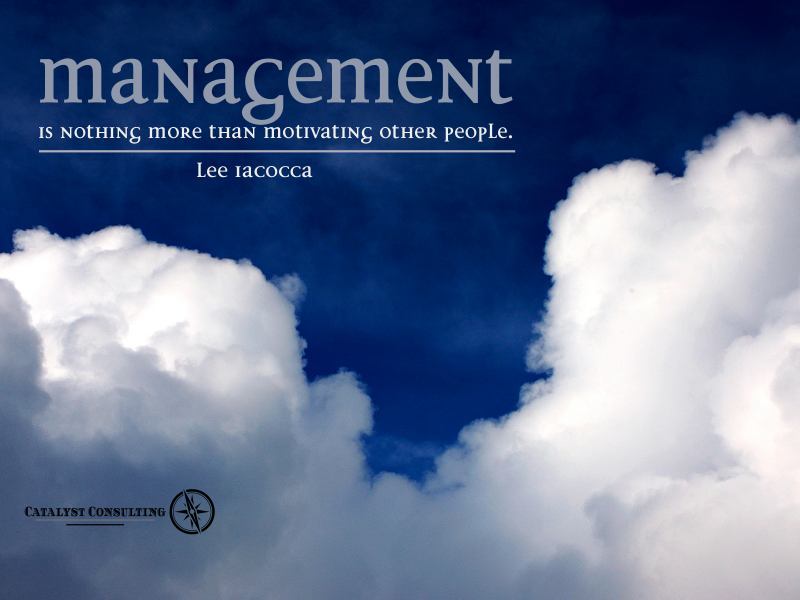

We’ve all been there — the dreaded negotiation with your most difficult customer at some point in our careers. Every year, he beats you to the ground on pricing and everything else you have to offer! Every discussion becomes a war very fast, and your self-confidence plummets.
There are several fallacies about negotiating that aren’t helpful if you’re dealing with a difficult scenario for the first time. However, like with many myths, the reality is generally quite different.
Myth: It may be a harrowing experience.
You tell a trustworthy colleague or coworker that you’re heading to negotiate next year’s large deal. What do they have to say? “Best of luck!” The majority of people consider negotiations to be an unpleasant and a difficult task, yet it is a necessary measure.
Reality: Not if you plan ahead of time.
As with all things in life, we fear the unknown, especially if we are unprepared. The reality of negotiating is that with adequate preparation comes confidence. Before your meeting sit down and ask yourself the following questions:
Myth: Successful negotiators are born.
Most people believe that you either have it or you don’t when it comes to negotiating and if you’ve got, you must have been born with the abilty.
Reality: You can learn to be a good negotiator.
Like any skill in business, negotiation skills can be learned and put into practice. There are lots of books, youtube videos and seminars you can attend on this subject. Negotiation is a structured process and once you understand how it all works the task becomes easier. But as with any new skill you have to practice, practice, practice and this is where most people take short cuts. Once you’ve got the basics put in the reps to get highly skilled.
Myth: To strike a deal you have to concede on price
The perception is that many negotiations end up with one of the parties always having to concede on price just to secure the deal.
Reality: There are other items you can concede on
The reality in any negotiation is that price is not always the deciding factor. There is usually something else that the other party wants in addition to, or instead of, a lower price. It could be that they need the product or service quickly and may be prepared to pay a premium for a fast delivery. They may want the product changed slightly to meet their specifications. They may like some on-site support for implementation.
In your research and needs-analysis it’s up to you to find out what they really want. Dig deep and find it because every part of the deal is negotiable, not just the price. Once you have hit upon it, before conceding on price, bring it into the discussion. Remember, this could be something which means very little to you but a lot to them.
Myth: If their first offer is what you want, say yes
After your sales pitch your client comes back and immediately offers exactly what you wanted. Wow, what a great outcome! He’s got what he wants and so do you. Deal done!
Reality: Always counter the first offer
If you accept immediately there are two problems:
There are instances where the customer will say “I don’t negotiate. This is the price I’m prepared to pay.” He has set the rules, so as long as you are happy with the price, go for it!
Myth: Negotiations have only one winner
If you have a competitive streak this is how you will see a negotiation – something to win or lose. Non-competitive people who believe this myth automatically lower their defences and quickly cave in to the ‘stronger’ player.
Reality: Successful negotiations have two winners
Negotiation is not a competition. The ideal outcome should be win-win, where both sides feel they’ve achieved something out of the whole process – one got a sale at a price he wanted and the other got a purchase at a price he wanted.
Win-win outcomes leave the door open for building strong relationships which will lead to more business in the future. Win-lose outcomes mean that one side will be reluctant to deal again. If, by your very nature, you are a competitive person, temper this and accept the reality that the negotiation process has to have two winners, not just you!
Myth: If you walk away, that’s it
You have found the perfect customer but you don’t get the agreement on price or any concessions and the deal never materializes. However, you are afraid about loosing the opportunity so you decide to go for it anyway, at any price.
Reality: Opportunities often come around again especially when you’ve got a full pipeline of potential customers
Accepting a deal through fear is not a position you want to be in. You will always have a nagging doubt that you didn’t hold the margins necessary to make the living you want and you gave away something which you should not have. Be strong enough to walk away from a deal if it’s not what’s best for you or your company.
You have to learn to detach yourself from the underlying deal and avoid getting emotionally involved with the product or service. Just concentrate on getting the best result. Being emotionally detached means you can walk away with no doubts. You may find that a few days later the seller will be back engaging you in conversation with another offer. Remember that opportunities always pop up and walking away is not a failure!
So take a fresh look at negotiating. Are you clinging onto old myths about how negotiating should be done? Accept that the reality can be very different!
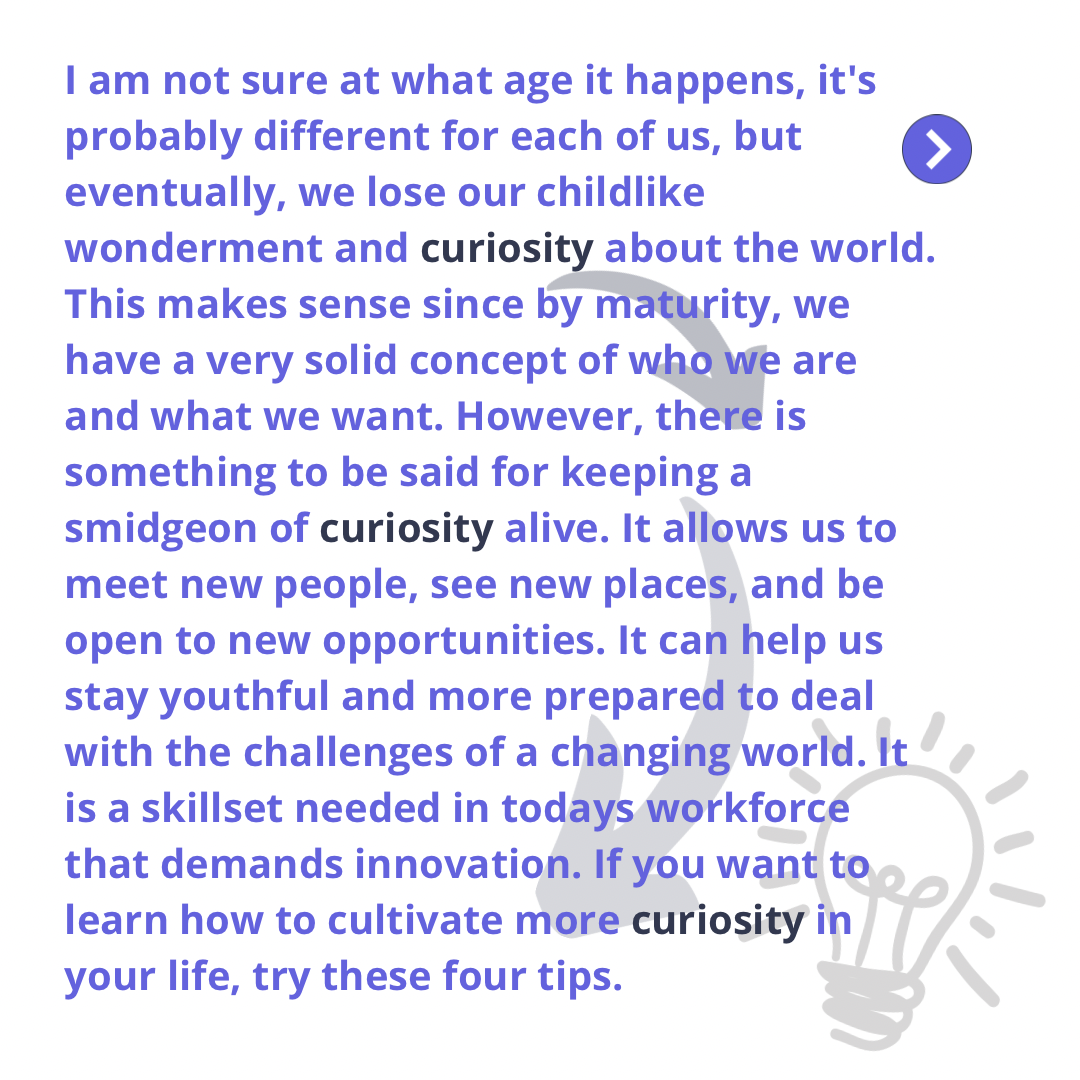
Early in my career a mentor gave a simple piece of advice. It was “be curious”. So simple and it’s stuck with me. How are you cultivating your own curiosity?



















Here’s an interesting thought: Everything in business comes back to selling. Think about that for a second. The economy revolves around sales…. every business regardless of what they do, they have to sell. On the daily every person in business sells. To your co-workers you sell your favorite movies, favorite books, favorite restaurants, favorite shoes. You even sell yourself on ideas and thoughts.
Here’s another interesting thought: Most people hate the very idea of being “salesy”, yet we all fall under that category in one fashion or another
The question is: How do I embrace my inner salesperson?
Acknowledge that you sell on a continuous basis in your day to day life.
Admit it. You do it. You just don’t think of it as selling. You would probably say “I’m just sharing my favorite_____________with so and so.
Hmmmm – Sharing. Replace the word selling with sharing. There. That feels better doesn’t it? Isn’t it funny how changing a word can alter your perspective? When it was selling, you shuddered. Now that it’s sharing, you feel all warm and fuzzy. We all like to share – we like to share our things, our thoughts, our ideas, our favorites, ourselves. Stop and think about that for a moment….. It’s the same thing.
Choose a new thought
When you choose to think of selling as sharing, it shifts the way you feel about it. When you feel empowered by something you will be more successful at it. For all of you who own businesses or work for a business (that would be everyone), this is vital.
-What thoughts do you entertain around selling?
-What new thought might you choose instead?
-What is one thing that you can do today to embrace your new thought?
“People don’t care about what you have to say until you care about what they have to say”
How true is that? Think about that for a moment – It is part of our nature as humans to want to be heard. Most people go through life just trying to be understood and when we are around someone who truly listens to us it is a breath of fresh air. And, what do we want to do? We want to be around those people as much as possible. Be part of their inner circle. We talk about them to everyone we know because they are the most genuine authentic people. They really hear us.
When we own a business or represent a business, we need to truly be in touch with what our clients need. We need to know what their challenges are, what they are excited about, who they are, so that we know how to best serve them. The only way to do this is to listen.
Listening is one of the best ways to sell. If you are in touch with your potential customer/client you will know how to work with them and create a win-win situation.
Be In Service of Others
Building on listening, let’s go into service. I’m not just talking about excellent service on the part of us, our business/product, I’m talking about being IN service of others.
When meeting another person for the first time, do you screen them for potential customer status? That’s a given. What about if they do not have a remote chance of being in need of you or your product? Do you write them off and move on to the next one?
What would happen if you looked at each person in terms of what you can do for them instead of what they can do for you?
Think of the people that you really like to do business with.
-What characteristics do they embody?
-How much of their success do you feel is in direct proportion to their ability to listen and really help you?
My challenge to you:
Practice really listening to everyone you connect with this week and find one way that you can be in service of them that exceeds their expectations.


 Catalyst Consulting