Three Surefire Ways To Crush IT Through A Recession

Successful managers and salespeople alike are constantly looking for new opportunities. They are confident in their product and their consumers’ ability to purchase it, and they are aware that tough economic times present opportunities that aren’t present in more prosperous times.

Photo by Razvan Chisu on Unsplash
  1. Get More Advertising for Your money.

It just makes sense that your advertising will generate less of a return than it would during an economic boom when the economy takes a turn for the worse. Of course, less money is being spent, but that doesn’t mean you have to see your profit margin shrink!

Just like you, advertisers are suffering from the recession, which has made them more desperate for customers. Even when you are already receiving a good bargain, the environment is ideal for negotiating your way to a lower price. For instance, if you have been paying an agency fee, rather than a flat fee, can you negotiate a percentage of revenue from sales driven by the agency’s efforts? This saves you the initial outlay of cash and gets your agency to have “skin” in the game. You will profit from the products by that much more for every up-front advertising dollar you can save.

Have you considered obtaining free publicity? Newspapers in your area are constantly looking for local news. Create news! Publicity is often free, but it’s a great way to expose your company to potential customers. If you have a new service offering or a new product line, use free resources like openpr.com (there are many others) to generate activity online that can be linked to and is SEO-friendly.

Is the size of your advertisements truly necessary? We have a tendency to believe that bigger is better, but the truth is that ads with 11 words or fewer frequently get more attention than longer ones. Try it out to immediately cut some expenses from your advertising budget. Additionally, is there a complimentary business or product to yours that you could co-op advertise together?

  1. Profit From Big Ticket Sales

During a downturn, not all of your clients experience hardship. It is common for many managers and salespeople alike to believe that consumers will begin to lean more towards cheaper products when times are tough, and that couldn’t be further from the truth. Don’t fall into the trap of thinking that you have to discount your product or service to stay ahead. Keep in mind that if you discount prices by 10% (assuming you’re at a 30% gross margin), you would need to sell 50% more units to maintain the same gross profit dollars. When considering a discount, always look at the other side of the equation to evaluate if you have the capacity, inventory, and capital to increase sales volume by an additional X% to maintain profit margins. Many consumers will evaluate risk differently during a downturn, and if your product is more expensive but a “safer” option, then don’t shy away from offering larger ticket items. Consumers who have a lot of faith in your products and services will also appreciate them much more in times of financial difficulty.

3. Increase Your Customer base.

Your clients are already aware of your excellent products and friendly customer service. They have faith in you to deliver for them. Consider this: Selling to someone you already have a relationship with is considerably simpler.

Take advantage of every chance to boost sales among your current consumer base. Do you sell a product to complement the one they’re buying? Toss it their way at the time of sale—think of it as “super sizing” their order. It is a tried-and-true strategy for boosting sales. The additional sales you can make from customers who currently do business with you might astound you.

5-week Daily Plan To Fill Your Pipeline, Regain Control , & Master Your Sales Role

Staying motivated during down sales months can be challenging, but it’s important to remember that every sales professional experiences highs and lows in their career. The key to success is to develop a consistent sales strategy and continuously work to improve your sales techniques. Below, I have outlined a 5-week plan with objectives broken down into daily action items:

Week 1. Set clear and specific goals: Create measurable goals that are achievable and align with your overall sales strategy. This will help you stay focused and motivated even during the downswing months.

  • Day 1: What are your current sales goals? Are they specific and measurable? If not, how can you refine them to make them more actionable?
  • Day 2: What are the key performance indicators (KPIs) that will help you track progress towards your sales goals? How can you ensure that you are consistently measuring and analyzing these metrics?
  • Day 3: How can you break down your sales goals into smaller, achievable targets? What steps can you take each day to work towards these targets?
  • Day 4: How can you stay accountable for achieving your sales goals? Who can you share them with, and how can you track progress together?
  • Day 5: How can you celebrate small wins and milestones along the way to achieving your sales goals? How can you use these celebrations as motivation to keep going?

For a deep dive into Week 1 tactics and strategies, visit my post here

Week 2. Develop a sales plan: Create a sales plan that outlines your target audience, sales approach, and key metrics. This will help you stay organized and focused on achieving your sales goals.

  • Day 6: Who is your target audience? What are their pain points and challenges, and how can you address them with your product or service?
  • Day 7: What is your unique selling proposition (USP)? How can you communicate this effectively to potential customers?
  • Day 8: What is your sales approach? How can you tailor it to different types of customers and situations?
  • Day 9: How can you use data and analytics to inform your sales plan? What insights can you gain from previous sales performance and customer behavior?
  • Day 10: How can you consistently review and update your sales plan to ensure it remains relevant and effective?

For a deep dive into Week 2 tactics and strategies, visit my post here

Week 3. Build relationships with your customers: Building strong relationships with your customers is essential for long-term success in sales. Focus on understanding their needs and pain points, and offer solutions that address their specific challenges.

  • Day 11: How can you actively listen to your customers to understand their needs and pain points?
  • Day 12: What are some effective ways to build rapport with customers? How can you use these techniques in your sales approach?
  • Day 13: How can you personalize your interactions with customers to make them feel valued and understood?
  • Day 14: How can you follow up with customers after a sale to ensure their satisfaction and build a long-term relationship?
  • Day 15: How can you leverage social media and other digital channels to connect with and engage customers?

For a deep dive into Week 3 tactics and strategies, visit my post here

Week 4. Improve your communication skills: Effective communication is key to successful sales. Work on improving your listening and communication skills, and focus on building rapport with your customers.

  • Day 16: What are some effective techniques for active listening? How can you incorporate these into your sales approach?
  • Day 17: How can you use storytelling to communicate the value of your product or service to customers?
  • Day 18: How can you use body language and nonverbal cues to establish trust and build rapport with customers?
  • Day 19: What are some effective questioning techniques that can help you better understand customer needs and pain points?
  • Day 20: How can you stay up-to-date with the latest sales trends and techniques? What resources and training programs can you access to continuously improve your sales approach?

For a deep dive into Week 4 tactics and strategies, visit my post here

Week 5: Continuously learn and adapt: The sales industry is always changing, and it’s important to stay up-to-date with the latest trends and techniques. Attend sales training programs, read industry publications, and seek feedback from your colleagues and customers to continuously improve your sales approach.

  • Day 21: Reflect on your recent sales interactions. What worked well? What could have been improved? Identify specific areas where you can enhance your sales techniques.
  • Day 22: Review industry publications, blogs, or podcasts to stay updated on the latest trends in your field. Identify one key insight or strategy that you can incorporate into your sales approach.
  • Day 23: Seek feedback from your colleagues or mentors. Ask them to evaluate your sales techniques and provide suggestions for improvement. Consider their input and determine actionable steps to enhance your approach.
  • Day 24: Attend a sales training or webinar. Choose a topic that aligns with your development needs, such as negotiation skills or objection handling. Apply the knowledge gained to your sales practice.
  • Day 25: Analyze customer feedback and testimonials. Identify common themes or areas of improvement mentioned by customers. Use this feedback to refine your sales approach and better address customer needs.
  • Day 26: Experiment with a new sales technique or approach. Step out of your comfort zone and try something different to see how it resonates with customers. Evaluate the results and determine if it’s worth incorporating into your regular practice.
  • Day 27: Engage in role-playing exercises with a colleague or mentor. Practice different sales scenarios and receive constructive feedback on your performance. Use this opportunity to refine your communication and persuasion skills.
  • Day 28: Reflect on your overall progress throughout the month. Celebrate your accomplishments and identify any remaining areas for improvement. Set new learning goals for the upcoming month to continue your professional growth.

Remember that sales success takes time and effort, and it’s important to stay motivated and focused even during the down months. With the right approach and mindset, you can achieve your sales goals and build a successful career.

Book review šŸ“š Predictable Success: Getting Your Organization on the Growth Track–And Keeping It There by Les McKeown

“An organization’s culture of accountability is only as strong as the leader’s willingness to model and uphold that culture.” – Les McKeown

As a manager and leader, I found Les McKeown’s book “Predictable Success: Getting Your Organization on the Growth Track–And Keeping It There” to be a valuable resource for anyone looking to improve their leadership skills and grow their business.

One of the key themes of the book is the importance of creating a culture of accountability within an organization. McKeown argues that accountability is essential for achieving success, both in terms of individual performance and overall organizational growth. He provides practical strategies for building a culture of accountability, such as setting clear expectations, providing regular feedback, and establishing consequences for non-performance. This may seem like ā€œmanagement-101ā€ but where McKeown stresses accountability, and the implications of a lack thereof, is in the progression of the various lifecycles of a business. More on this below.

As mentioned above, another important theme of the book is the concept of “predictable success.” McKeown argues that all organizations go through a predictable lifecycle, and that understanding and managing this lifecycle is key to achieving long-term success. The book provides a clear roadmap for navigating the different stages of organizational growth, from the “early struggle” phase to the “predictable success” phase.

Throughout the book, McKeown uses a positive and engaging writing style, using real-world examples to illustrate his points which kept me engaged. He also provides a wealth of practical tips and strategies for improving leadership effectiveness, such as the importance of delegation, effective communication, and building strong teams.

As a manager myself, I found the book to be highly applicable to my own work. I was particularly struck by McKeown’s emphasis on the importance of creating a culture of accountability, and have already implemented some of his strategies in my own organization. I also appreciated his clear and actionable advice for navigating the different stages of organizational growth.

While I found “Predictable Success” to be a highly valuable resource, there were a few areas where I felt the book could have been stronger. For example, I would have liked to see more detailed case studies or examples of organizations that have successfully implemented McKeown’s strategies. This may just be a personal preference as I find case studies very helpful. Additionally, while the book does provide a clear roadmap for achieving “predictable success,” it could benefit from more specific guidance on how to apply these principles in different organizational contexts.

Overall, I would highly recommend “Predictable Success” to anyone looking to improve their management effectiveness and grow their organization. McKeown’s insights and strategies are highly practical and actionable, and his engaging writing style makes for an enjoyable and informative read.


Here are ten reflection questions that you can use after reading to help to begin applying some of the key ideas.

  1. How does my organization’s current culture align with the principles of accountability outlined in the book? What changes can I make to improve accountability?
  2. What are the key stages of organizational growth, and which stage is my organization currently in? What steps can I take to move towards “predictable success”?
  3. How does my leadership style impact my organization’s growth and success? What changes can I make to improve my effectiveness as a leader?
  4. What are the key factors that contribute to team performance, and how can I build stronger teams within my organization?
  5. How can I effectively delegate tasks and responsibilities to members of my team? What strategies can I use to ensure that delegated tasks are completed successfully?
  6. How can I improve communication within my organization, both internally and externally? What barriers to communication currently exist, and how can I overcome them?
  7. What are the potential consequences of failing to achieve “predictable success” within my organization? How can I mitigate these risks and ensure long-term sustainability?
  8. What are the most important metrics for measuring organizational success, and how can I track these metrics effectively?
  9. How can I identify and address organizational silos or other barriers to cross-functional collaboration? What strategies can I use to promote collaboration and alignment across departments?
  10. What are the biggest challenges facing my organization in terms of growth and sustainability, and how can I address these challenges effectively?

Want to join me on Goodreads?

Book Review šŸ“š First, Break All the Rules: What the World’s Greatest Managers Do Differentlyby Marcus Buckingham, Curt Coffman

“Great managers don’t try to help everyone do everything. They pick a few priorities and help everyone see how these priorities relate to their own work.”

Marcus Buckingham

First, Break All the Rules by Marcus Buckingham and Curt Coffman is a refreshing and insightful read that offers valuable lessons for anyone in a sales management role. I have often recommended this book to other managers and have used for management book club(s). The book is based on a study conducted by the authors, in which they analyzed the best practices of successful managers and identified the key traits that set them apart from others.

One of the book’s standout themes is the importance of breaking traditional rules in order to achieve success. The authors argue that the most effective managers don’t conform to conventional wisdom, but instead create their own rules based on their unique circumstances and strengths. This idea is particularly relevant to the sales management, where the ability to think creatively and outside the box is essential for success.

The following are a few conventional wisdoms that the authors encourage managers to rethink:

  • “Treat everyone the same”: The book argues that effective managers do not treat everyone the same, but instead tailor their management style to the unique needs and strengths of each individual employee.
  • “Focus on fixing weaknesses”: The book suggests that the traditional approach of focusing on improving weaknesses is not the most effective way to achieve success. Instead, the authors argue that focusing on building and leveraging strengths is a more productive strategy.
  • “Follow the rules”: The book’s title itself challenges the conventional wisdom of blindly following rules and instead encourages readers to think creatively and break rules when necessary to achieve success. The authors argue that the best managers do not simply follow conventional wisdom, but instead create their own rules based on their unique circumstances and strengths.

Another important takeaway from the book is the emphasis on employee engagement. The authors emphasize the importance of understanding each employee’s unique talents and needs, and tailoring management styles accordingly. This approach can be applied to sales teams by recognizing each team member’s strengths and weaknesses, and leveraging those strengths to optimize team performance.

The writing style is engaging and accessible, making it an easy and enjoyable read. The authors use real-world examples to illustrate their points, and their insights are backed up by solid research. However, one potential criticism of the book is that it can be overly simplistic at times, and may not offer enough practical advice for managers and sales professionals looking to implement the ideas presented.

Personally, I have found First, Break All the Rules to be highly impactful in my sales management career. The book’s emphasis on employee engagement has helped me to better understand my team members and to tailor my management style to their individual needs. Additionally, the concept of breaking traditional rules has encouraged me to think creatively when approaching sales challenges, and has led to some of my most successful sales campaigns.

Overall, I highly recommend First, Break All the Rules to anyone in a management or sales role. While it may not offer all the answers, it provides valuable insights that can help you to think differently and achieve greater success in your career.


Reflection questions

  • How can I apply the concept of breaking traditional rules to my sales approach?
  • What are some specific ways I can tailor my management style to better engage and motivate my team members?
  • How can I identify and leverage the unique strengths of each member of my sales team?
  • How can I encourage creativity and outside-the-box thinking within my sales team?
  • In what ways can I measure employee engagement and adjust my approach accordingly?
  • How can I identify when I am relying too heavily on conventional wisdom and need to break the rules?
  • What are some specific examples of successful managers who have broken traditional rules to achieve success?
  • What are some potential drawbacks of breaking traditional rules, and how can I mitigate those risks?
  • How can I balance the need to break rules with the need for consistency and structure in my sales approach?
  • What are some key takeaways from the book that I can implement right away to improve my sales results?

Want to connect on Goodreads?

Book Review šŸ“š Triggers: Creating Behaviors that Last, by Marshal Goldsmith

Triggers: Creating Behaviors That Last – Becoming the Person You Want to Be by Marshall Goldsmith is a powerful book that delves deeply into the psychology of behavior change. Goldsmith, a renowned executive coach, shares his insights on how to create lasting change in our lives and become the person we want to be.

One of the key themes of the book is that behavior change requires a conscious effort on our part. Goldsmith explains that our environment and the people around us can trigger certain behaviors, both positive and negative. He uses the term “triggers” to describe these environmental cues that can influence our behavior. By becoming aware of our triggers and taking action to modify them, we can create new habits and behaviors that will serve us better.

Outside of our environment, our internal beliefs that can stop change. An awareness of these beliefs, along with self-reflection, can turn these beliefs into positive triggers for success. These beliefs include:

  1. “I have willpower and won’t give in to my triggers.” This belief can be problematic because it assumes that willpower alone is enough to overcome triggers and change behavior, when in reality willpower is a limited resource that can be depleted quickly.
  2. “I’m right and others are wrong.” This belief can prevent us from being open to feedback and new ideas, and can make it difficult to make changes in our behavior.
  3. “I’m a victim of my environment.” This belief can make us feel powerless to change our circumstances, and can prevent us from taking action to modify our environment and our behavior.
  4. “I’m too busy and don’t have time to change.” This belief can be a convenient excuse for avoiding the hard work of behavior change, and can prevent us from making progress toward our goals.
  5. “I’ve tried before and failed, so why bother trying again?” This belief can be a self-fulfilling prophecy that prevents us from making new attempts at behavior change and can keep us stuck in unhelpful patterns.

Goldsmith suggests that these beliefs can be overcome by adopting a growth mindset, being open to feedback and new ideas, and developing a sense of accountability to ourselves and to others. By doing so, we can create lasting change and become the person we want to be.

The writing style of the book is direct and practical, with Goldsmith offering a wealth of actionable advice and exercises that help to implement his ideas. He also emphasizes the importance of accountability, both to ourselves and to others, in order to stay on track and achieve our goals.

A tip that Goldsmith suggests to drive personal accountability is to ask the five questions below at the end of each day. He offers some interesting research data (although anecdotal at best) conveying the efficacy of these questions and goal achievement.

  1. Did I do my best to set clear goals today?
  2. Did I do my best to make progress toward my goals today?
  3. Did I do my best to find meaning and purpose in my work today?
  4. Did I do my best to be happy today?
  5. Did I do my best to be fully engaged in my interactions with others today?

As a sales professional, I found this book to be incredibly valuable. Sales is a highly competitive field, and success often requires a combination of skill, discipline, and perseverance. Goldsmith’s insights on behavior change are directly applicable to the sales profession, as we constantly face challenges and opportunities that can trigger positive or negative behaviors. By developing greater awareness of our triggers and consciously modifying our behavior, we can become more effective salespeople and achieve greater success.

One important takeaway from the book is the importance of setting achievable goals. Goldsmith emphasizes that small, incremental changes can lead to significant improvements over time. By setting specific, measurable goals and tracking our progress, we can build momentum and create lasting change in our behavior.

Another key lesson from the book is the importance of humility and openness to feedback. Goldsmith encourages readers to seek out constructive feedback from others and to be open to criticism. By doing so, we can identify areas for improvement and make the necessary changes to become better versions of ourselves.

Overall, I highly recommend Triggers: Creating Behaviors That Last – Becoming the Person You Want to Be to anyone looking to create positive change in their lives. While the book is not without its flaws, particularly in its somewhat repetitive structure, the insights and advice it offers are invaluable. As a sales professional, I have found the concepts and strategies outlined in the book to be directly applicable to my work, and have seen tangible improvements in my sales results as a result of implementing Goldsmith’s advice.


Following are ten reflection questions based on my reading. These questions are designed to facilitate reflection on the key concepts and strategies outlined in the book, and to help you apply them to your own professional development and career goals.

  1. What triggers have I identified in my own life that influence my behavior, both positively and negatively?
  2. How can I modify my environment to support positive behavior change and eliminate triggers that lead to negative behavior?
  3. What specific, measurable goals can I set for myself to create lasting change in my behavior?
  4. How can I hold myself accountable to these goals and monitor my progress?
  5. What is my mindset toward feedback, and how can I become more open to constructive criticism and suggestions for improvement?
  6. How can I develop a sense of humility and acknowledge that I don’t have all the answers?
  7. How can I cultivate a growth mindset and approach behavior change as an opportunity for learning and development?
  8. How can I build stronger connections with others and seek out support and guidance in my behavior change efforts?
  9. What role does urgency play in my behavior, and how can I manage it more effectively?
  10. How can I find meaning and purpose in my work, and use it as a source of motivation and inspiration for behavior change?

Want to join me on Goodreads?

Recession Proof Sales Techniques for Selling Home Improvements to Homeowners

Selling home improvements can be a lucrative business, but it can also be challenging, especially during times of economic uncertainty. With many homeowners tightening their belts and cutting back on expenses, it can be difficult to convince some to invest in home renovations. However, with the right sales techniques, you can still close deals and grow your business even during a recession.

Here, I’ll share some of the top recession-proof sales techniques for selling home improvements to homeowners. From building trust to offering financing options, we’ll cover everything you need to know to close more deals and thrive in a challenging market.

Building Trust

One of the most important things you can do as a salesperson is to build trust with your potential customers. Homeowners want to work with someone they can trust to do a good job and not take advantage of them. In a recession many businesses will be cutting costs in an effort to lower prices and in doing so quality can suffer. In a race to the lowest price, homeowners are willing to pay more for companies they can trust. Here are some ways to build trust with your customers:

  • Be honest and transparent: Don’t make false promises or exaggerate the benefits of your services. Be transparent about pricing and what your services include.
  • Provide references and testimonials: Show your potential customers that you have a track record of satisfied customers. Provide references and testimonials from previous clients to demonstrate your expertise and reliability. Many homeowners are aware of how easily some testimonials can be misrepresented (testimonials from family members, friends, employees, etc) so be sure to leverage other sources of credibility such as Better Business Bureau ratings, and other third party ratings.
  • Offer guarantees: Offer a satisfaction guarantee or warranty to show your customers that you stand behind your work.

By building trust with your customers, you’ll be more likely to close deals and earn repeat business.

Offering Financing Options

During a recession, many homeowners may be hesitant to spend money on home improvements, even if they’re necessary. Offering financing options can help make your services more accessible and affordable. This is another area where some business will see financing as an expense and look for cost-savings by either limiting financing options or eliminating them. Here are some financing options you can offer:

  • Payment plans: Offer payment plans that allow customers to pay for your product or services over time instead of all at once.
  • Home equity loans: Help your customers secure home equity loans to finance their home improvements.
  • Credit cards: Accept credit cards to make paying for your services more convenient for your customers.

By offering financing options, you can make your services more accessible to a wider range of customers and increase your chances of closing deals.

Creating a Sense of Urgency

Creating a sense of urgency can be a powerful sales technique, especially during a recession when customers may be more hesitant to spend money. Here are some ways to create a sense of urgency:

  • Limited-time offers: Offer limited-time discounts or promotions to encourage your customers to act quickly.
  • Emphasize the benefits: Highlight the benefits of your services and how they can improve your customers’ quality of life. Remind them of the potential costs of delaying or not investing in home improvements.
  • Show your availability: Let your customers know that your schedule is filling up quickly and that they may miss out on the opportunity to work with you if they don’t act soon.

By creating a sense of urgency, you can encourage your customers to act quickly and increase your chances of closing deals.

Overcoming Objections

Homeowners may have objections to investing in home improvements, especially during a recession. Here are some common objections and how to overcome them:

“It’s too expensive”: Offer financing options or emphasize the long-term benefits of the investment. For products or services that have a strong return on investment, whether through greater resale value or energy-savings, long-term financing options let these homeowners offset the initial costs through a low cost of ownership.

“I don’t have time”: Emphasize the convenience and time-saving benefits of your services. You can also work with the customer to create a timeline that works for them.

“I’m not sure it’s necessary”: Emphasize the potential cost savings and energy efficiency that come with home improvements. You can also provide references or testimonials from previous customers who have seen the benefits of your services.

By addressing objections and providing solutions, you can help your customers overcome their reservations and close more deals.

Upselling and Cross-Selling

Upselling and cross-selling can be effective sales techniques for increasing the value of each sale. Here are some tips for upselling and cross-selling:

Offer complementary services: If a customer is interested in one service, offer a related service that complements it. For example, if they’re interested in a window replacement, offer to also update their entry door as well.

Suggest upgrades: If a customer is considering a certain product or service, suggest an upgraded version that offers more features or benefits.

Large project discounts: Offer discounts for jobs that keep crews busy and reduces downtime to encourage customers to invest in larger projects.

By upselling and cross-selling, you can increase the value of each sale and grow your business.

Selling home improvements during a recession can be challenging, but it’s not impossible. By building trust, offering financing options, creating a sense of urgency, overcoming objections, and upselling and cross-selling, you can increase your chances of closing deals and growing your business. Remember to be honest, transparent, and customer-focused throughout the sales process, and you’ll be well on your way to recession-proof success.

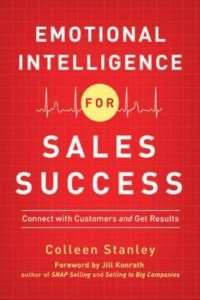
Book Review šŸ“š Emotional Intelligence for Sales Success: Connect with Customers and Get Results by Colleen Stanley

Emotional Intelligence (EI) for Sales Success by Colleen Stanley is a must-read for anyone in the sales profession. This book is a comprehensive guide that offers valuable insights and strategies to help salespeople connect with customers on a deeper level and achieve better results.


“Sales success is not about being the best at selling; it’s about being the best at connecting.”- Colleen Stanley

One of the key themes of the book is the importance of emotional intelligence in sales. Stanley emphasizes that sales success is not just about having the right product or service, but also about understanding and connecting with the emotions of your customers. By developing emotional intelligence, salespeople can build stronger relationships, establish trust, and ultimately close more deals.

The writing style is engaging and conversational, making it easy to read and understand. Stanley provides real-life examples and practical advice that can be applied in any sales situation. I found her to be relatable and down-to-earth, making it easy to connect with the material.

One of the most important takeaways from the book is the concept of “empathetic listening.” Stanley explains that this involves not just hearing what your customers are saying, but truly understanding their needs, concerns, and emotions. By practicing empathetic listening, salespeople can build trust and establish themselves as trusted advisors, rather than just another salesperson pushing a product.

Another important aspect of the book is its direct application to the sales profession, whereas other EI materials can seem abstract. Stanley provides practical strategies for applying emotional intelligence in a sales context, such as how to handle objections, build rapport, and close deals. She also provides tips for managing stress and maintaining a positive attitude in the face of rejection and setbacks.

As a sales professional myself, I can attest to the impact that this book has had on my sales results. By applying the strategies and techniques outlined in Emotional Intelligence for Sales Success, I have been able to build stronger relationships with my customers, close more deals, and ultimately achieve greater success in my sales career. This is a book that I share will all of my sales teams.

While the book is certainly a valuable resource, there are a few areas where it falls short. For example, some of the concepts and strategies presented in the book may be familiar to those who have already studied emotional intelligence or sales techniques. Additionally, the book focuses primarily on business-to-business (B2B) sales, so those in other types of sales roles may perceive some of the advice inapplicable. Having done both B2B and B2C, I didn’t find it too difficult to connect the dots across various roles.

Overall, Emotional Intelligence for Sales Success is a valuable resource for anyone in the sales profession. By focusing on the importance of emotional intelligence and providing practical strategies for applying it in a sales context, Colleen Stanley has created a book that is both informative and engaging. Whether you are a seasoned sales professional or just starting out in your sales career, this book is definitely worth a read.


Below are 10 reflection questions based on the insights from Emotional Intelligence for Sales Success:

  1. What are some examples of situations where you have demonstrated empathy in your sales interactions? How did it impact the outcome?
  2. How do you typically handle objections from customers? How could you apply the concept of empathetic listening to improve your approach?
  3. Reflect on a recent sales interaction where you felt you could have done better. What emotional intelligence strategies could you have applied in that situation?
  4. How do you typically manage stress in your sales role? What techniques have worked well for you, and what could you improve on?
  5. Reflect on your current sales goals. How could developing your emotional intelligence help you achieve these goals?
  6. What are some examples of times when you may have made assumptions about a customer’s needs or emotions? How could you have used empathetic listening to better understand their perspective?
  7. Think about a sales interaction where you felt you established a strong rapport with a customer. What strategies did you use to build that connection?
  8. How do you typically follow up with customers after a sale? How could you use emotional intelligence to strengthen those customer relationships?
  9. Reflect on a recent rejection or setback in your sales career. How could you apply emotional intelligence to maintain a positive attitude and keep moving forward?
  10. What are some examples of ways you could apply the strategies and techniques from this book in your day-to-day sales interactions? How could you measure the impact of these efforts?

Want to connect on Goodread ?

Reframing Failure: Six Stories We Tell Ourselves & How You Can Learn and Grow

When faced with a failure or setback, there are six common stories that people tend to tell themselves and others. By recognizing these patterns, you can use them as a way of thinking differently about what went wrong and how to move forward.

The first story is Relief, which involves acknowledging personal responsibility and learning from the experience. While this approach shows humility and an open mind, it’s important to consider whether you’ve learned the right lessons.

The second story is Hubris, which involves recognizing that the failure was a result of collective overconfidence. By focusing on team failings, this approach can help avoid placing too much blame on any one person. However, it may also lead to less emphasis on personal responsibility.

The third story is Betrayal, which involves blaming someone close for the failure. While this approach can help identify skills gaps in the team, it can also become very personal and accusatory.

The fourth story is Mechanistic, which involves attributing the failure to an impersonal or organizational cause, such as a flawed system or process. By focusing on complex causes, this approach can help identify areas for improvement in the organization. However, it may also minimize personal failings and the importance of individual responsibility.

The fifth story is Cultural Alignment, which involves attributing the failure to the prevailing attitudes and beliefs of the organizational culture. By putting the failure into a wider context, this approach can help identify external influences that may have contributed to the situation. However, it’s important to remember that other people’s actions are not an excuse for one’s own failures.

The sixth story is Nemesis, which involves attributing the failure to someone deliberately trying to bring you down. By identifying bad relationships, this approach can help recognize negative influences and avoid future conflicts. However, assuming bad intentions can also lead to a lack of trust and collaboration in the future.

By recognizing these six common stories and their pros and cons, you can approach failure in a more nuanced and productive way. This can help you learn from your mistakes, take responsibility for your actions, and make positive changes for the future.


Here are some reflection questions for each of the six stories that can help you identify when a particular story is being used:

Relief:

  • Am I taking personal responsibility for the failure?
  • Am I acknowledging what I’ve learned from the experience?

Hubris:

  • Am I focusing on team failings rather than individual responsibility?
  • Am I blaming external factors instead of looking at what we could have done differently?

Betrayal:

  • Am I blaming someone close for the failure?
  • Am I getting too personal and accusatory in my language?

Mechanistic:

  • Am I attributing the failure to an impersonal or organizational cause?
  • Am I minimizing personal responsibility and individual actions?

Cultural Alignment:

  • Am I attributing the failure to external cultural or team factors?
  • Am I using other people’s actions as an excuse for my own failures?

Nemesis:

  • Am I assuming bad intentions on someone else’s part?
  • Am I identifying bad relationships and avoiding future conflicts?

ā˜Žļø Ace Your Follow-Up Game: Best Practices for Following Up After a Cold Call

Cold calling is an essential aspect of sales, but it’s only half the battle. Following up after a cold call is equally important, if not more, to close the deal. However, following up can be a daunting task, especially if you don’t have a plan in place. In this article, we’ll discuss the best practices for following up after a cold call to increase your chances of success.

The Importance of Following Up After a Cold Call

Before we dive into best practices, let’s understand why following up after a cold call is crucial. Here are a few reasons:

  1. Keeps you on top of mind: Following up regularly reminds the prospect of your product or service. This way, when they are considering a purchase, your business will be the first one that comes to their mind.
  2. Builds credibility: Regular follow-ups show that you are serious about your business and are willing to put in the effort to close the deal. This builds credibility and trust with the prospect.
  3. Provides additional information: Following up gives you the opportunity to provide additional information or answer any questions the prospect may have. This can help address any concerns and move them further down the sales funnel.

Best Practices for Following Up After a Cold Call

Now that we understand the importance of following up after a cold call let’s discuss the best practices to maximize your chances of success.

1. Have a Plan

Before making the cold call, have a follow-up plan in place. This will help you stay organized and ensure that you don’t miss any follow-up opportunities. Make sure to note down the prospect’s contact information, the date of the call, and any other relevant details.

2. Send a Thank You Email

After the cold call, send a thank-you email to the prospect. This shows that you appreciate their time and are interested in continuing the conversation. The email should be brief, to the point, and personalized.

3. Follow Up Within 24-48 Hours

Timing is crucial when it comes to following up after a cold call. Follow up within 24-48 hours to keep the conversation fresh in the prospect’s mind. This also shows that you are proactive and serious about closing the deal.

4. Use Multiple Channels

Don’t rely solely on email to follow up. Use multiple channels such as phone, social media, and text message to stay in touch with the prospect. This will increase your chances of getting a response and closing the deal.

5. Provide Value

When following up, provide value to the prospect. Share relevant industry insights, news, or resources that can help them make an informed decision. This shows that you are invested in their success, not just making a sale.

6. Keep the Conversation Going

Following up is not a one-time event. Keep the conversation going by scheduling regular check-ins with the prospect. This will help build a relationship and increase the likelihood of closing the deal.

Following up after a cold call is a critical aspect of sales. It helps keep you on top of mind, builds credibility, and provides additional information to the prospect. By implementing the best practices we’ve discussed, you can increase your chances of success and close more deals. Remember to have a plan, send a thank-you email, follow up within 24-48 hours, use multiple channels, provide value, and keep the conversation going.

Happy selling!

FAQs

Q: How often should I follow up after a cold call?

A: Follow up within 24-48 hours of the call, then continue to schedule regular check-ins with the prospect.

Q: What if the prospect doesn’t respond to my follow-up?

A: If the prospect doesn’t respond, try a different channel or provide additional value in your follow-up communication. If you still don’t hear back, it may be time to move on to other prospects and revisit this one at a later date.

Q: What should I do if the prospect says they’re not interested?

A: Respect their decision and thank them for their time. However, don’t completely give up on them. Continue to stay in touch and provide value. You never know when their needs or circumstances may change, and they may become interested in your product or service.

Book Review: Predictably Irrational-How Hidden Forces Shape Our Decisions by Dan Ariely

“We are not as rational as we think we are, but we are rational enough to think we are rational.” -Dan Ariely

Predictably Irrational by Dan Ariely is a thought-provoking book that delves into the realm of behavioral economics and the irrationality of human decision-making. Ariely, a professor of psychology and behavioral economics, provides an engaging and informative book that explores the various ways in which people make decisions, often in ways that are not rational or logical.

The chapters are divided into different aspects of human behavior. Ariely uses a combination of personal anecdotes, experiments, and studies to illustrate his points, making the book an easy and thought-provoking read.

One of the key themes of Predictably Irrational is the idea that people often act against their own best interests. Ariely argues that people make decisions based on emotions and biases rather than rational thought, resulting in poor decision-making and negative outcomes. For example, he highlights the concept of “anchoring,” where people rely too heavily on the first piece of information they receive when making a decision, even if it’s irrelevant or inaccurate.

Another important theme of the book is the idea that people are highly influenced by social norms and peer pressure. Ariely explains how our desire to fit in and be accepted can lead us to make irrational decisions, such as conforming to group norms even when they go against our own beliefs.

The style of the book is informative and engaging, with Ariely’s examples making complex concepts easy to understand. However, it’s worth noting that Predictably Irrational is not a book that provides easy answers or quick fixes. Instead, it challenged me to rethink my assumptions about human behavior and the decision-making process.

As a sales professional, I found the insights in Predictably Irrational to be incredibly applicable. The book helped me understand the ways in which customers make decisions, and how I can use this knowledge to deliver a more customer centric sales approach. For example, by understanding the concept of anchoring, I can present my products and services in a way that sets a positive first impression and reduces resistance.

Dan Ariely provides several insights around pricing and purchasing behavior. One key insight is that people’s perception of value is often influenced by the price of a product or service. For example, Ariely found that people are more likely to perceive a wine as tasting better if they are told that it is more expensive, even if the wine is actually the same as a cheaper option.

Another insight is that people are often willing to pay more for a product or service if they feel that they are getting a “deal”. Ariely found that people are more likely to buy a product that has a higher price with a discount than a lower-priced product with no discount, even if the actual price paid is the same.

Ariely also argues that people are more likely to make a purchase if they have an emotional connection with the product or service. For example, people are more likely to buy a product if it is presented in a way that appeals to their emotions or personal values.

Ariely’s insights around pricing and purchasing behavior suggest that people’s decision-making when it comes to buying products and services is often influenced by emotions, biases, and perceptions of value. Understanding these factors can help businesses and sales professionals to develop more effective pricing and marketing strategies.

Overall, Predictably Irrational is a must-read for anyone interested in behavioral economics, psychology, or human decision-making. While it’s not a book that provides easy answers or guarantees success, it’s a fascinating exploration of the science behind our choices and a valuable tool for anyone looking to improve their sales results. My only criticism of the book is that it occasionally feels repetitive, with some of the concepts being revisited multiple times. However, this is a minor quibble in an otherwise excellent read.


Here are 10 reflection questions to use while reading “Predictably Irrational” by Dan Ariely:

  1. What are some examples from your own life where you’ve made irrational decisions based on emotions or biases?
  2. How can understanding the concept of anchoring help you make better decisions in your personal or professional life?
  3. In what ways do social norms and peer pressure influence your decision-making?
  4. How can you apply the insights from the book to improve your sales approach or marketing strategies?
  5. What impact does the concept of “fairness” have on your decision-making?
  6. How can you use the insights from the book to make better financial decisions, such as saving money or investing?
  7. Have you ever been influenced by the perceived value of a product or service? How can you avoid being swayed by this in the future?
  8. In what situations do you find yourself making decisions based on incomplete or inaccurate information? How can you improve this?
  9. How can you use the insights from the book to improve your personal relationships or communication with others?
  10. What are some practical steps you can take to overcome your own biases and make more rational decisions in the future?