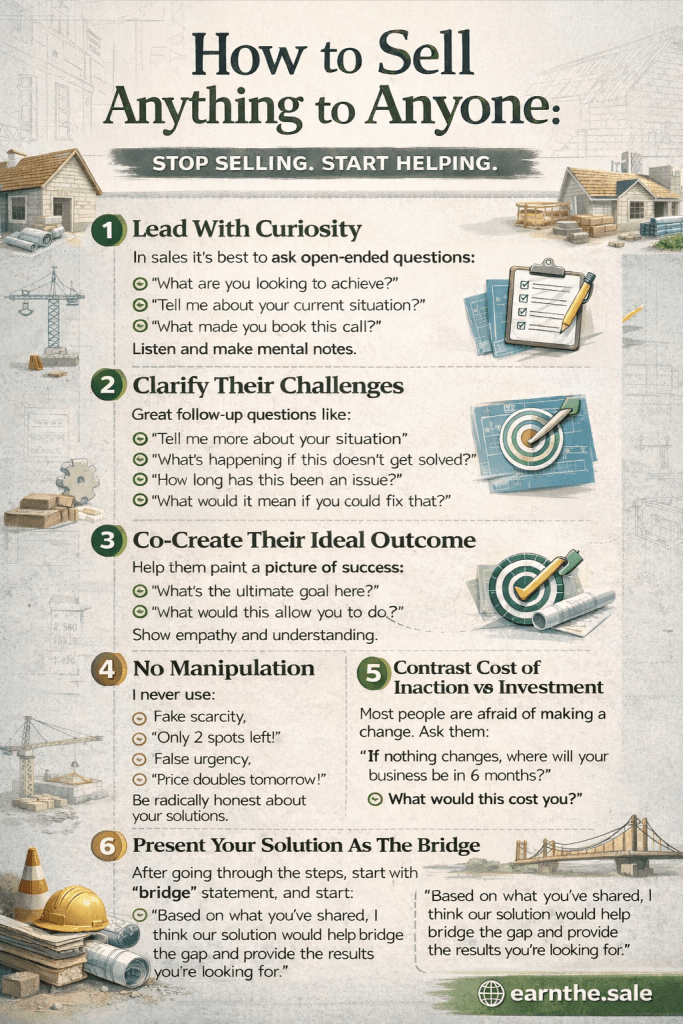
6-Step Consultative Process
I recently caught a clip of Chris Rock riffing on relationships. His message? “It’s about serving each other.” That got me thinking: isn’t sales really just a (hilarious and sometimes complicated) relationship, too?
In sales, we all know it’s rarely about who has the best product or the slickest pitch; it’s about building relationships and showing up for each other. Here’s how great sales mirrors great relationships:
At the end of the day, great salespeople know their role isn’t just to sell but to serve. Build the trust, understand their goals, and—yes—make them laugh. That’s how relationships last, and we could all use a good laugh right now.
Avoiding tasks, situations, or even people can be more common in sales than many realize. For sales professionals and managers alike, understanding the root cause of avoidance can be the first step to creating a sales culture that takes action. Avoidance can take many forms, often rooted in different mental or emotional responses, and can prevent you from reaching your goals or performing at your best. Here, I’ll explore three types of avoidance, breaking down why each happens and how you, as a sales professional, can address it effectively.
In sales, emotional or cognitive avoidance happens internally. It’s often invisible to others but has a real impact on your performance and mindset. When you emotionally or cognitively avoid something, you’re choosing to avoid thinking about it altogether. This might look like pushing aside the thought of following up on a challenging prospect, blocking out stressful client interactions, or not addressing feelings of burnout.
Common triggers in sales that can lead to emotional avoidance include:
This type of avoidance can often lead to procrastination or disengagement. If it persists, consider identifying specific thought patterns that are holding you back. A sales manager might find it helpful to provide coaching support, focusing on building resilience against these stressors. Seeking professional help can also be valuable if emotional avoidance becomes overwhelming or stems from deeper issues.
Situational avoidance is when you consciously avoid specific people, places, or tasks. In the sales environment, this could mean avoiding meetings, skipping networking events, or avoiding interactions with certain clients or colleagues. This type of avoidance is often a response to past negative experiences, where sales professionals steer clear of situations they associate with discomfort or conflict.
Here are a few examples of situational avoidance in sales:
The risk here is that situational avoidance limits your growth and narrows your opportunities. If you recognize this pattern, try gradually confronting the avoided situations with small steps. Sales managers can also help by creating an open environment where team members feel supported, even in uncomfortable situations. Encouraging honest discussions can often alleviate some of the tension that causes situational avoidance.
Protective avoidance is when you go out of your way to shield yourself from perceived risks, often by creating patterns or behaviors that feel “safe.” This type of avoidance can become particularly tricky in sales, as it can lead to habits that hinder growth and productivity. Protective avoidance often manifests as overly cautious behavior, where fear of failure or rejection leads to over-preparing or avoiding risks altogether.
Some signs of protective avoidance in sales might include:
While these protective actions may feel safe, they often lead to missed opportunities. Sales professionals need to find a balance between preparation and action, and sometimes that means taking calculated risks. Sales managers can play a pivotal role here by encouraging risk-taking in a structured way, offering feedback and reassurance to prevent protective behaviors from holding back growth.
Avoidance can be a significant barrier to success in sales. By recognizing the type of avoidance that’s impacting your behavior—whether it’s emotional, situational, or protective—you can take targeted steps to address it. Sales professionals who confront their avoidance tendencies head-on often experience personal growth, better client relationships, and increased sales outcomes. Sales managers, too, can use this understanding to provide supportive, growth-oriented environments for their teams.
By identifying and addressing avoidance patterns, you can break free from self-imposed limitations and open the door to new sales opportunities. When avoidance becomes persistent or too difficult to manage alone, consider seeking support through professional development programs or coaching. Remember, the first step to overcoming any type of avoidance is awareness—only then can you take steps toward meaningful change in your sales journey.
Below is a helpful exercise to use in your personal development journey or 1:1 sessions.
Ready to take your sales game to the next level? 🚀
Don’t miss out on more tips, insights, and strategies to boost your sales and sales leadership skills! Subscribe today and join a community of sales enthusiasts like yourself!
📩 Stay up-to-date with the latest blog posts, packed with practical advice and real-world examples that will help you close more deals and inspire your sales team. 💪
🔗 Want more valuable content? Check out the library of articles for a treasure trove of sales wisdom just waiting to be discovered. From prospecting techniques to negotiation tactics, I’ve got you covered!
👍 If you found this article helpful, give it a thumbs up and share it with your network. Help spread the word and empower others to achieve sales excellence!
Remember, success in sales starts with knowledge and continuous learning. Don’t miss out—subscribe, explore, and share today!
📢 Come along the journey! Subscribe now, explore more, and share the knowledge
Books
1. Grit: The Power of Passion and Perseverance

Author: Angela Duckworth
Angela Duckworth’s “Grit”
Duckworth’s acclaimed book dives into the science of grit, a key driver for long-term success. In sales, where persistence often separates top performers from the rest, Duckworth’s insights offer actionable steps for developing resilience. This book is packed with case studies and research that reinforces why passion and perseverance can elevate one’s career trajectory, making it an indispensable read for sales professionals who want to push past challenges and consistently close deals.
2. Mindset: The New Psychology of Success

Author: Carol S. Dweck
Carol S. Dweck’s “Mindset”
Success in sales hinges on adaptability and a positive mindset. Dweck’s “Mindset” explains how shifting from a fixed mindset to a growth mindset can be transformational, especially when handling rejection or navigating challenging quotas. Her approach empowers salespeople to see setbacks as opportunities for growth, fostering an outlook that drives performance under pressure.
3. Navigating Through the Valleys of Success: A Perspective in Perseverance
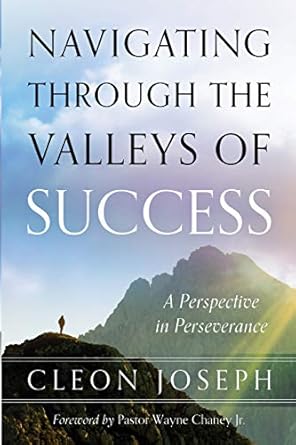
Author: Cleon Joseph
Cleon Joseph’s “Navigating Through the Valleys of Success”
Sales professionals often encounter obstacles that test their perseverance. Cleon Joseph’s book provides strategies for managing setbacks and maintaining focus during tough times. It’s a guide for any salesperson striving to develop mental resilience and maintain their drive, regardless of external challenges. Joseph’s perspective is a valuable resource for those aiming to maintain momentum in high-stakes environments.
4. Mind Over Matter: The Self-Discipline to Execute Without Excuses
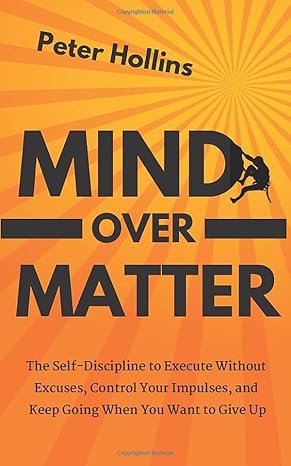
Author: Peter Hollins
Peter Hollins’s Mind-Over-Matter-Self-Discipline
Self-discipline is at the heart of sales success. Hollins’ concise book on building self-discipline equips sales professionals with the tools to stay focused, control impulses, and push forward even when the pressure is high. With practical exercises and clear strategies, this book is a quick yet powerful read for anyone who wants to enhance their productivity and close deals consistently.
5. An Astronaut’s Guide to Life on Earth

Author: Chris Hadfield
Chris Hadfield’s Astronauts-Guide-Life-Earth
Chris Hadfield’s experience as an astronaut offers unique insights into the importance of preparation and determination. Sales managers and team leaders will appreciate Hadfield’s lessons on staying calm under pressure, a skill as relevant in space as it is in the sales field. His book encourages sales professionals to adopt a meticulous approach to planning and to stay resilient when the stakes are high.
Videos
1. Grit: The Power of Passion and Perseverance | Angela Lee Duckworth
Angela Duckworth’s TED Talk breaks down the importance of grit in achieving long-term goals. For sales teams, this talk offers an inspiring reminder that sustained effort and resilience are often more critical than natural talent. It’s an excellent motivational tool for those facing demanding sales cycles.
2. Leadership – When It Matters Most: Courage Up! | John C. Maxwell
In this talk, leadership expert John C. Maxwell discusses the role of courage in high-pressure situations. Sales managers can use this to inspire their teams to tackle challenging quotas and pursue ambitious targets without fear, instilling a culture of resilience and boldness.
https://www.youtube.com/live/qLq87C7hWjY?si=M0IhEcSmSs2Zjzcl
3. Finding Your Resolve
This motivational video is designed to help viewers find their inner resolve. Sales professionals facing burnt-out or difficult market conditions can find encouragement here to persist and overcome, making it a valuable resource for anyone who needs a motivational boost.
4. Digging Deeper: How a Few Extra Moments Can Change Lives | Cody Coleman
Cody Coleman’s TEDx talk encourages taking that “extra moment” to make a difference, a principle highly relevant to sales. This talk is ideal for sales professionals who want to deepen their impact, build stronger relationships, and achieve lasting success through small, consistent efforts.
5. Pushing Through | Ruben Daniels
Ruben Daniels shares insights on perseverance, ideal for sales teams working in a high-pressure environment. This short talk is an excellent addition to any sales team meeting, reminding everyone that determination and a positive outlook are keys to success.
Articles and Blogs
1. The Power of Resolve
This article on resolve offers insights into how mental toughness can drive personal and professional success. Sales professionals can apply these principles to navigate competitive markets and stay focused on goals despite challenges.
https://www.psychologytoday.com/us/blog/happiness-in-world/200911/the-power-resolve
2. Finding Strength: How to Overcome Anything
Description: Sales success often requires overcoming significant obstacles. This article discusses strategies to harness inner strength, making it a useful read for sales teams looking to build resilience and face high-pressure environments with confidence.
https://www.psychologytoday.com/us/articles/199805/finding-strength-how-overcome-anything
3. Grit: A Complete Guide on Being Mentally Tough
In this comprehensive guide, James Clear outlines the essentials of mental toughness. Sales professionals will find this article especially relevant, as it covers grit’s role in achieving long-term goals and provides actionable strategies for building resilience.
4. How to See Challenges as Opportunities
Description: This article reframes challenges as opportunities, an essential mindset shift for sales professionals. By adopting this perspective, salespeople can approach obstacles as chances to grow, making them better equipped to thrive in competitive environments.
https://www.psychologytoday.com/us/blog/what-doesnt-kill-us/201611/how-see-challenges-opportunities
5. How to Get Yourself Out of Rock Bottom
Description: For those facing a rough sales quarter, this article provides practical advice on overcoming tough periods. It’s an empowering read for any sales professional seeking to recharge and bounce back from difficult situations.
https://medium.com/swlh/how-to-get-yourself-out-of-rock-bottom-c005f899a66d
Discussion Questions for Sales Teams
How do you handle high-pressure deadlines?
Do you have strategies for “digging deep” when it counts?
Share a time when you overcame a challenging sales target. What kept you motivated, and what lessons did you learn?
What are your strategies for staying positive in the face of rejection?
Reflect on a past sales experience where preparation made a significant difference. What would you do differently today?
Ready to take your sales game to the next level? 🚀
Don’t miss out on more tips, insights, and strategies to boost your sales and sales leadership skills! Subscribe today and join a community of sales enthusiasts like yourself!
📩 Stay up-to-date with the latest blog posts, packed with practical advice and real-world examples that will help you close more deals and inspire your sales team. 💪
🔗 Want more valuable content? Check out the library of articles for a treasure trove of sales wisdom just waiting to be discovered. From prospecting techniques to negotiation tactics, I’ve got you covered!
👍 If you found this article helpful, give it a thumbs up and share it with your network. Help spread the word and empower others to achieve sales excellence!
Remember, success in sales starts with knowledge and continuous learning. Don’t miss out—subscribe, explore, and share today!
📢 Come along the journey! Subscribe now, explore more, and share the knowledge! 🌟
As a sales manager or leader, one of the most crucial roles you play is helping your team navigate “The Dip”—that tough period where progress stalls, motivation wanes, and the path to success feels steep. Seth Godin’s The Dip highlights how essential it is to recognize these moments in ourselves and others, making the choice to either persevere or pivot. For your team members, the Dip can often feel isolating, leading them to question their abilities. This is where leadership can make all the difference.
Encourage individuals by acknowledging their struggles and reinforcing their potential. Sometimes, simply knowing they’re heard and supported can help them renew their willingness to push through. But it’s equally important to recognize when a challenge has become a “cul-de-sac”—a dead end that leads nowhere. In these cases, guide team members to re-evaluate their path. If their efforts aren’t yielding meaningful progress or if the market or strategy has shifted significantly, it might be time to redirect their focus.
The key is to distinguish temporary obstacles from enduring roadblocks. For challenges that promise growth and learning, encourage grit and perseverance. But for those that offer little return on investment, be willing to support a graceful exit. Ultimately, your role is to help them identify worthwhile pursuits and see them through, turning any Dip into an opportunity for growth rather than frustration. Leading with clarity and empathy creates a resilient, focused team ready to achieve lasting success.
Personally, I love this story from John Krasinski. It illustrates the impact of encouragement and how success, luck, and opportunities lie on the other side of the dip.
Ready to take your sales game to the next level? 🚀
Don’t miss out on more tips, insights, and strategies to boost your sales and sales leadership skills! Subscribe and join a community of sales enthusiasts like yourself!
📩 Stay up-to-date with the latest blog posts, packed with practical advice and real-world examples that will help you close more deals and inspire your sales team. 💪
🔗 Want more valuable content? Check out the library of articles for a treasure trove of sales wisdom just waiting to be discovered. From prospecting techniques to negotiation tactics, I’ve got you covered!
👍 If you found this article helpful, give it a thumbs up and share it with your network. Help spread the word and empower others to achieve sales excellence!
Remember, success in sales starts with knowledge and continuous learning. Don’t miss out—subscribe, explore, and share today!
📢 Come along the journey! Subscribe, explore, and share the knowledge! 🌟
Sales is fast-paced, particularly within the building materials industry; clarity, resilience, and goal alignment are essential. Whether you’re a sales professional or manager, decision-making and goal-setting shape your day-to-day success. A framework that I’ve personally found to be useful and have leveraged for personal coaching, goal achievement, and decision-making is the Cartesian Questions model. This framework helps to explore the depth of any decision or goal, helping me uncover insights that might otherwise go unnoticed.
The Cartesian Questions model is based on a philosophical approach by René Descartes, who suggested evaluating any theory from multiple perspectives. For sales professionals, these questions are used to challenge and validate your thoughts around a specific decision or goal. By answering each question, you gain a clearer view of the potential outcomes and can confront self-imposed limitations. Here’s a breakdown of the four Cartesian Questions:
At first glance, these questions might seem redundant. However, each question serves to engage your mind from a different angle, sparking creative thinking and surfacing hidden beliefs.
Using the Cartesian Questions for self-coaching provides clarity in complex decisions and reinforces commitment to your goals. Here’s how to approach it:
To achieve meaningful goals, it’s crucial to understand both your motivations and any potential barriers. Cartesian Questions can help break down these goals into manageable insights:
For sales managers and professionals, decision-making can often feel like high-stakes poker. The Cartesian model can empower you to make decisions grounded in comprehensive reasoning. Here’s a step-by-step guide:
Incorporating Cartesian Questions into your coaching or management toolkit can enhance not only your own decision-making but also help guide your team members in clarifying their goals. The discipline of systematic questioning can be the difference between achieving superficial goals and making impactful, career-advancing moves. Remember, every decision is a step closer to or further from success. Where are your decisions leading you?
Below is a useful tool to use in one-on-one coaching sessions or for personal use.
Contrast bias is a cognitive bias in which our perception of something is influenced by a previous experience or exposure to a contrasting stimulus. This bias can lead to an exaggerated difference in our perception of two similar things due to the direct comparison between them.

In sales and sales management, contrast bias can have significant implications. For example, when a salesperson presents a high-priced product after showing a series of even more expensive options, the customer may perceive the high-priced product as a good deal in comparison, even if it is still expensive in absolute terms. Conversely, if the salesperson presents the same high-priced product after showing a series of lower-priced options, the customer may perceive it as excessively expensive, despite its actual value. This demonstrates how the perception of value is heavily influenced by the context in which it is presented.
In sales management, contrast bias can affect performance evaluations. For instance, if a sales manager evaluates a salesperson who has been consistently meeting moderate targets after observing another salesperson exceed exceptionally high targets, they may perceive the first salesperson’s performance as subpar, despite it being objectively satisfactory in a different context. This can lead to unfair assessments and demotivation among the sales team.
To mitigate contrast bias in sales, salespeople can strategically present products in a consistent context to avoid exaggerated perceptions of value. Sales managers can reduce the impact of contrast bias by evaluating each salesperson’s performance based on individual targets and industry standards rather than direct comparisons with colleagues. By understanding and addressing contrast bias, sales professionals and managers can make more objective decisions and improve overall performance.
Here are 10 questions to help identify where the contrast effect may be present in your day-to-day. The contrast bias is not inherently bad or good. However, identifying where this bias may be contributing to both positive and negative outcomes can be important to achieving the results you want.
Ready to take your sales game to the next level? 🚀
Don’t miss out on more tips, insights, and strategies to boost your sales and sales leadership skills! Subscribe today and join a community of sales enthusiasts like yourself!
📩 Stay up-to-date with the latest blog posts, packed with practical advice and real-world examples that will help you close more deals and inspire your sales team. 💪
🔗 Want more valuable content? Check out the library of articles for a treasure trove of sales wisdom just waiting to be discovered. From prospecting techniques to negotiation tactics, I’ve got you covered!
👍 If you found this article helpful, give it a thumbs up and share it with your network. Help spread the word and empower others to achieve sales excellence!
Remember, success in sales starts with knowledge and continuous learning. Don’t miss out—subscribe, explore, and share today!
📢 Come along the journey! Subscribe now, explore more, and share the knowledge! 🌟

In continuation of the 5-week Daily Plan series, this blog post aims to provide specific tactics for building better communication skills that is necessary to be successful in sales.
I’ll continue breaking down the topic into specific tactics for each day of the week.
Week 4: Improve Your Communication Skills
Day 16: Effective Techniques for Active Listening
Task: Learn and implement active listening techniques to enhance your sales approach.
There is a continuum across the selling profession, and it is one where many sales reps begin in transactional selling and progress into consultative sales. There are varying types of transactional sales as well as consultative sales. Generally speaking, transactional sales are smaller-ticket items done in higher volumes, whereas consultative sales are higher-ticket items usually sold in a longer sales cycle. Communication skills are important in both, and active listening has far-reaching implications in consultative sales. Gone are the days where it was enough for a sales professional to be a walking, talking brochure, brimming with product specs, just waiting for the next customer in which to unload all of this product knowledge. Customers today can, and often are, more educated before ever meeting with a sales rep. Therefore, product knowledge alone isn’t enough to differentiate, and as more sellers are commoditized due to omnichannel initiatives, the differentiator is a sales rep’s ability to listen and understand a customer’s needs.
We’ve talked about how better questions can lead to understanding needs, but what about active listening skills? Questions can also be used to acknowledge a customer and confirm a rep’s ability to understand the customer. These are called connecting questions. These connecting questions are broken down into four categories: acknowledging, confirming, positioning, and checking. These aren’t used in rapid succession but are used throughout a conversation.
Takeaway: Active listening shows customers you value their concerns, leading to stronger relationships and more effective sales interactions.
Application Framework: In addition to using the connecting questions above, practice the SOLER technique: Sit facing the customer squarely, Open your posture, Lean slightly towards them, maintain Eye contact, and use a relaxed posture. This signals openness and attentiveness.
Day 17: Using Storytelling to Communicate Value
Task: Incorporate storytelling techniques to effectively convey the value of your product or service.

Facts tell, stories sell. End of story! Well, kind of. The art of storytelling is a valuable skill set in sales. It becomes another great differentiator. While other sales pros focus on facts, they fail to connect the dots in customers minds the same way that stories do. Storytelling does not have to be difficult, but starting out a common story structure that I like to use is rags to riches.
We love success stories because we hope to follow them. The moral of this optimistic tale is “you can do it!”. It also makes a great sales story: You’ve got a problem, we can make things better. But you don’t have to promise wealth to tell Rags to Riches. These tales are not about money; they’re about value.
Takeaway: Stories engage customers emotionally, making your offerings relatable and memorable.
Application Framework: Structure your stories with a clear problem-solution-outcome format. Describe a customer challenge, how your solution addressed it, and the positive outcomes achieved.
Day 18: Utilizing Body Language and Nonverbal Cues
Task: Learn to read and use body language to establish trust and rapport with customers.
Amy J.C. Cuddy, an Associate Professor of Business Administration at Harvard Business School, states in Harvard Business Review:

I study how people judge each other on two fundamental traits, warmth/trustworthiness (Do I like this person?) and strength/competence (Do I respect this person?), which together account for 80-90% of the variance in our evaluations of other people. We make these judgments hastily and base them on our interpretations of someone’s nonverbal behavior.
Takeaway: Nonverbal cues speak volumes and can influence customers’ perceptions of your trustworthiness and authenticity.
Application Framework: Study nonverbal cues and practice mirroring in sales situations. Adopting open postures and maintaining eye contact portrays confidence and empathy.

Day 19: Effective Questioning Techniques
Task: Develop strong questioning techniques to better understand customer needs and pain points.
My first sales role, over 24 years ago, was selling in the home. I sold Cutco Cutlery at the kitchen table with Mr. & Mrs. Jones. These presentations were 100% referral-sourced and on an appointment-only basis (which I set). Little did I know that what started as a Summer job before my senior year in High School would turn into an eight year career, setting the foundation for what would turn into a lifelong passion. The presentation was scripted, and all I had to do was infuse my personality into it and ask a few good questions. When it became time for me to transition into a new role, I went into B2B sales where I was calling on C-level executives. Now for context, I had been really successful prior to this transition. I won Presidents Club every year, numerous national trips, recognized as one of the top reps and managers in the organization. I was young, full of pride and ego- and thought I had nothing else to learn in terms of selling. Boy did I have a wake-up call coming my way. I was wrong of course, I had much more to learn in terms of how to translate my communication skills from the kitchen table to the boardroom. It was in this new role where I learned just how strategic selling can be, and the importance of asking really good questions are to the discovery process. It was in the role where I became familiar with the S.P.I.N. Selling methodology and what I still use to this day.
S.P.I.N. Selling is about understanding the four types of questions that are typically asked in selling transaction and how to appropriately use these questions to understand customer needs. It is a highly effective framework and one where I have trained many sales reps, with a lot of success. The big “ah ha” for many reps that I train on this methodology is the realization of how many sellers focus on two primary types of questions without understanding why certain problems are important and to what extent do customers experiences certain problems. The latter puts sellers in a position to tip the value equation in their favor whereas other sellers get commoditized.
If you are not familiar with S.P.I.N. I recommend it. If you would like to get trained on it, or receive some coaching, feel free to reach out to me and I can discuss getting a 1-on-1 session set up, or if you have a team that may want to get trained we can discuss that as well.
Takeaway: Thoughtful questions elicit valuable information and show customers you’re genuinely interested in solving their problems.
Application Framework: Use the SPIN framework: Situation questions, Problem questions, Implication questions, and Need-payoff questions. This guides customers to recognize their needs and see your solution’s value.
Day 20: Continuous Learning and Development
Task: Stay updated with the latest sales trends and techniques through resources and training programs.
The reality with many tenured sales people is that they have received one year of training just ten times over. Selling is perishable skillset, just like a muscle will atrophy if not in training so do selling skills. One of the aspects of selling that I thoroughly enjoy is just how multi-faceted it is and the learning and development is continuous. 24 years later and I am still honing and improving my skills in selling and thus enjoying my work more and more over time. How exciting is that? Not many other professions can give the same enjoyment that sales can when treated as a profession.
Takeaway: Evolving sales techniques keep you adaptable and enable you to offer fresh, effective solutions to clients.
Application Framework: Set aside time for weekly learning, whether it’s reading sales books, following thought leaders on social media, listening to podcast or Youtube channels, or attending relevant workshops and webinars.
In summary, enhancing your communication skills is a critical aspect of successful sales. By incorporating active listening, storytelling, body language awareness, effective questioning, and ongoing learning, you can significantly improve your sales interactions, build stronger connections with customers, and navigate down sales months with greater confidence and effectiveness.

In continuation of the 5-week Daily Plan series, this blog post aims to provide specific tactics for building strong relationships with customers in sales.
Readers will learn practical strategies to understand customer needs, establish rapport, personalize interactions, follow up after a sale, and leverage digital channels for customer engagement.
I’ll continue breaking down the topic into specific tactics for each day of the week.
Day 11: Actively listen to understand customer needs and pain points.
Task: Actively listen to customers.
Over the last 15 years, I have averaged three to four ride-alongs a week. That would be around 2,800 sales appointments where I have witnessed a sales rep in action, with a portion of those having me actively involved in the sales interaction. In this time, there have been reoccurring themes with many new and old (by tenure) sales professionals. One that I’ll focus on for the purpose of this article is a rep’s excitement to talk about their company, product, or service before truly understanding and acknowledging a customer’s need or existence thereof. Many assumptions are made early in sales interactions, and it’s these assumptions that lead to many stalled sales and ineffective sales calls.
On one particular sales call, Mark was a new rep selling in the B2B space for a small local company. He was able to get a meeting with a CEO that had been on his target list. During Mark’s call to the CEO to get a discovery appointment set, the CEO remarked that he was currently using a larger competitor that initially offered a lot of resources for his growing business. In preparing for this meeting, Mark expressed his concern about being a smaller player in his space when the prospect had many other bigger companies to select from. Mark built his initial conversation around giving this prospect the impression that his company was far larger and could compete with as much agility as his competitors. At the end of the meeting, the CEO thanked Mark for his time but went on to share that they previously worked with a larger firm and felt ignored due to the perception that the CEO’s company wasn’t as large, thus less important, and didn’t receive the attention he felt the company needed.
In my coaching conversation afterwards, I asked Mark where his belief is that being a smaller competitor equates to being disadvantaged. Mark stated he’s gotten that objection from other prospects and assumed this CEO would have felt the same. Voila, an inaccurate assumption was carried into a conversation where the conversation was built around Mark’s company and capabilities rather than a conversation focused on the problems and needs of the customer. This miss was that Mark didn’t engage the CEO on whether he felt better served by a larger firm or even if that was a requisite for choosing another provider. By engaging and actively listening to customers, sales professionals can gain a deeper understanding of their needs and pain points, leading to more effective solutions.
Take-away: Actively listening helps sales professionals uncover valuable insights and tailor their approach to meet customer needs.
Application: There are numerous resources and sales conversation templates available, and I won’t go into great detail outlining specific sales methodologies.
For a list of resources, visit a previous post here
However, a lot of bad sales calls and conversations could have been prevented with a process of pre-call planning. Below is a sales call checklist from Rain Group that I have personally used and trained other sales reps on how to use.

By focusing on the questions above, a rep can be better prepared to focus solely on the buyer and the impact of the problems they are experiencing. Acknowledging relative strengths and weaknesses prior to an important sales call can eliminate negative emotions driven by being caught off guard and will help deliver a professional conversation.
Day 12: Build rapport with customers and apply techniques in sales.
Task: Build rapport with customers.
Oftentimes, during a ride-along, I have a skills analyzer where I take notes on important aspects of the conversation and points of the sales call. Typically, before the ride-along, I have determined a specific area on which I’ll be focusing based on prior coaching conversations. This prevents me from having to detail an entire conversation and keeps me honed in on what the customer may be saying. If I’m on a ride-along for the first time with a rep or listening in on a prospect call, there is typically only one thing that I am paying attention to, and that is the rep’s ability to build rapport. Now granted, not every prospecting call will give a rep time to build good rapport, but there’s usually an opening to do so at some point in the conversation.
A common mistake that I see reps make is that they are so excited to have an opening to discuss their company, product, features, and benefits that they completely overlook the importance of establishing rapport with the prospect. Depending on the type of selling (transactional vs. consultative) that is taking place, it will determine how much rapport may be needed. Building rapport can happen at the beginning of the conversation or throughout, but make no mistake, people will often buy from people that they like. All things being equal, the rapport that is built may determine who a prospect selects.
For building rapport, I like to follow a simple acronym: F.O.R.M., where F stands for family, O stands for occupation, R stands for recreation, and M stands for message. Using a bio page on the company’s website, social media profiles, or recent company announcements are all great resources to use in finding context clues on what may be good to build rapport on or around. Doing a little research can prevent rapport from seeming like small talk and make it more productive. A good rule of thumb that I’ve found over the years is that when a prospect begins asking questions about you, it’s a good sign that you have built good rapport so far in the conversation.
Another important aspect of building rapport, outside of establishing a connection, is that during the process of building rapport, a sales professional can begin to determine the personality style of your prospect. Getting training on personality assessments such as the DISC, Hermann Brain Dominance Instrument (HBDI), or Predictive Index can be really useful in picking up additional context clues on how to communicate with the prospect. Many sales managers understand the importance of these assessments in hiring talent but fall short in training sales reps on how to use these same tools in adapting communications with high value clients. This article will not service to be an exhaustive description of these tools or how to apply them in conversations, but more so to reinforce the usefulness of these tools in the context of rapport building and facilitating better sales conversations. For example, below will be a description of the DISC profile with tendencies and behaviors.


Takeaway: Building rapport helps sales professionals establish trust, understand customer preferences, and adapt their approach accordingly.
Application: Sales professionals should show genuine interest, use active listening skills, find common ground, use positive language, and adapt their communication style to match the customer’s preferences.
Day 13: Personalize interactions to make customers feel valued and understood.
Task: Personalize interactions with customers.
According to The Salesforce State of Connected Customers Report, which polled over 6700 consumers and business buyers, 72% of business buyers expect vendors to personalize engagements to their needs. In fact, 67% of B2B buyers have switched to vendors who provide a more consumer-like experience. Early in my selling career, I worked for a national training provider. I called on C-level executives, HR managers, and senior department managers. My goals were to understand the specific staff development issues and sell either an off-the-shelf course or customize a course that addressed the specific needs of the employees. This was before online training had really taken hold, and many companies relied on in-person training for all of their staff development. There are common issues that face all teams and companies that span change management, transitioning from contributor to manager, dealing with difficult people, and many others. The point is that it is really easy to take a cookie-cutter approach to discussing these issues and how they affect all employees. However, at the same time that I was working at this company, I was taking college courses at night in an effort to complete my degree. One of my courses was in finance and accounting. During this course, an assignment was to look at the accounting statements of publicly traded companies. My territory at this time was San Francisco, and I had many high-profile clients with whom I was able to pour over their financial statements. I ordered all of my top 20 clients 10-K reports and began familiarizing myself with all of their financial statements, many of which contained forward-looking statements. This gave me the insight and ability to tie the financial numbers to department goals and employee development. Personalized interactions go beyond just getting the correct name for the “to” line in a cold email campaign. Understanding customer issues and personalizing your conversation to the customer will enhance their experience, making them feel valued and understood.
I am not suggesting that you need an accounting degree or an advanced understanding of financial statements; this was just an example of how I began personalizing my outreach to a customer base at that time. Some readers will not have access to this level of information on a potential customer; however, that does not mean that information cannot be found to personalize communications. Any Google search today can just about get you all of the information you need on a business or contact within a company. A great exercise to deepen your level of personalization is to use “Mackay 66“, developed by author, sales professional, and business owner Harvey Mackay. He details 66 questions that sales professionals should know about their customers. Since trust and loyalty are built over time, a sales professional can use these questions to broaden customer relationships.
Takeaway: Personalization fosters stronger customer relationships and increases customer loyalty.
Application: Sales professionals should use multiple resources to learn more about their customers, tailor recommendations, remember previous interactions, offer customization, and express appreciation for the customer’s business.
Day 14: Follow up with customers after a sale for satisfaction and long-term relationship building.
Task: Follow up with customers after a sale.
Never underestimate the impact a quick post-sales follow-up can have. The level of follow-up will vary depending on the product or service that is being sold, but post-sale follow-up is nonetheless important. For lower-ticket, high-transactional sales, it might only require a thank-you card or a brief phone call thanking them for their business. When an on-going service or system is sold, whereas there will be ongoing purchases or usage of a product, it is important to understand that a change is the “way of doing things” is taking place. Oftentimes, this will involve changes within multiple areas of the business, from onboarding new employees, changes in purchasing, field implementation, and IT deployment, among many others. While many of these areas can be discussed during the purchase process, it’s important to schedule follow-up touch points post-sale to keep a pulse on how these potential roadblocks affect a positive customer experience.
Takeaway: Post-sale follow-up ensures customer satisfaction, addresses concerns, and strengthens the customer relationship.
Application: Sales professionals should send personalized thank-you notes or emails, check in with customers, address concerns promptly, offer post-sale support, and maintain regular communication.
For a list of 40+ Email Templates for Thanking, Upselling, Onboarding, & Account Handoffs, leave a comment below “templates” and I’ll send to your inbox
Day 15: Leverage social media and digital channels for customer connection and engagement.
Task: Leverage social media and digital channels.
It is highly likely that readers of this blog have found it via a social media post; therefore, it would not be necessary to describe the importance of social media today and how useful it can be. However, I will say this: I am shocked to this day at how many people I run into don’t utilize social media for prospecting, networking, competitive intelligence, and customer engagement. Those who are currently using social platforms have an opportunity to improve, and that is a topic that I am currently doing a lot of coaching around. Those who recognize the importance but haven’t taken the leap in leveraging social media are an area in which I have developed a course to help sales professionals begin developing their personal brand and profiles. If that is something that interests you, feel free to reach out, and I would be happy to schedule a call to discuss. Utilizing social media and digital channels allows sales professionals to connect with and engage customers on platforms they frequent.
I have numerous examples where I have leveraged social media to close deals, network with dream accounts, engage with new customers, and build a network of referral partners. The numbers on social media today prove that it is no longer a fad. It is imperative that businesses have social media accounts, and their engagement with customers is a differentiator.
If you go to Google and search for all the different ways to grow your business and get clients, you’ll get thousands of different results telling you hundreds of different ways to get clients.
A great way to expand your customer base is by using social media platforms. Customers can easily connect with you and others who have similar interests, and it’s simple to keep them updated on what’s happening with your business. And tons of other inbound and outbound methods.
Not all social media are created equal. And if you’re in the business-to-business (B2B) space, there is one platform that reigns over all the others: LinkedIn.
LinkedIn is the premier B2B social media platform. And it is the best B2B platform because it did not start out as a social media platform. However, it has evolved over the years to become a powerful social media platform for businesses.
LinkedIn is not just another social media platform for you to connect with your friends and your family or to post pictures of your latest vacation. LinkedIn is designed to be a business networking tool.
Because of this, the users that engage on LinkedIn are usually high-income individuals. On average, people who use LinkedIn make more money than those using other social media accounts, and they’re much more likely to be receptive to any sort of business proposal.
LinkedIn is widely known as a platform to learn business secrets and sell/purchase services that help businesses grow. Therefore, LinkedIn is the perfect place to acquire new clients, as it is more accepted than other social media platforms such as Facebook, Instagram, or Twitter.
In a 2020 RAIN Group Center for Sales Research study of close to 500
buyers, they learned that the overwhelming majority—82%!—will look
up a seller on LinkedIn before replying to a seller’s prospecting efforts.
Compare that to back in 2005, when sellers told us social media
wasn’t important because enterprise-level decision makers couldn’t
be bothered using it. How times have changed!
Whatever means you use for prospecting, or any aspect of virtual
or face-to-face selling, know that eight out of every 10 buyers are
vetting you on LinkedIn before deciding whether to respond to you.
Reaching out to the C-level?
You may be surprised to learn the C-level is more likely than others to
connect with you on LinkedIn—even when they don’t know you.


Takeaway: Leveraging digital channels expands the reach and engagement with customers, boosting sales opportunities.
Application: Sales professionals should create an active presence on relevant social media platforms, share valuable content, respond promptly to customer inquiries, encourage feedback and reviews, and utilize targeted advertising or promotional campaigns. The goal is to move from a mindset of social media to social selling. My advice would be to start with LinkedIn, as it can be extremely beneficial for your business, but first you have to put in the work. It may seem like a lot at first, but if you just sit down and get started, you’ll see how easy it is. Follow the steps we talked about in this guide, and LinkedIn will help take your company to new heights.
If you would like some 1-on-1 guidance on setting up your profile, do’s & don’ts, networking tips, working with LinkedIn groups, and content creation, reach out to me personally, and I can set up a session or invite you to a live webinar.
By following the tactics outlined in this blog post, sales professionals can effectively build strong relationships with their customers, understand their needs, and enhance customer satisfaction and loyalty.
Stay tuned for a follow-up post breaking down the strategies and tactics for Week 4. Improve your communication skills: Effective communication is the key to successful sales. Till then, I hope Week 3 brings a new level of confidence and focus on your path to finishing 2023 BIG!

Over the next 5 weeks, I will be following up on a post that I made here and diving deeper into each weekly and daily objective. My hope is that this helps you on your sales journey to finishing BIG for 2023 and beyond!
Week 2: Developing a Sales Plan
Day 6: Identifying Your Target Audience and Their Pain Points
Task: Define your target audience and understand their pain points and challenges. Develop strategies to address these pain points effectively with your product or service.
Mark, a sales professional that I recently had the opportunity to work with in the tech industry, realized that his target audience was small businesses struggling with outdated software systems. I encouraged him to conduct more targeted research, and he found that these businesses were facing productivity losses due to system crashes. He tailored his sales approach to focus on how his software solution could alleviate this pain point and improve their efficiency. Prior to this exercise, Mark was leading with his product features and capabilities, rather than asking good questions around a defined buyer persona.
Oftentimes, buyer/user personas have been defined by marketing departments, as this guides where investments are made and where to find the appropriate audience. I’ve worked with some companies where there was a disconnect between marketing’s idea of who an ideal customer is, and what sales finds in the field. This is why it is imperative that marketing and sales keep open lines of communication to drive efficiencies in marketing dollars and put sales in a better position to pull the right customers through.
Takeaway: Understanding your target audience’s pain points allows you to position your product or service as a solution to their problems, increasing the likelihood of successful sales interactions.
Application: Create buyer personas that outline your ideal customers’ characteristics, challenges, and goals. Develop messaging that directly addresses their pain points and offers solutions.
Day 7: Crafting Your Unique Selling Proposition (USP)
Task: Define your unique selling proposition (USP) and devise strategies to effectively communicate it to potential customers.
There’s quite a bit of research and work to come up with a viable USP, which takes more time than I’ll cover here. However, defining your target customer and then composing your USP will make a big difference in your results. For example take Laura, a sales representative for a small business services firm located in Kansas City, discovered that her USP was the use of organic cleaning solutions, cruelty-free ingredients. She incorporated this into her sales conversations and marketing materials, highlighting how her products aligned with customers’ values.
Takeaway: A compelling USP sets you apart from competitors and gives customers a reason to choose your product or service.

Application: Craft a concise and compelling USP that highlights what makes your offering unique and valuable. Incorporate it into your sales pitches, presentations, and marketing materials.
Day 8: Tailoring Your Sales Approach
Task: Develop a flexible sales approach that can be tailored to different types of customers and various situations.
The initial approach is much different than the sales presentation. The latter is always tailored to a prospect’s unique problems and needs. The sales approach is much earlier in the process and is what leads to getting an appointment or at least an agreement to spend more time with the prospect. James, a sales professional selling office furniture, realized that his approach needed to differ when dealing with small businesses (typically less than 50 employees) versus larger businesses (typically businesses with 100–1000 employees). For small businesses, he focused on cost-effectiveness and scalability, while for larger businesses, he emphasized quality and customization.
Takeaway: Adapting your sales approach based on your audience’s preferences and needs enhances your ability to connect and resonate with potential customers.
Application: Create multiple sales scripts or approaches that can be customized for different customer segments or scenarios. This ensures you’re prepared for a variety of interactions.
Day 9: Utilizing Data and Analytics
Task: Incorporate data and analytics into your sales plan. Leverage insights from previous sales performance and customer behavior to inform your strategies.
The opposition to using a CRM system as a sales tool rather than a repositor for useless data still baffles me. Granted, some sales managers do not help with some of the mandates for information to be included, as the problem with this approach is that it often leads to putting garbage in thus getting garbage out. My recommendation to inputting account info into a CRM is to use what I call the W.I.N. method. A simple acronym that helps with putting information in that is useful and actionable.
Takeaway: Data-driven decision-making allows you to fine-tune your strategies and focus on what works best for your audience.
Application: Regularly review sales data to identify patterns and trends. Use these insights to refine your approach, allocate resources effectively, and identify areas for improvement.
Day 10: Reviewing and Updating Your Sales Plan
Task: Establish a process for consistently reviewing and updating your sales plan to ensure its ongoing relevance and effectiveness.
Takeaway: A sales plan should be dynamic, evolving with changes in the market and your customers’ preferences.
Application: Set up regular checkpoints to evaluate your sales plan’s performance. Consider factors such as market trends, customer feedback, and competitive landscape to determine necessary updates.
Developing a well-defined sales plan is essential for maintaining focus and organization while pursuing your sales goals. By identifying your target audience’s pain points, crafting a compelling USP, tailoring your sales approach, leveraging data and analytics, and regularly reviewing your plan, you can stay adaptable and effective in a dynamic sales environment. Remember that a successful sales plan is not a static document but a living strategy that evolves to meet the needs of your customers and the market.
Stay tuned for a follow up post breaking down the strategies and tactics for Week 3: Building Relationships with your Customers. Till then, I hope Week 2 brings a new level of confidence and focus on your path to finishing 2023 BIG!
 Catalyst Consulting