[Week 1] 5-week Daily Plan To Fill Your Pipeline, Regain Control , & Master Your Sales Role

Photo by RDNE Stock project on Pexels.com

Over the next 5 weeks, I will be following up on a post that I made here, and diving deeper into each weekly and daily objective. My hope is that this helps you on your sales journey to finishing BIG for 2023 and beyond!

Week 1: Setting Clear and Specific Goals

Day 1: Refining Your Sales Goals

Task: Take some time to review your current sales goals and assess their specificity and measurability. If your goals are vague or difficult to measure, refine them to make them more actionable.

In my coaching, I see (I have been one too) many sales professionals who set their sales goals at the beginning of the year. In doing so they soon realize, once the year has begun, that their initial goals were too broad, like “increase sales” and “grow customer base”, or “hit bonus.” As a result, they hop on the struggle bus to staying motivated because they couldn’t track their progress effectively.

Takeaway: Specific and measurable goals provide clarity and direction. When you have clear objectives, you can break them down into actionable tasks, making it easier to stay motivated during down sales months. For example, let’s take the goal of increasing sales and break it down, make it actionable, and put a timeline on it. Let’s say that this rep wants to increase their close rate 33% by the end of the week.

Current state:

  • 10 opportunities a week
  • 30% close rate
  • $20,000 average deal size

So in the past week, this rep has closed three jobs. An increase of 33% would equate to four deals this week. Closing four deals out of 10 opportunities would put this rep’s closing rate at 40%. Just one extra contract! I know, this is just easy math, but this is the magic of taking vague goals and making them specific and measurable. To some, even increasing the closing rate by 33% seems a little abstract, but once you realize it’s just one additional contract per week, it seemingly becomes achievable just on it’s surface. When you take that one additional deal over weeks, months, and quarters, you begin to realize the commission impact that just a single deal per week can make, and that’s when this vague goal just became relevant.

Application: SMART goals ensure your goals are Specific, Measurable, Achievable, Relevant, and Time-bound. For example, instead of “increase sales,” make it “achieve a 33% increase in close rate by the end of the week.”

For more on SMART goals visit my previous post here

Day 2: Tracking Key Performance Indicators (KPIs)

Task: Identify the key performance indicators (KPIs) that will help you track progress towards your sales goals. KPI’s are usually relegated to management for measuring important company metrics, but for sales reps, the important metrics are the ones that track selling effectiveness. These can vary greatly by industry or even by company, but for simplicity, let’s use closing percentage, average deal size, and net sales per lead issued. It is really important to be clear on the metrics by which performance is graded. Once the metrics are identified, a system can be created to consistently measure and analyze them.

I really enjoy sports and movies; combine those two, and there’s an audience in my home theater. One of my favorite movies is Moneyball with Brad Pitt. While it’s a great baseball movie, it really conveys the importance and impact of tracking the right metrics. If there’s one thing that baseball does not lack, it’s stats. The movie is very analogous to sales, in my opinion. Andy, another sales professional I had the opportunity to coach, realized the importance of tracking his KPIs after a slow sales month. We identified that he had a weak pipeline, but when I asked about his call numbers, he would extort that he called “plenty of people” but “couldn’t get ahold of anyone.” When pressed to quantify “plenty”, he always had a convenient number of around 20. My experience told me that it was probably closer to 10. Let’s face it, that’s not enough activity to fill any pipeline. We implemented a tracking system, and he started monitoring metrics like the number of dials, contact rate, lead conversion rate, and the number of prospect meetings scheduled. By doing so, he could identify which areas needed improvement and adjust his strategies accordingly. Most notably, what he found was that he was talking to prospects, but he just lacked the right skills to convert them into appointments.

Takeaway: KPIs provide valuable insights into your sales performance. Regularly analyzing these metrics will enable you to make data-driven decisions and maintain motivation during challenging times.

Application: Use a CRM system or sales tracking tool to monitor your KPIs consistently. Set aside time each day to review your progress and identify areas that require attention.

For more tips on prospecting visit my previous post here

Day 3: Setting Achievable Targets

Task: Break down your sales goals into smaller, more achievable targets. Develop a daily action plan to work toward these targets.

Prior to COVID my wife and I would go on a cruise every year. It’s usually our one big trip per year, with a few smaller trips in other months. Over the years our packing routine hasn’t changed one bit. It goes like this; the week leading up to the trip we begin to get anxious about everything that needs to get done before we leave- our dogs scheduled for the kennel, have I mowed the yard, have we purchased our travel necessities, have we done all of the laundry (who wants to come back to five loads of laundry to do??), have we gotten our suitcases out from storage, have we packed, printed our boarding passes etc., etc. It is without fail that we wait till the day before we leave to do the majority of these items and we are often checking off this list of to-do’s till midnight with a flight schedule for 6 am the next morning. By the time we are in bed we feel like we’ve done more in the past four hours than we have in the past four days. I share this story because I see sales reps engage in planning for their sales targets in very much the same way. While I can relate with my vacation planning, I can’t when it comes to sales planning. Too many sales reps begin planning and stressing about achieving their targets when they have only a week left in the month, and just like my vacations, it’s due to bad planning and procrastination.

To prevent this sales dilemma, start by breaking down the most important sales activities into daily time blocks. What gets scheduled often doesn’t get ignored. If a reps follow-up to close rate is only 20%, and she needs five more deals to hit her goal, then she will need 25 contacts in her follow up pipeline. However, if her call to contact ratio is only 15% then she’ll need 166 prospects in which to follow up. Since the best reps track their activity, like discussed in Day 2, this rep knows that they can only effectively contact 20 prospects per hour. So, this reps needs to plan their follow up activity over eight hours in the week. See how knowing the numbers can begin to tell the story of how to best plan the days, weeks, and month? This rep that I coached, Emily, created a daily schedule that included making a certain number of prospecting calls, sending personalized follow-up emails, and attending sales meetings. This structured approach helped her make steady progress even during slow sales months.

Takeaway: By breaking down your goals into smaller milestones, you can avoid feeling overwhelmed and maintain a sense of accomplishment with each achievement.

Application: Use the “divide and conquer” approach. Divide your monthly or quarterly sales goals into weekly or daily targets, and then plan your activities accordingly.

For more on planning & productivity visit a previous post here

Day 4: Accountability and Support

Task: Determine how you will hold yourself accountable for achieving your sales goals. Identify someone you can share your goals with and set up a system to track progress together.

In my 24 years of selling, managing, coaching, and leading high-performing sales teams, I have noticed a few things. There is a common misperception that top salespeople do not need accountability. That is simply not true; however, it is often the case that accountability looks different from one rep to the next. While one rep finds accountability with a team member, another with a sales manager, others with a mentor, and another with performance metrics, Accountability isn’t a one-size-fits-all approach. The reps that last and become high performers test many approaches until they find what works best for them. My advice is to spend some time thinking about the qualities that would be important to look for in an accountability partner. Are they optimistic? Are they constructive? Do they need to have more experience? Can they be similar in terms of tenure? Asking these questions beforehand can help you avoid some potential landmines that could do more harm than good.

Takeaway: Having someone hold you accountable and provide support can significantly impact your motivation and determination to achieve important sales goals.

Application: Find an accountability partner within the organization or a mentor who can provide guidance and encouragement. Schedule regular check-ins to discuss progress and challenges.

Here’s a Weekly Accountability Plan template that I use with my coaching clients: Leave a comment (“accountability plan”) and I’ll be happy to send you the excel workbook

For more on finding a mentor and maintaining motivation visit a previous post here

Day 5: Celebrating Small Wins

Task: Identify how you will celebrate small wins and milestones along the way to achieving your sales goals. Consider ways to use these celebrations as motivation to keep going.

A veteran rep that I had the privilege to coach and mentor was Alex. He’s a seasoned sales professional, and I encouraged him to implement a reward system for himself. Whenever he achieved a significant milestone or exceeded his weekly targets, he would treat himself to something he enjoyed, like a nice dinner or a relaxing weekend getaway. He had my full support! If it meant me taking calls from his accounts during his getaway, then I was happy to do it. These celebrations not only boosted his motivation but also created a positive feedback loop.

Takeaway: Celebrating your achievements, no matter how small, reinforces a sense of accomplishment and keeps you motivated throughout the down sales months.

Application: Create a rewards system that aligns with your goals. Treat yourself to something special whenever you reach a target or milestone. It can be as simple as taking a break to enjoy a favorite snack after a successful day of prospecting. It will be very easy to fall into a routine over time in sales, and at times that can become monotonous. These small celebrations help keep the process fun and more enjoyable over a career.

In conclusion, staying motivated during down sales months requires a proactive and structured approach. By setting clear and specific goals, tracking your performance with KPIs, breaking down targets, seeking accountability, and celebrating small wins, you can maintain your motivation and drive towards achieving success in your sales career. Remember, highs and lows are natural in every sales professional’s journey, but with a consistent sales strategy and continuous improvement, you can navigate through the tough times and come out stronger on the other side.

Stay tuned for a follow up post breaking down the strategies and tactics for Week 2: Developing a Sales Plan. Till then, I hope Week 1 brings a new level of confidence and focus on your path to finishing 2023 BIG!


Three Surefire Ways To Crush IT Through A Recession

Successful managers and salespeople alike are constantly looking for new opportunities. They are confident in their product and their consumers’ ability to purchase it, and they are aware that tough economic times present opportunities that aren’t present in more prosperous times.

Photo by Razvan Chisu on Unsplash
  1. Get More Advertising for Your money.

It just makes sense that your advertising will generate less of a return than it would during an economic boom when the economy takes a turn for the worse. Of course, less money is being spent, but that doesn’t mean you have to see your profit margin shrink!

Just like you, advertisers are suffering from the recession, which has made them more desperate for customers. Even when you are already receiving a good bargain, the environment is ideal for negotiating your way to a lower price. For instance, if you have been paying an agency fee, rather than a flat fee, can you negotiate a percentage of revenue from sales driven by the agency’s efforts? This saves you the initial outlay of cash and gets your agency to have “skin” in the game. You will profit from the products by that much more for every up-front advertising dollar you can save.

Have you considered obtaining free publicity? Newspapers in your area are constantly looking for local news. Create news! Publicity is often free, but it’s a great way to expose your company to potential customers. If you have a new service offering or a new product line, use free resources like openpr.com (there are many others) to generate activity online that can be linked to and is SEO-friendly.

Is the size of your advertisements truly necessary? We have a tendency to believe that bigger is better, but the truth is that ads with 11 words or fewer frequently get more attention than longer ones. Try it out to immediately cut some expenses from your advertising budget. Additionally, is there a complimentary business or product to yours that you could co-op advertise together?

  1. Profit From Big Ticket Sales

During a downturn, not all of your clients experience hardship. It is common for many managers and salespeople alike to believe that consumers will begin to lean more towards cheaper products when times are tough, and that couldn’t be further from the truth. Don’t fall into the trap of thinking that you have to discount your product or service to stay ahead. Keep in mind that if you discount prices by 10% (assuming you’re at a 30% gross margin), you would need to sell 50% more units to maintain the same gross profit dollars. When considering a discount, always look at the other side of the equation to evaluate if you have the capacity, inventory, and capital to increase sales volume by an additional X% to maintain profit margins. Many consumers will evaluate risk differently during a downturn, and if your product is more expensive but a “safer” option, then don’t shy away from offering larger ticket items. Consumers who have a lot of faith in your products and services will also appreciate them much more in times of financial difficulty.

3. Increase Your Customer base.

Your clients are already aware of your excellent products and friendly customer service. They have faith in you to deliver for them. Consider this: Selling to someone you already have a relationship with is considerably simpler.

Take advantage of every chance to boost sales among your current consumer base. Do you sell a product to complement the one they’re buying? Toss it their way at the time of sale—think of it as “super sizing” their order. It is a tried-and-true strategy for boosting sales. The additional sales you can make from customers who currently do business with you might astound you.

Reframing Failure: Six Stories We Tell Ourselves & How You Can Learn and Grow

When faced with a failure or setback, there are six common stories that people tend to tell themselves and others. By recognizing these patterns, you can use them as a way of thinking differently about what went wrong and how to move forward.

The first story is Relief, which involves acknowledging personal responsibility and learning from the experience. While this approach shows humility and an open mind, it’s important to consider whether you’ve learned the right lessons.

The second story is Hubris, which involves recognizing that the failure was a result of collective overconfidence. By focusing on team failings, this approach can help avoid placing too much blame on any one person. However, it may also lead to less emphasis on personal responsibility.

The third story is Betrayal, which involves blaming someone close for the failure. While this approach can help identify skills gaps in the team, it can also become very personal and accusatory.

The fourth story is Mechanistic, which involves attributing the failure to an impersonal or organizational cause, such as a flawed system or process. By focusing on complex causes, this approach can help identify areas for improvement in the organization. However, it may also minimize personal failings and the importance of individual responsibility.

The fifth story is Cultural Alignment, which involves attributing the failure to the prevailing attitudes and beliefs of the organizational culture. By putting the failure into a wider context, this approach can help identify external influences that may have contributed to the situation. However, it’s important to remember that other people’s actions are not an excuse for one’s own failures.

The sixth story is Nemesis, which involves attributing the failure to someone deliberately trying to bring you down. By identifying bad relationships, this approach can help recognize negative influences and avoid future conflicts. However, assuming bad intentions can also lead to a lack of trust and collaboration in the future.

By recognizing these six common stories and their pros and cons, you can approach failure in a more nuanced and productive way. This can help you learn from your mistakes, take responsibility for your actions, and make positive changes for the future.


Here are some reflection questions for each of the six stories that can help you identify when a particular story is being used:

Relief:

  • Am I taking personal responsibility for the failure?
  • Am I acknowledging what I’ve learned from the experience?

Hubris:

  • Am I focusing on team failings rather than individual responsibility?
  • Am I blaming external factors instead of looking at what we could have done differently?

Betrayal:

  • Am I blaming someone close for the failure?
  • Am I getting too personal and accusatory in my language?

Mechanistic:

  • Am I attributing the failure to an impersonal or organizational cause?
  • Am I minimizing personal responsibility and individual actions?

Cultural Alignment:

  • Am I attributing the failure to external cultural or team factors?
  • Am I using other people’s actions as an excuse for my own failures?

Nemesis:

  • Am I assuming bad intentions on someone else’s part?
  • Am I identifying bad relationships and avoiding future conflicts?

☎️ Ace Your Follow-Up Game: Best Practices for Following Up After a Cold Call

Cold calling is an essential aspect of sales, but it’s only half the battle. Following up after a cold call is equally important, if not more, to close the deal. However, following up can be a daunting task, especially if you don’t have a plan in place. In this article, we’ll discuss the best practices for following up after a cold call to increase your chances of success.

The Importance of Following Up After a Cold Call

Before we dive into best practices, let’s understand why following up after a cold call is crucial. Here are a few reasons:

  1. Keeps you on top of mind: Following up regularly reminds the prospect of your product or service. This way, when they are considering a purchase, your business will be the first one that comes to their mind.
  2. Builds credibility: Regular follow-ups show that you are serious about your business and are willing to put in the effort to close the deal. This builds credibility and trust with the prospect.
  3. Provides additional information: Following up gives you the opportunity to provide additional information or answer any questions the prospect may have. This can help address any concerns and move them further down the sales funnel.

Best Practices for Following Up After a Cold Call

Now that we understand the importance of following up after a cold call let’s discuss the best practices to maximize your chances of success.

1. Have a Plan

Before making the cold call, have a follow-up plan in place. This will help you stay organized and ensure that you don’t miss any follow-up opportunities. Make sure to note down the prospect’s contact information, the date of the call, and any other relevant details.

2. Send a Thank You Email

After the cold call, send a thank-you email to the prospect. This shows that you appreciate their time and are interested in continuing the conversation. The email should be brief, to the point, and personalized.

3. Follow Up Within 24-48 Hours

Timing is crucial when it comes to following up after a cold call. Follow up within 24-48 hours to keep the conversation fresh in the prospect’s mind. This also shows that you are proactive and serious about closing the deal.

4. Use Multiple Channels

Don’t rely solely on email to follow up. Use multiple channels such as phone, social media, and text message to stay in touch with the prospect. This will increase your chances of getting a response and closing the deal.

5. Provide Value

When following up, provide value to the prospect. Share relevant industry insights, news, or resources that can help them make an informed decision. This shows that you are invested in their success, not just making a sale.

6. Keep the Conversation Going

Following up is not a one-time event. Keep the conversation going by scheduling regular check-ins with the prospect. This will help build a relationship and increase the likelihood of closing the deal.

Following up after a cold call is a critical aspect of sales. It helps keep you on top of mind, builds credibility, and provides additional information to the prospect. By implementing the best practices we’ve discussed, you can increase your chances of success and close more deals. Remember to have a plan, send a thank-you email, follow up within 24-48 hours, use multiple channels, provide value, and keep the conversation going.

Happy selling!

FAQs

Q: How often should I follow up after a cold call?

A: Follow up within 24-48 hours of the call, then continue to schedule regular check-ins with the prospect.

Q: What if the prospect doesn’t respond to my follow-up?

A: If the prospect doesn’t respond, try a different channel or provide additional value in your follow-up communication. If you still don’t hear back, it may be time to move on to other prospects and revisit this one at a later date.

Q: What should I do if the prospect says they’re not interested?

A: Respect their decision and thank them for their time. However, don’t completely give up on them. Continue to stay in touch and provide value. You never know when their needs or circumstances may change, and they may become interested in your product or service.

Effective Coaching Sessions for Sales Managers & Sales Reps

Photo by Drew Beamer on Unsplash

As a sales manager, you are aware of how crucial frequent feedback is to the performance of your team. Your sales representatives could find it difficult to reach their goals and realize their full potential without constructive feedback and direction. Coaching sessions are one of the most effective ways to give this feedback.

During coaching sessions, you may sit down with your sales representatives to go over their progress and provide ideas for improvement. But not every coaching session is the same. The best coaching sessions are those that are well-organized, structured, and targeted towards the needs of the person.

In this post, we’ll look at the best methods for leading productive coaching sessions that give frequent feedback to sales managers and sales representatives. Everything will be covered, including establishing objectives, giving useful feedback, and follow-up tactics.

Making Goals

Clarify your intentions and expectations before the coaching session starts. This makes sure that you and your sales representative are on the same page and pursuing the same outcomes. When setting goals, it’s important to take the following factors into account:

  • Identifying the area(s) that needs improvement: Determine the particular area, such as closing deals, building rapport, or improving presentation skills, where the sales representative needs to improve.
  • Creating measurable milestones: Make sure the sales representative has measurable goals to strive towards. For instance, if closing deals is the area that needs development, the goal can be to raise the sales representative’s closing rate by 20% over the course of the upcoming month.
  • Creating a schedule: Create a schedule for completing the goals. Everyone is kept accountable and motivated to make progress as a result.

Providing Feedback

After you have established specific goals and timelines, the next step is to offer feedback. Feedback must be behavior or process focused, tailored to the needs of the sales representative, and constructive. Following are some pointers for giving constructive feedback:

  • Prioritize behaviors over personality: Instead of launching personal attacks, critique particular actions. Saying, “You’re not a very good listener,” for instance, can be replaced by, “I noticed that you interrupt the customer frequently during meetings. How do you suppose that comes across to the customer?”
  • Give specific examples: Use specific examples to support your critique. The sales representative can now clearly see what needs improvement. As an instance, you may state, “I noticed that you tend to use jargon during customer meetings,” while providing critique on communication skills. Let’s practice speaking in plain and understandable terms.
  • Encourage self-reflection: Use questions that motivate the salesperson to consider their actions and pinpoint their areas of weakness. What did you believe went well on the most recent sales call, for instance? What may you have done differently to provide the outcome that both you and the customer may have needed?

Follow-Up Techniques

The coaching process doesn’t end with giving feedback. You must build follow-up techniques to make sure your sales representative is moving closer to their goals. Everyone is kept accountable and driven to complete their assigned tasks as a result. Following-up techniques to think about include:

  • Schedule frequent check-ins: Set up frequent meetings to assess how well the mutually agreed upon goals are being met. Depending on the situation, this can occur weekly, biweekly, or monthly.
  • Provide ongoing support: To assist your sales representative in achieving their goals, provide ongoing assistance and direction. This can include additional training, suggesting a mentor, or resources to support their success.
  • Celebrate accomplishments: Acknowledge and celebrate achievements made along the way. Take the time to thank your sales representative for their dedication and hard work once they accomplish a target. As a result, morale and motivation are raised, which might pave the way for future success.

FAQs

Q. How frequently should coaching sessions be held?

A: Coaching sessions need to be held on a regular basis, but how often will depend on the specific needs of your sales force. Coaching sessions should ideally take place weekly or bi-weekly. This may vary on tenure of a particular sales representative, but don’t assume that your most experienced representatives do not appreciate regularly scheduled coaching sessions 

Q. What happens if a sales representative resists feedback?

A: It’s not uncommon for sales representatives to frequently exhibit resistance to feedback especially if they feel criticized or attacked. In these circumstances, it’s crucial to approach feedback in a positive and encouraging manner. Encourage the sales representative to view feedback as a chance for development and progress.

Q: Are remote coaching sessions possible?

A: Using video conferencing software or other online communication platforms, coaching sessions may be held remotely. To make sure that remote coaching sessions are successful, it’s important to establish clear guidelines and expectations.

Effective coaching sessions are an essential component of any successful sales team. By setting clear goals, providing actionable feedback, and establishing follow-up strategies, sales managers can help their sales reps achieve their full potential. Remember, coaching sessions should be a collaborative effort, with both the sales manager and the sales rep working together towards a common objective. As is the case with many sales managers who’ve performed well as sales reps, these feedback sessions can often become one-way solution providing sessions. These sessions turn into selling your sales reps on your techniques, and become less effective over time. After all, you want your sale reps empowered to come up with their own solutions that will pave the way for their long-term success. A sales reps inability to be resourceful when creating solutions may be a sign that they are not a good fit for the role, or may need further training to deliver better outcomes. With regular coaching sessions, you can improve performance, increase productivity, and drive sales growth for your organization.

Here are 30 Coaching Questions to use in your next session: 

  1. What do you feel went well during your last sales call? 
  2. How can you continue to build on that insight? 
  3. Can you tell me about a time when you were able to close a difficult sale?
  4. What part of that experience do feel is repeatable? 
  5. How do you typically open a sales call?
  6. What has worked well? What did not work well and should focus on eliminating? 
  7. What are some of the biggest challenges you’re facing in your sales role right now?
  8. When was the last time you faced a similar challenge and how did you move passed it? 
  9. Can you walk me through your process for gaining agreement with a customer?
  10. What do you think sets you apart from other sales reps on the team?
  11. What have you learned form other team members? 
  12. How do you stay motivated during times when sales are slow? 
  13. Can you give me an example of a successful presentation you’ve made in the past?
  14. What do you feel you could improve on in terms of your sales technique?
  15. How do you typically handle objections during a sales call?
  16. What could you improve on? 
  17. Can you walk me through your follow-up process after a sales call?
  18. What do you feel are some of the most important qualities for a successful sales rep?
  19. What are some the qualities of an successful one?
  20. Which are you exhibiting? 
  21. How do you measure success in your role?
  22. What are you settling on, rather than overcoming and pushing through? 
  23. What do you think are some of the biggest challenges facing our industry right now?
  24. How do you stay up to date on trends and changes that customers are faced with?
  25. Can you give me an example of a time when you were able to successfully upsell a customer?
  26. How do you approach building relationships early in the conversation?
  27. What do you think are some of the most important behaviors for a sales rep to have?
  28. How do you prioritize your sales activities throughout the day?
  29. Can you tell me about a time when you were able to turn around a difficult sales situation?
  30. What do you need from a coach to move you closer towards you goals? 

Book Review: The War of Art, by Steven Pressfield

“Resistance is the most toxic force on the planet. It is the root of more unhappiness than poverty, and disease. To yield to Resistance deforms our spirit. It stunts us and makes us less than we are and were born to be.”

“The War of Art”, by Steven Pressfield, is a book that every artist, writer, musician, or creative person should read. It is a compelling manifesto that explores the nature of creativity and the resistance that often hinders us from achieving our full potential.

Pressfield’s book is divided into three parts, each with its own set of insights and wisdom.

Part one, “Resistance: Defining the Enemy”, is a powerful call to action that forces readers to confront the obstacles that prevent us from creating, such as procrastination, self-doubt, and fear.

Part two, “Combating Resistance: Turning Pro”, is a guide to overcoming these obstacles and becoming a professional in our chosen field.

Finally, part three, “Beyond Resistance: The Higher Realm”, explores the spiritual dimension of creativity and the connection between art and the divine.

The book’s tone is straightforward and no-nonsense, with Pressfield’s voice serving as a firm but supportive guide. I found his writing style to be engaging and accessible, with anecdotes and examples that illustrate his points and make the book feel like a conversation with a wise mentor.

One of the main themes of the book is the importance of discipline and perseverance in the creative process. Pressfield argues that to achieve greatness, we must show up every day and do the work, regardless of how we feel or what obstacles we face. He also stresses the importance of taking risks and embracing failure as a necessary part of the creative journey.

Another key theme is the idea that creativity is a spiritual endeavor, and that by tapping into our innermost selves, we can create work that is not only meaningful but transformative. Pressfield encourages readers to trust their intuition and to view their work as a calling rather than a job.

Overall, “The War of Art” is a book that has inspired me to take my own creative work more seriously and to confront the resistance that arises when pushing beyond the status-quo. It has given me actionable ideas and tools that I can use to overcome self-doubt and fear, and it has reminded me that creativity is not just a hobby but a vital part of who I am and who I can continue to become as new challenges come.

“The War of Art” is a must-read for anyone who has ever struggled to create or who has felt that their creative work is not living up to its full potential. It is a book that will inspire, challenge, and ultimately transform.

Here are my five main takeaways from the book:

  1. Resistance is the enemy of creativity, and we must learn to recognize and overcome it.
  2. Discipline and perseverance are essential to achieving greatness in our creative work.
  3. Taking risks and embracing failure are necessary parts of the creative journey.
  4. Creativity is a spiritual endeavor, and by tapping into our innermost selves, we can create work that is transformative.
  5. Trusting our intuition and viewing our work as a calling rather than a job can help us find meaning and purpose in our creative endeavors.

While “The War of Art” is primarily focused on the creative process, its principles can be applied to sales professionals and sales managers as well. Here are some ways the book is very relevant to sales:

  1. Resistance in sales: Just like in the creative process, sales professionals also face resistance in their work. This can manifest as fear of rejection, procrastination, or self-doubt. By understanding the nature of resistance and learning to overcome it, sales professionals can become more effective and successful in their work.
  2. Discipline and perseverance: Sales is a competitive field, and achieving success requires discipline and perseverance. Sales professionals must be willing to put in the hard work and show up every day, even when faced with rejection or setbacks.
  3. Taking risks: Sales professionals are often required to take risks, whether it’s trying out a new sales technique or reaching out to a potential client who may seem out of reach. By embracing the possibility of failure and taking calculated risks, sales professionals can expand their reach and achieve greater success.
  4. Resourcefulness in sales: While sales may not seem like a creative field at first glance, creativity can be an important asset for sales professionals. By thinking outside the box and coming up with innovative solutions to clients’ problems, sales professionals can differentiate themselves from their competitors and build lasting relationships with clients.
  5. Trusting intuition: Sales professionals often rely on their intuition to make quick decisions and build rapport with clients. “The War of Art” emphasizes the importance of trusting our inner voice and intuition, which can be a valuable tool for sales professionals.

Overall, “The War of Art” can provide valuable insights and strategies for sales professionals looking to improve their performance and achieve greater success in their work.

The Sales Managers Guide for the Quietly Quitting Sales Force

Photo by Magnet.me on Unsplash

You are responsible for leading your team to success as a sales manager. You seek to ensure that your team members are motivated, successful, and, above all, continually striving towards improvement. But what happens when members of your team begin quitting without ever saying a word? This is a problem that many sales managers are facing in todays (post-covid) environment – the quietly quitting sales force. When salespeople quietly leave, it can be challenging to identify the reasons behind their departure and address the issues that led to it. This guide is designed to help sales managers navigate the issue of a quietly quitting sales force.

Identifying the Quietly Quitting Sales Force

The first step in addressing the issue of a quietly quitting sales force is identifying the signs that your team members are unhappy and may be considering leaving. Here are some common signs to look out for:

  • A decline in productivity or work quality
  • A rise in absenteeism or tardiness is observed.
  • A lack of engagement during team meetings or one-on-one meetings.
  • A sudden shift in work-related behavior or attitude
  • A decline in sales performance or missed targets
  • A lack of interest in professional development or training
  • A rise in conflicts with team members or superiors

If you observe any of these symptoms, it is crucial that you address them promptly. Don’t wait for your team members to quit before taking action.

Preventing the Quietly Quitting Sales Force

The best way to address a sales force that is quietly quitting is to prevent it from occurring in the first place. Here are some strategies for maintaining the engagement and motivation of your team members:

  • Create a positive workplace: Ensure that the members of your team feel valued and appreciated. Celebrate their successes and provide regular feedback.
  • Offer development opportunities: Offer your team members opportunities to acquire new skills and build their effectiveness. This may help them feel more invested in their work by helping them to increase their ability to influence. 
  • Provide regular feedback: Regular feedback can help your team members improve their performance and feel more engaged with their work.
  • Offer competitive compensation and benefits packages to ensure that your team members feel valued. Many team members do not equate higher-pay to a greater sense of happiness, but more often do want the ability to affect their income with merit based raises or bonuses. 
  • Value work-life balance: Encourage your team members to take breaks and prioritize their well-being by setting goals around this value. This can help prevent burnout and increase job satisfaction.

By implementing these strategies, you can help prevent the quietly quitting sales force and keep your team members motivated and engaged.

Addressing the Quietly Quitting Sales Force

If you detect signs of a quietly quitting sales force, it is crucial to address the situation immediately. Here are some strategies for addressing the issue:

  • Have open and honest conversations: Schedule one-on-one conversations with your team members to discuss any concerns they may have. Listen to their feedback and work together to find solutions.
  • If team members decide to depart, conduct exit interviews to collect feedback and identify areas for improvement.
  • Provide training and support: Provide training and support to team members who may be struggling with their work or experiencing feelings of being overburdened.
  • Take action based on feedback: Improve your management style, company culture, and policies and procedures based on the feedback you receive from your team members.
  • Celebrate success: Celebrate successes while recognizing the hard work of your team members. This can help boost morale and prevent resignations in the future.

By taking action to address the quietly quitting sales force, you can prevent further turnover and ensure the success of your sales team.

FAQs 

1. How can I determine if my sales team is quietly quitting?

  • Look for signs of decreased productivity, increased absenteeism, lack of engagement in meetings, and a sudden change in behavior or attitude towards work.

2. What can I do to prevent the quietly quitting sales force? 

  • Creating a positive work environment, offering career development opportunities, providing regular feedback, offering competitive compensation, and encouraging work-life balance can help prevent the quietly quitting sales force.

3. How can I address the quietly quitting sales force?

  • Having open and honest conversations with your team members, conducting exit interviews, providing training and support, taking action on feedback, and celebrating successes can help address the quietly quitting sales force.

4. Why is addressing the quietly quitting sales force important?

  • Addressing the quietly quitting sales force is important because it can prevent further turnover and ensure the success of your sales team. Additionally, addressing the underlying issues that led to the resignation can improve company culture and increase employee morale.

The quietly quitting sales force is a problem that sales managers cannot afford to ignore. Identifying the signs of a quietly quitting sales force, preventing turnover, and addressing the issue when it arises are critical steps to ensuring the success of your sales team. By creating a positive work environment, offering career development opportunities, providing regular feedback, offering competitive compensation, encouraging work-life balance, having open and honest conversations, conducting exit interviews, providing training and support, taking action on feedback, and celebrating successes, you can prevent the quietly quitting sales force and keep your team members motivated and engaged. As a sales manager, it’s your responsibility to ensure the success of your sales team. Use this guide to help prevent and address the quietly quitting sales force and keep your team members on the path to success.

Coaching Beyond the Metrics

My approach to coaching, which I use in my role as a sales manager who works with top salespeople, is based on three essential pillars: caring, focus, and listening. In this article, I will share, what I believe to be, the significance of these pillars and offer some suggestions for how sales coaches might make good use of them to assist their sales reps in achieving the goals they have set.

Pillar #1: a sincere concern for the individual

While Stephen Stills sang it first, it is a common refrain in sales to, “love the one your with”. This is a great reminder when working with customers, but what about when it comes to working with your salespeople? How often have you sat with a manager only to be stuck in a whirlwind of someone who’s multitasking?  To be an effective coach, you must first demonstrate a profound concern for the individual you are working with and that begins with scheduling uninterrupted time with your reps. If you want to be a good coach, you need to sincerely care about the people you’re mentoring and the progress they make.  You have to work to build a connection with them that is founded on trust, respect, and empathy. You must be willing to devote both time and effort into comprehending their (what’s perceived) one-of-a-kind circumstance. If the person you are coaching has the impression that you care about them on a personal level, they will be more receptive to the advice you give and more likely to put it into practice. 

Listed below are some examples of questions that might be asked when delivering on this pillar:

  • What do you perceive to be your most significant obstacles at the moment, and how may I assist you in overcoming them?
  • What is it that drives you to succeed, and how can I help you work toward attaining the objectives that you have set for yourself?
  • What are some of your personal as well as professional objectives, and how may I assist you in accomplishing those objectives?

Questions to gain commitment on future activities:

  • In order to get past your difficulties, what actions are you prepared to take?
  • In order to accomplish what you have set out to do, how can you best utilize your strengths?
  • What are some concrete steps you can take this week to go closer to achieving the objectives you’ve set for yourself?

Pillar #2: the ability to concentrate on the goals of another person

If you want to be a good coach, you have to put the needs and goals of your reps ahead of your own. It is your responsibility to assist them in recognizing and achieving their objectives. After 15 years of coaching sales professionals it is no surprise to me when a sales rep comes to a coaching session without defined goals and objectives. I’m talking about the things that are beyond quota, minimums, and income expectations. Too often we get caught up doing what we are doing today because it is the same thing we did yesterday. To really challenge your reps you need to have excellent listening skills and be able to ask probing questions that assist them in gaining clarity, insight, and perspective. You have a duty to help them in exploring a variety of possibilities and solutions, and you must also encourage them to take accountability of their actions and choices. You know you are doing this well if the conversation becomes uncomfortable. If achieving goals were easy they aren’t really goals and this requires you to stretch someone beyond what they may believe they are capable of doing. 

Listed below are some examples of questions that might be asked when you are delivering on this pillar:

  • What are some goals that you wish to accomplish in the next six to twelve months, and why is accomplishing these goals important to you?
  • What are your greatest areas of strength and where do you feel you need the most growth, and how can you best utilize those areas to reach the objectives you have set for yourself?
  • What are some possible problems or roadblocks that you could run across, and how can you get beyond them?

Questions to gain commitment on future activities:

  • What specific actions are you going to take, and by when, in order to get closer to the achievement of your goals?
  • How can you make the most of your resources and network to move toward your objectives?
  • In order to keep moving forward with your goals, what kind of assistance or responsibility do you require from me?

Pillar #3: a willingness to actively listen and dive deeper

Active listening is essential to effective coaching, as is providing your rep with encouragement to investigate their own thoughts, feelings, and beliefs. Too often I see both reps and managers listen with the goal to respond rather than to understand. The irony of these situations is that, as managers, don’t we want our sales people to listen to understand the customer rather than to product dump? Of course! This is our opportunity to display this skillset. It is necessary for you to ask open-ended questions that will assist your reps in revealing their values, ambitions, and priorities. You also need to be willing to confront their assumptions and beliefs and assist them in overcoming any self-doubt or limiting ideas that may be holding them back from reaching their full potential.

Listed below are some examples of questions that might be asked regarding this pillar:

  • What are some of your biggest worries or doubts, and how do you plan to get through them?
  • Which of the following views or narratives would you take into consideration that would serve you better?
  • What is the primary motive or reason behind your goals, and how can you best align them with the things that are most important to you?

Questions to gain commitment on future activities:

  • How can you evaluate your growth and improve based on the lessons you’ve gained from your experiences?
  • What kinds of assistance or resources do you require so that you can keep expanding and improving?
  • What are some measurable goals that you aim to reach, and how will you know when you’ve achieved them when you get there?

In a nutshell, in order to be a good coach, you need to have a profound sense of care, focus on the needs and agenda of your reps, engage in active listening, and encourage your reps to think critically. The use of these three pillars allows coaches/managers to not only form good connections with your reps but also to assist them in achieving their goals, as well as to empower them to continue developing and becoming more successful.

Source: HBR.org

The Cause of Procrastination

Photo by Natasha Connell on Unsplash

Why do we as humans frequently act in ways that we don’t actually want to? How many times have you said or done something that makes you wince when you think about it later? The fact is that your unconscious mind is in charge of most of your actions, especially those that are difficult to explain logically. Procrastination is when you know what you should do and have the capacity and desire to do it, but you don’t. Although there are several apparent grounds for procrastination, the main cause of this irrational behavior is found in your subconscious mind.

Your conscious mind’s ability to deal with life is severely constrained. The amount of conscious control you have is usually restricted to one item at a time. This is why relying on your willpower to effect long-term change seldom succeeds. What you need to do is alter your automatic behavior, which is stored in your unconscious mind, the portion of your brain that regulates all of your mind’s and body’s critical activities. Willpower can be used to combat procrastination, although it is typically only a temporary solution. Your unconscious connections, not your conscious acts, are to a considerable measure responsible for your procrastination.

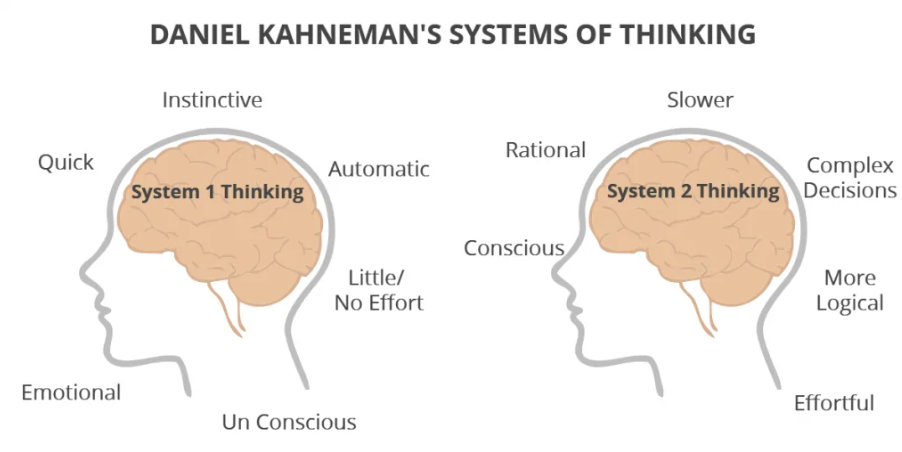
Daniel Kahneman’s bestseller Thinking Fast and Slowclaims that human decision making is subject to many follies, biases, and inherent human laziness. Daniel is also a Nobel Prize winner and is acknowledged as the father of the field of Behavioral Economics.

The basic idea of “Thinking fast and slow” is that we have two modes of thinking. The first mode is called System 1 (S1). This is intuitive in nature, it is emotional and acts automatically and quickly. It is based on mental rules of thumb (heuristics) and biases (cognitive). This system doesn’t involve much effort. It is often sloppy and wrong.

The second mode of thinking is System 2 (S2). This is rational thinking. In contrast to S1, this type of thinking is slow, deliberate and often requires significant effort. It doesn’t just go by intuition or gut but is more instilled in reason or logic. This thinking is often much more accurate or precise. As this type of thinking is effortful, the human brain has limited capacity for this kind of thinking.

Back to procrastination. Your System 1 thinking is created to protect you, and when fear arises, your nervous system will “kick in” to “defend you” through the subconscious. The irony is that we unknowingly train ourselves to dread some things by associating incorrect meanings with them. Nothing in life has any significance until you give it that significance. You physically “store” neurological connections to events in your nervous system so that you can act fast and efficiently the following time. Whenever anything happens to you, the way you describe the event to yourself gives it significance. Unconsciously, you’re continually trying to figure out what anything means, and at the most basic level, you’re trying to figure out if it implies pain or pleasure. This meaning is then stored in your subconscious mind, where it will later help you act (or re-act) properly. The problem is that when associations are reinforced, beliefs are formed that have a significant impact on your behavior and are frequently the source of procrastination.

Despite the fact that procrastination defies logic, it exposes a lot about your unconscious and self-imposed limitations and (in)abilities. Worry, primarily the fear that taking action would result in discomfort or a terrible experience of some type, is the leading cause of procrastination. Your unconscious mind mixes and searches its “files” to create a “link” that connects the action to an unpleasant event. This might be anything from a minor annoyance to something that is really painful. Even if you consciously desire to do something, your unconscious mind will stop you because it links the activity with pain. As humans, we instinctively seek comfort and will nearly always choose whatever seems most comfortable at the time. This is why you delay on chores that don’t feel good right now but will provide you a lot of joy in the future.

Learning (System 2) to fight against this drive for comfort is what leads to all of the essential progress for you to achieve actual success. When you consider procrastination as a gift in disguise, you may begin to exploit it and benefit from the behavioral insights it provides. Procrastination exposes your worries and, by design, provides the necessary resistance for you to expand and grow in your ability to push through your fears and build the lifestyle you truly desire. The amount of “discomfort” you can comfortably live with determines the quality of your experience. Procrastination may also shed light on the goals that you value the most, as your anxiety over postponing demonstrates that some part of you cares enough to be concerned.

It’s been stated that we shape our habits first, and then our habits shape us. This is also true of mental habits, and procrastination is frequently manifested as a regular pattern of thought. Your ideas influence and are influenced by your actions. Your behavior will “play the same song” every time, like the etched pattern on a record. Your connections with pain and pleasure play a significant role in determining what you will or will not do in your regular behavior. When your habit pattern is triggered, you create habitual thought patterns that drive you to automatically act or withdraw in specific ways.

In order to address the core cause of procrastination, you must be conscious of your associations with pain and pleasure. There are several symptomatic remedies that will not provide a long-term solution. Although willpower is required at first, the goal is to re-establish your associations with the tasks you are avoiding. If you can overcome your self-imposed anxieties and take action, you can be, do, or have anything your heart desires. Although the root of procrastination is in your subconscious mind, your conscious actions are ultimately in charge.

Become A Better Storyteller

What type of communication is the most memorable? Of course, it’s a nice old-fashioned story! A good narrative may connect the mind and the soul in a variety of ways, including parables, fairy tales, and fables.

Storytelling is a long-standing practice that is both amusing and useful in conveying knowledge on practically any topic.

Any classroom will have teachers using stories to educate their students. When you walk into a large firm, you’ll see high-profile CEOs telling their staff anecdotes about their beliefs, opinions, and facts. Storytelling is a strong form of communication and a powerful one when selling.

Why is it important to tell stories?

It’s been revealed that we all have a want, if not a need, to tell and listen to stories.

We grow to understand one another on a much deeper level through exchanging stories with others and engaging in shared experiences. We join together as a community of persons by reaching a shared level of understanding, recognizing both our differences and our similarities.

You may use stories to express your thoughts, feelings, and experiences. By doing so, you’re verbally expressing the things you value, the traditions you follow, and the life lessons you’ve learned.

“Storytelling is our obligation to the next generation. If all we are doing is marketing, we are doing a disservice, and not only to our profession, but to our children, and their children. Give something of meaning to your audience by inspiring, engaging, and educating them with story. Stop marketing. Start storytelling.”

Laura Holloway, Founder & Chief of The Storyteller Agency

Have you ever felt like there was nothing interesting to say? If that’s the case, you’ll be relieved to learn that you have numerous stories ready to be shared. You can build a greater connection with others by improving your storytelling skills.

How to Become an Excellent Storyteller

You can become a terrific storyteller even if you’ve never told one before! Your narrative talents will develop with a little work and practice, and as you do so others will be drawn to what you have to say.

Here are four fundamental approaches for telling outstanding stories:

1. Make sure your presence is noticeable. Whether it’s a small group of friends or a large audience, you must grab the attention of your audience. You’re halfway there if you can attract your audience! What can you use as an opener? A segment from your favorite tv series, or a clip from your favorite movie, a funny joke can be used to set the tone of your story.

• Self-assurance is important in making your presence known in a room. You’ll have a hard time capturing your audience’s attention if you lack the confidence to push outside of your comfort zone and be confident.

2. Engage and connect with your audience. It’s crucial to make an emotional connection with your audience. If you can accomplish this, you’ll pique the audience’s curiosity and your narrative won’t fall on deaf ears. This entails knowing who they are, what they want, why they’re there, and how to communicate with them. What challenges or opportunities is your audience being faced with that you can empathize?

• Interact with your audience on an equal footing. Your ego should not lead to a condescending tone of voice, nor should your shaky self-confidence make you fearful. Remove any negative views or mental negative self-talk.

• Match your tone of voice to the audience you’re conversing with. When speaking with college students vs a PTA group, phrasing should match the audience. Try to pinpoint exactly what the audience goes through on a daily basis and express that story.

3. Make eye contact with your audience, when possible. It’s too easy to stare at notes, or keep our focus on slides all while avoiding eye contact with the audience. When delivering anecdotes, professional speakers employ a simple technique; audience participation. You can pose questions, plan activities, or have someone share their experiences with you. This engages your audience because they get involved in the story.

• Use humor to engage and communicate with your audience, but don’t overdo it. It’s difficult for both the storyteller and the listener to force comedy into a story where it doesn’t fit. While humor is one of the best ways to connect with an audience, be careful that it’s relevant & topical or you risk losing the attention of the audience.

4. Share your knowledge. Your audience is looking for information. They don’t just want to learn about you; they want to learn something useful that they can apply to their own life. Structure your story such that there is a predicament as well as a solution or moral, so that the audience may relate with the story’s deeper meaning.

  • If you’ve ever felt imposter syndrome this is where it turns on for many people. It’s easy to think and feel what you have to say isn’t important or unique. If your goal is to allow others learn from your experience there will undoubtedly be someone who has struggled or will struggle with what you’ve experienced. It just may be that they’ve struggled with sharing their experience and that’s what they learn from your story. Kick that feeling of imposter syndrome to the side and do it anyway! That just may be the more important part of the story.

You can engage with your audience on an emotional level and communicate with them when you have their undivided attention. This allows you to better relate with their personal issues and keep them on the edge of their seats. It only takes a little practice!

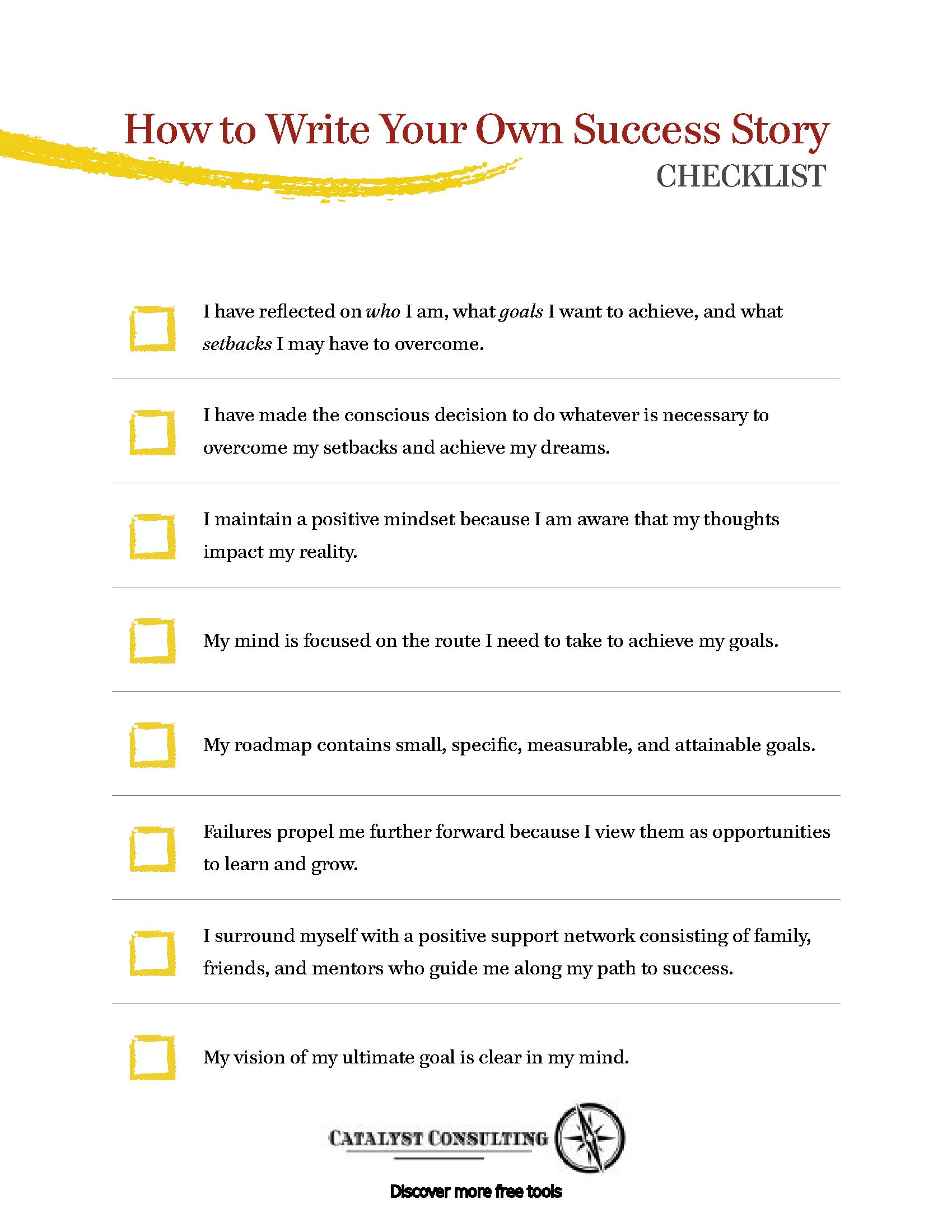
I’ve coached numerous sales professionals, business owners, managers, and leaders on Overcoming Obstacles. An exercise I often do is to have participants write out their own success story. I help them identify the main points of their own story and then put that into a narrative. Below is a checklist on How to Write Your Own Success Story. Follow these thought joggers and create your own narrative for your next story.