Become A Better Storyteller

What type of communication is the most memorable? Of course, it’s a nice old-fashioned story! A good narrative may connect the mind and the soul in a variety of ways, including parables, fairy tales, and fables.

Storytelling is a long-standing practice that is both amusing and useful in conveying knowledge on practically any topic.

Any classroom will have teachers using stories to educate their students. When you walk into a large firm, you’ll see high-profile CEOs telling their staff anecdotes about their beliefs, opinions, and facts. Storytelling is a strong form of communication and a powerful one when selling.

Why is it important to tell stories?

It’s been revealed that we all have a want, if not a need, to tell and listen to stories.

We grow to understand one another on a much deeper level through exchanging stories with others and engaging in shared experiences. We join together as a community of persons by reaching a shared level of understanding, recognizing both our differences and our similarities.

You may use stories to express your thoughts, feelings, and experiences. By doing so, you’re verbally expressing the things you value, the traditions you follow, and the life lessons you’ve learned.

“Storytelling is our obligation to the next generation. If all we are doing is marketing, we are doing a disservice, and not only to our profession, but to our children, and their children. Give something of meaning to your audience by inspiring, engaging, and educating them with story. Stop marketing. Start storytelling.”

Laura Holloway, Founder & Chief of The Storyteller Agency

Have you ever felt like there was nothing interesting to say? If that’s the case, you’ll be relieved to learn that you have numerous stories ready to be shared. You can build a greater connection with others by improving your storytelling skills.

How to Become an Excellent Storyteller

You can become a terrific storyteller even if you’ve never told one before! Your narrative talents will develop with a little work and practice, and as you do so others will be drawn to what you have to say.

Here are four fundamental approaches for telling outstanding stories:

1. Make sure your presence is noticeable. Whether it’s a small group of friends or a large audience, you must grab the attention of your audience. You’re halfway there if you can attract your audience! What can you use as an opener? A segment from your favorite tv series, or a clip from your favorite movie, a funny joke can be used to set the tone of your story.

• Self-assurance is important in making your presence known in a room. You’ll have a hard time capturing your audience’s attention if you lack the confidence to push outside of your comfort zone and be confident.

2. Engage and connect with your audience. It’s crucial to make an emotional connection with your audience. If you can accomplish this, you’ll pique the audience’s curiosity and your narrative won’t fall on deaf ears. This entails knowing who they are, what they want, why they’re there, and how to communicate with them. What challenges or opportunities is your audience being faced with that you can empathize?

• Interact with your audience on an equal footing. Your ego should not lead to a condescending tone of voice, nor should your shaky self-confidence make you fearful. Remove any negative views or mental negative self-talk.

• Match your tone of voice to the audience you’re conversing with. When speaking with college students vs a PTA group, phrasing should match the audience. Try to pinpoint exactly what the audience goes through on a daily basis and express that story.

3. Make eye contact with your audience, when possible. It’s too easy to stare at notes, or keep our focus on slides all while avoiding eye contact with the audience. When delivering anecdotes, professional speakers employ a simple technique; audience participation. You can pose questions, plan activities, or have someone share their experiences with you. This engages your audience because they get involved in the story.

• Use humor to engage and communicate with your audience, but don’t overdo it. It’s difficult for both the storyteller and the listener to force comedy into a story where it doesn’t fit. While humor is one of the best ways to connect with an audience, be careful that it’s relevant & topical or you risk losing the attention of the audience.

4. Share your knowledge. Your audience is looking for information. They don’t just want to learn about you; they want to learn something useful that they can apply to their own life. Structure your story such that there is a predicament as well as a solution or moral, so that the audience may relate with the story’s deeper meaning.

  • If you’ve ever felt imposter syndrome this is where it turns on for many people. It’s easy to think and feel what you have to say isn’t important or unique. If your goal is to allow others learn from your experience there will undoubtedly be someone who has struggled or will struggle with what you’ve experienced. It just may be that they’ve struggled with sharing their experience and that’s what they learn from your story. Kick that feeling of imposter syndrome to the side and do it anyway! That just may be the more important part of the story.

You can engage with your audience on an emotional level and communicate with them when you have their undivided attention. This allows you to better relate with their personal issues and keep them on the edge of their seats. It only takes a little practice!

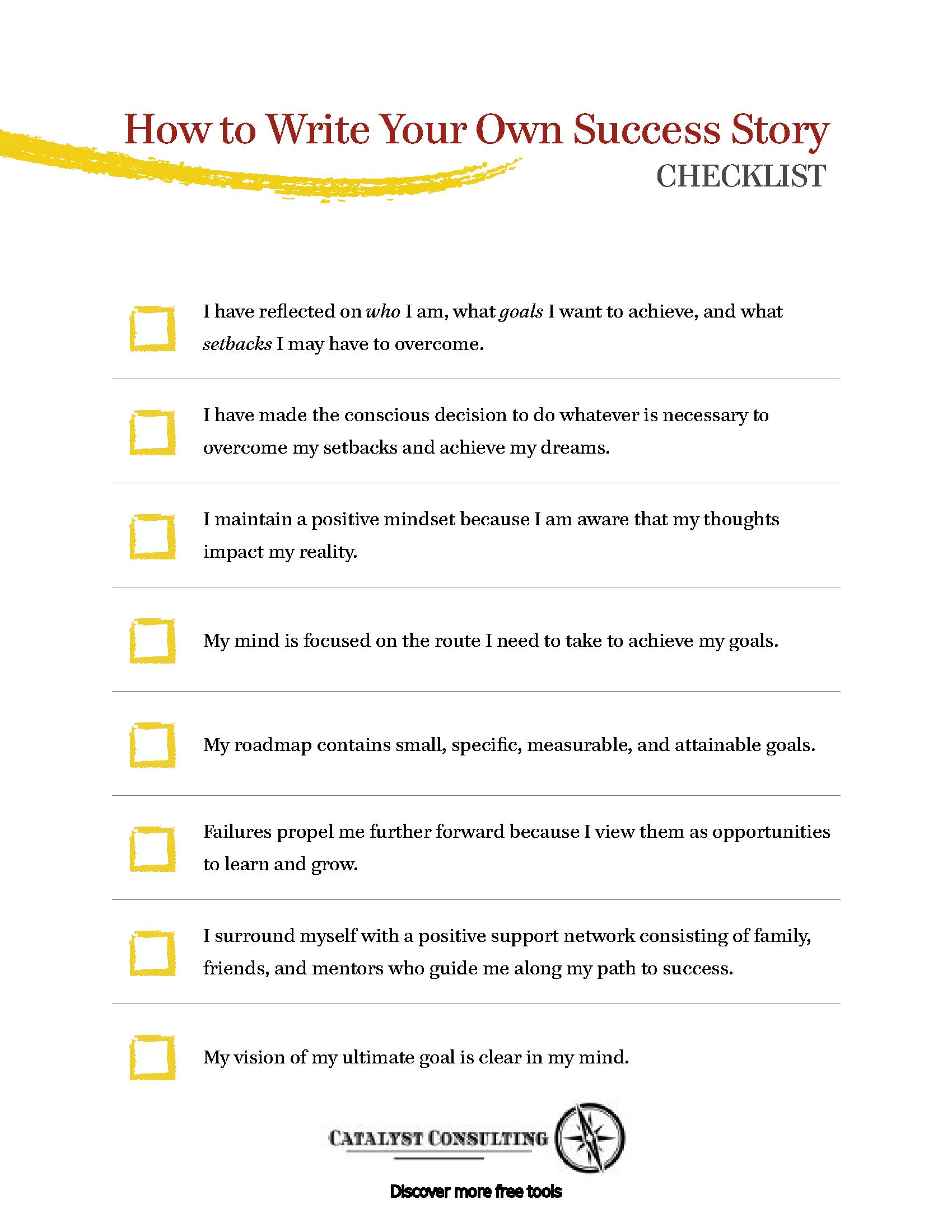
I’ve coached numerous sales professionals, business owners, managers, and leaders on Overcoming Obstacles. An exercise I often do is to have participants write out their own success story. I help them identify the main points of their own story and then put that into a narrative. Below is a checklist on How to Write Your Own Success Story. Follow these thought joggers and create your own narrative for your next story.

How To Push Through When You Feel Like Quitting

There are times in our career when we want to throw our hands in the air and shout, “I quit.” If working on something is affecting your mental health in a negative way, then it’s time to give up. Quitting, resetting, and rethinking what you’re doing are all acceptable options. Then go on with a new strategy. When you want to quit, but there isn’t a big reason why you should, look at the main reasons to keep going. 
Understanding why you must break through the wall is a rather straightforward process………. It is referred to as the “Big Why?” You’re more likely to give up if your why isn’t clearly defined. The simple act of sitting down and writing out all the reasons you shouldn’t give up might often be all you need to keep you going. Consider whether you are doing it for yourself, and why you deserve it. If you’re a parent, you might look back on your youth with a sense of wanting to create something better for your children than you experienced growing up. You believe your family deserves better, and going the extra mile is more than worth it to you since you care so much about them. If you haven’t heard of Simon Sinek, he’s most notably known for his TedTalk titled; How Great Leaders Inspire Action. The focus on his talk was around the importance of answering the “Why” question and what is now known as The Golden Circle. Below is a video from Sinek where he describes how he came to this realization, and how the WHY movement has grown.

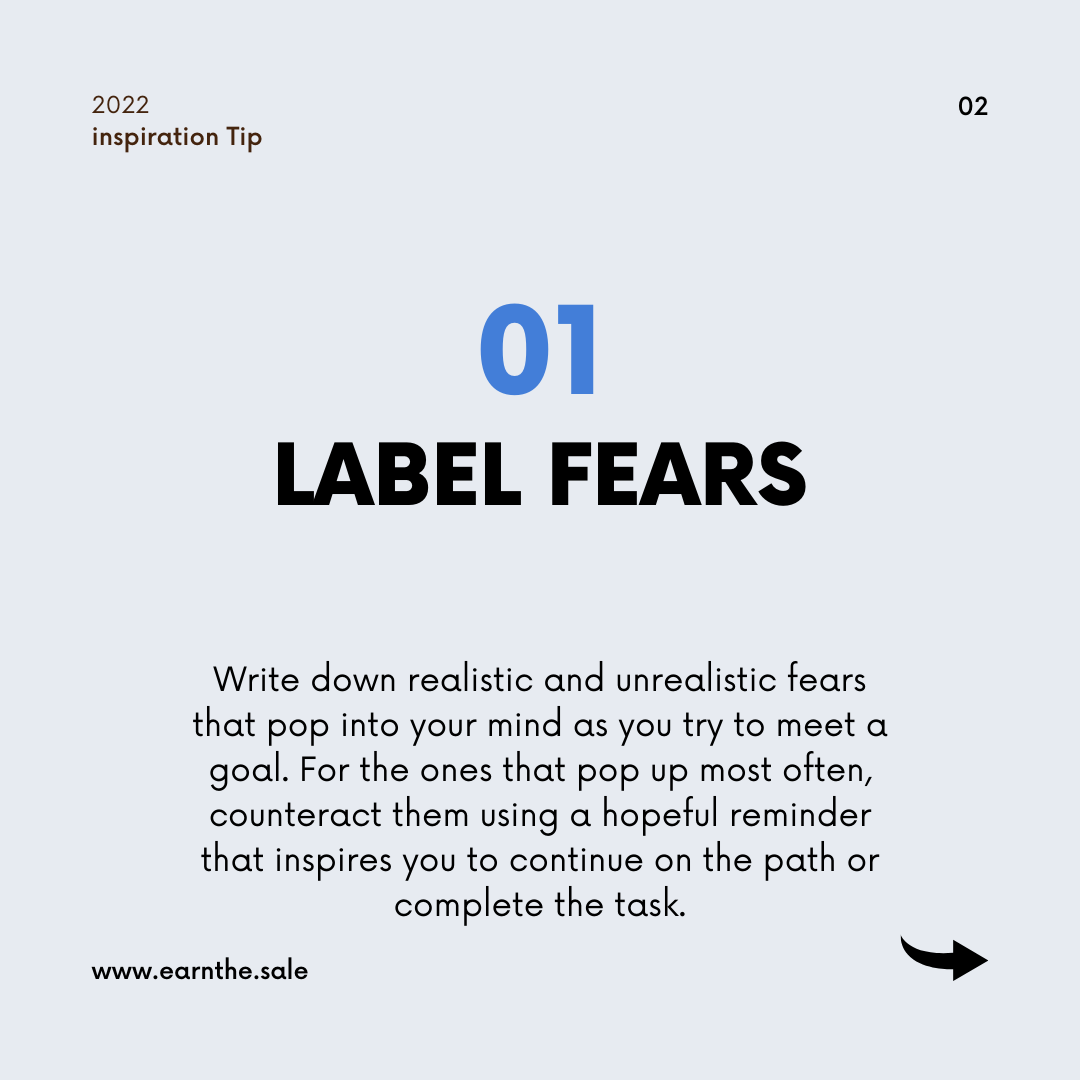
You’ll need to keep reminding yourself that there are going to be a lot of obstacles in the way. Sit down, clear your mind and contemplate the obstacles before you. Ask yourself if they are truly obstacles preventing you from moving forward or if your imagination is exaggerating their magnitude. We often embellish an event by adding in negative self-talk and actions that did not take place. For example, a negative self-image perceives the act of feedback as criticism rather than coaching. Our minds are capable of creating fears, but sometimes those fears are filled with pain when they don’t have to be.

Replaying breakthrough moments in your imagination might help you avoid picturing hurdles in your mind. Fake obstacles will have a hard time taking root in the wake of such positive reflection. Breakthroughs occur to everyone at some point in their careers. It might be anything as basic as suffering through two years of an entry-level position before suddenly finding purpose in this experience as a stepping stone to a promotion. You may have spent years attempting to be the best salesperson in your company, only to come in second place. After that, you took your frustration and channeled it into action, putting in the time and calls necessary to get to the top. The thrill of achieving such a significant goal and receiving such recognition was priceless.

When someone says they have no recollection of a time when they were a winner, then make one. If you give it enough focus, your brain can’t discern the difference between a real occurrence and one you’ve made up. In Psychology this process is known as the Pygmalion Effect. Think back to a time when someone believed in you, and in doing so gave you the self-belief to push through. Describe how you “rose to the occasion” when confronted with a serious obstacle and smashed through it. Put your heart and soul into it, and imagine yourself leaping up and down and yelling, “I did it!”. In your mind’s eye, you’ll be able to see this scene in motion. This happens all the time in sports. Basketball’s finest free-throw shooters have a mental picture in their heads that encourages them to make their shots. After bouncing the ball around a few times before shooting it, they see and feel themselves on the line, ready to go. In this mental replay, there are no rim bouncers.

Stop and take a breather when you’re feeling overwhelmed. What may initially feel like a need to quit is simply a need to take a break . Take a deep breath, then turn off your phone and disconnect from email, social media, and constant notifications. For me getting outside and connecting with nature helps me reset. The only thing that matters is whether or not you are moving and smiling at the same time. Don’t worry about why you decided to rest for a few days. A mental and physical break is the only solution. Once you feel a sense of rejuvenation begin the process of refocusing on what you want and why you want it, then take huge action to get there.

Coaching as a Catalyst

Is it satisfying to see an employee learn from you and then use that knowledge to build a successful career of his or her own, or does it feel unfair?

“It’s not difficult to make a buck.” Making an impact is far more difficult.” Tom Brokaw 

After all, wasn’t it your expertise, your sweat, and your time that helped them get to the point where they understood enough to create the new found success?

“You can’t take anyone else any further than you’ve gone.” Mauch, Gene

It simply doesn’t seem right, doesn’t it?

“It’s never crowded on the extra mile .” – Unknown Author

What if you hired a revolving door of staff on a semi-regular basis? Would that alter your viewpoint?

Have I lost you? Let me see if I clear this up. 

In my opinion, success in life may have less to do with how much money you make and more to do with what you do for others. It’s more about lifting someone up than it is about putting them down.

“We make a living by what we get, but we make a life by what we give.” – Winston Churchill

When you reach a high level in business, you have two options: you can either help someone from the bottom rise to the top and encourage them to do so, or you may strive to make those below you subject to your demands. Always be sure that the person you choose to assist you is interested in climbing.

“There is no use whatever trying to help people who do not help themselves. You cannot push anyone up a ladder unless he is willing to climb himself.” – Andrew Carnegie

Surround yourself with team members who are eager to walk with you up the ladder of success and empower them as they want to strive for their best – or discover their own ladder. When you engage in their success you both win.

When everyone wants to be served but no one wants to serve, society and business’s collapse, or, as one children’s program put it, “when everyone hides and no one seeks, it’s no longer the fun game you thought it was.” When business people realize they have a platform to help the next generation by serving as mentors, their attitude and purpose may take on a whole new meaning.

“Everybody can be great. Because anybody can serve. You don’t have to have a college degree to serve. You don’t have to make your subject and your verb agree to serve…. You don’t have to know the second theory of thermodynamics in physics to serve. You only need a heart full of grace. A soul generated by love.” –Martin Luther King, Jr.

How are you using your position to improve the future? What success stories do you have of team members who have gone on to outperform their mentor? How do you feel about that? Were you the one that outperformed your mentor? Have you expressed your gratitude to them?

Be a Catalyst.