The #1 Thing Standing In Your Way In 2022

“Only when we are no longer afraid do we begin to live.”

Dorothy Thompson

Photo by Simon Watkinson on Unsplash

Imagine this: you are sitting on the phone as it rings your most sought-after prospect. They could be worth millions in business to your company and landing them would garner you a lot of attention in the office. Not only do you have the best product for them, but you will legitimately solve real problems for them and their business.

Now imagine what the reality is: You’re envisioning of landing this top client, shaking hands on a hard-fought deal. But instead of implementing the steps to get you closer to your dream client, you feel fear. You begin to feel ill-prepared, what if they ask you a question you don’t know the answer to? You begin to hope it goes to voicemail (again) so you’re not faced with any challenges. When asked again by your manager of the progress on this dream client, you can respond again “Called again today, didn’t answer so left them a voicemail”. What if they call you back? What would happen if you stumbled on your words? What if…?

Living in fear, keeps us form taking the risks and chances to go for what we truly desire. It keeps us from finding reaching our full potential and enjoying more from our efforts and work.

Happiness isn’t defined by what you have; where you live; where you go; or the people you love. True happiness is a feeling. It’s something you feel deep inside about yourself and believe yourself to be. But to find it you must face the fears keeping you paralyzed.

When we have fears, we feel unsafe, we feel unsure, we lack confidence. Facing our fears and getting out of our comfort zone is hard because of how our brains are naturally hard wired to expect the worst-case scenario. Our brains naturally send us negative information because it is trying to keep you safe.

So how can you approach work in a way free of fear and be truly happy?

Every salesperson has fears. It’s normal. It’s how we react to them that makes the difference in how we feel. But you might find yourself weighed down with too much fear that’s preventing you from being truly happy. If that’s the case, it’s time to get familiar with your fears and find ways to work through them.

Here are 4 common fears and ideas to help you deal with them.

  1. Fear of failure. This is a common fear, often stemming from our childhood. Fear of failing a test, for example. This fear brings on the feeling of being judged or embarrassed. In reality, failing is part of success. Overcome this fear by not worrying about the outcome and only focusing on the process of getting to success. At the end of the day, you don’t DO a result. Results come from following a process so by switching your focus from results to process helps avoid some of the fears associated with failure.
  2. Fear of success. This fear stems from many different fears: fear of change, responsibilities, attention, vulnerability, and many others. The best way to overcome this fear is to focus on one step at a time while moving forward.
  3. Fear of rejection. First off, if you’re in sales and you have a healthy fear of rejection you’ve picked a very interesting career. The fear of being rejected is a reaction to our innate need for belonging. It can include fears of being judged, not being liked, or being alone. To overcome this fear put yourself out there, reminding yourself that the right people will respond to you favorably. Detaching yourself from the outcome and focusing on the process also helps with the fear of rejection.
  4. Fear of not being good enough. This fear is rooted in how we feel about ourselves. Our low self-esteem keeps us from not trying because of a lack of confidence. You can overcome this fear by starting small with things you know you can accomplish. Keep doing more steps to build your self-confidence. By consistently challenging yourself that when you feel this fear, and do it any way, you begin to build a resiliency to the fear of not being good enough.

We all have fears of some kind. They may seem rational to us but appear irrational to others. To overcome your fears, you need to understand why you have them and then work on facing them so you can begin to experience more joy in the work you do.

Hey Leaders! Are you guided by intuition or ego?

Photo by Orkun Azap

When you are a new leader or manager it’s not always easy to tell if your choices are coming from the right place. Experience and time will bring insights, but how can you speed up the learning process and ultimately make better decisions? Learning from others is one way to shorten the learning curve. As a leader, learning the difference in how I have used intuition or ego in my decision making process has provided me a mental roadmap. Following your gut might be easier for some, but could lead to bad results and without examination there is no process to prevent the same results from happening again. Follow your ego and you might be successful in many ways, but you’re likely to find yourself wondering why you’re not as happy and ultimately not as effective as you could be as a leader. 

Learning how to determine whether my decisions were guided by intuition or ego has made a huge difference in my approach to decision making. While there are no hard and fast rules to make the distinction, there are tendencies that I have personally found that can serve as a guide.

First let me start by stating, fear is the single biggest obstruction to the ahievement of anything.You must first start with this understanding. 

Consider these differences:

1. Ego-based decisions are grounded in fear and self-preservation. If you decide to go into management or leadership primarily for reasons of financial security, that’s ego. If you decide to not engage in a new coaching process out of fear of looking unauthetic, that’s ego.

2. Ego-based decisions typically have emotion connected to them. A choice made from a place of intuition just feels “right” and often comes out of left field. You might be in the middle of a Netflix series and are hit with the realization that you should be spending time with your reps in the field. The resulting battle in your head is your ego fighting back.

3. Ego-based decisions consider external results. Are you leading a sales meeting in order to establish control, or are you leading a sales meeting because you’re fascinated with the idea of inpsiring, teaching, and motivating people? Are you taking an action to gain certain results, or does the action itself provide sufficient satisfaction?

4. Ego-based decisions involve rationalization. Your ego is wonderful at convincing you that its choice is the right one. “I’ll never get that job. Imagine how disappointed I’ll feel when it doesn’t work out. People like me are destined to only be supervisors, but there’s nothing wrong with that. I can still have a decent life.” 

* It’s really just a rationalization based on fear – fear of success or fear of failure. ((not convinced there’s a real fear of success? See the Icarus Deception))

* The ego tries to justify itself with facts, figures, and logic. Intuition doesn’t require these tricks to compel you. If you’re using logic to convince yourself of a course of action, you can bet that’s your ego squawking. 

5. Intuition doesn’t judge. A thought or decision arising from intuition doesn’t involve judgment statements about right or wrong, good or bad. Intuitive thoughts feel calm, relaxed, and peaceful. There’s a universal truth to an idea that arises from intuition.

6. Is the expected gratification coming from within or is it external. Would you make the same choice if no one would ever know? Would you purchase that BMW if no one ever knew you owned it? Or do you simply love German automobiles and love the idea of owning a precision car? Are you driven by money and admiration or by personal satisfaction in up-lifting others?

A mentor of mine told me a story that I think illustrates this point. He shared with me; there was an armored truck full of money that flipped over making a sharp turn while going too fast. As the truck tipped over all of the money that was loaded in the back blew across the streets. On the sidewalks stood groups of individuals. One group went running to grab up as much money as they could hold. Another group rushed to the truck to provide aid to the drivers, while others stood back and called 911. As he finished the story- he asked; which group would you be in and how long would it have taken you to decide?

While the ego can be very limiting, that doesn’t necessarily mean that it’s wrong. Remember that the ego’s motivation is largely based on self-preservation. Your ego believes that it has your best interests at heart. Ignoring the ego can be challenging. It uses fear to influence you. It’s only natural to avoid fear and seek comfort.

The trick is to realize when fear is holding you back from something bigger and better. As a leader not only is that fear holding you back, but it is also indirectly holding back those that you lead. Think before choosing which voice to follow: use these tips to help you make a decision that will bring you more joy, bring better results, and make an impact on those you lead.

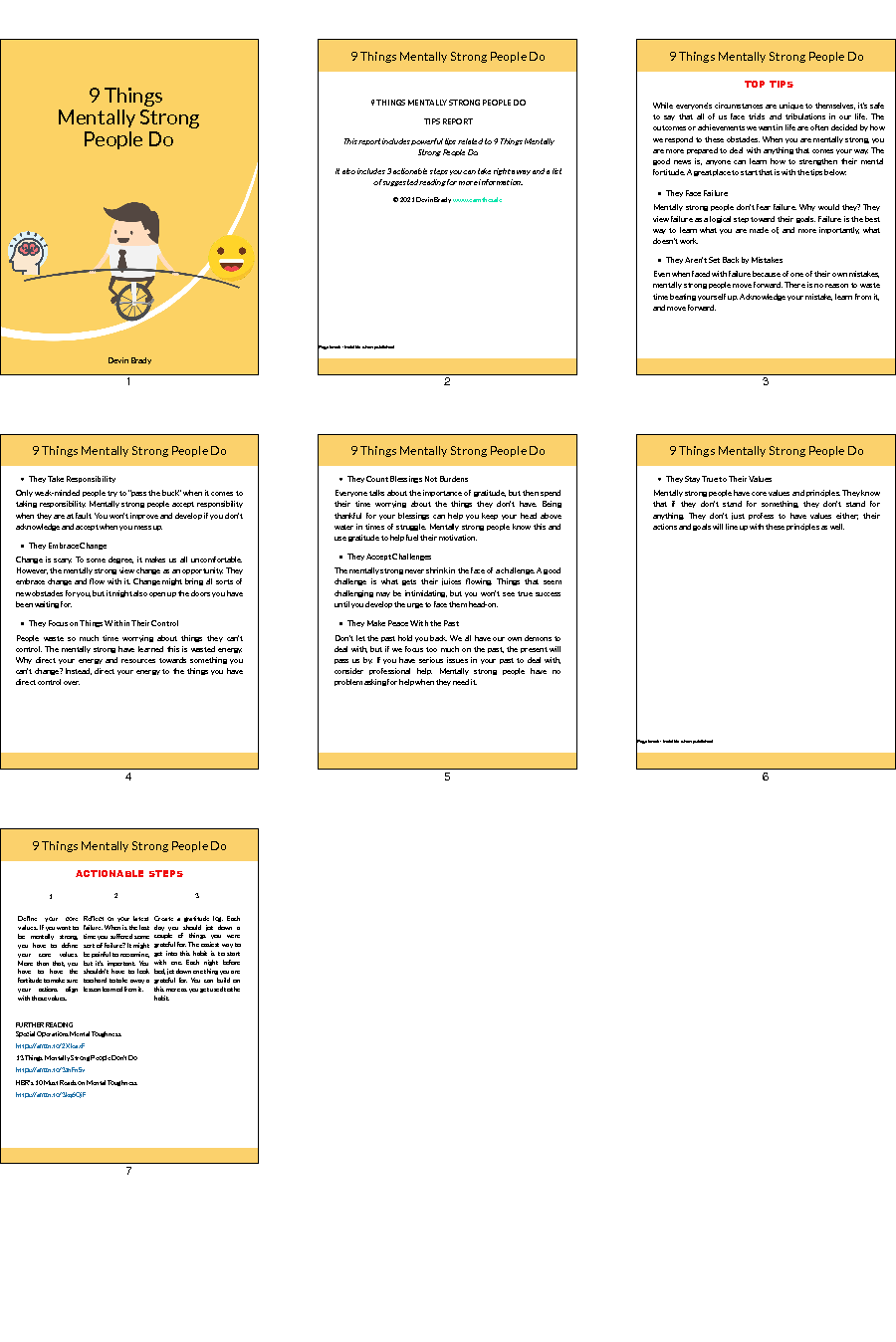
9 Things Mentally Strong People Do (VIDEO & eReport)

Subscribers are welcome to use the download link below and get the eReport on 9 Things Mentally Strong People Do. The eReport provides 3 actionable steps that you can use right away and a list of additional resources for suggested reading.

Are You Being Assertive or Selfish? Discover the Difference

In the fine art of finesse, you get much better results when others perceive you as being assertive rather than selfish. Either way, you’re letting others know what you want or need, so why is there such a difference?

Assertiveness is a positive quality that makes others feel good about helping you get what you want. On the other hand, selfishness pushes others away. It makes them want to keep you from getting your way!

Let’s look at some examples:

Selfish

When you appear selfish, it looks like you’re concerned only with yourself and your advantage to the exclusion of the feelings, wants, and needs of others. Your focus is completely on you. This might trigger others to feel negatively toward you.

You could come off as demanding or even rude when you’re behaving selfishly.

Selfish Examples

  • John said, “I’m in need of a decision now and I don’t want to wait two more hours to learn what it may be. Let’s go to the point right now!”
  • Susan loudly demanded the salesperson send her a revised contract because the terms weren’t clear enough for her.
  • Jane insisted that she be first to get into the que for receiving her product when she was late placing her order. “My timeline is now all screwed up”

Assertive

When you’re assertive, you appear self-assured, confident, declarative, definite, emphatic, and positive about what you want.

You might not like the way something has taken place, but you’re able to stand up for yourself and appropriately say what you require. You have no malice toward others and you’re not feeling frustrated.

You’re simply asking for or stating what you want to happen with confidence and courtesy.

Assertive Examples

  • Jim said, “There’s no rush in requiring a final decision and I know we’ll need to wait a few more hours. I’m going to work on a few of the other details in the meantime. What day & time would be best to take delivery?”
  • Gloria was subtle as she noted to the salesperson and spoke quietly. “I’d like to understand what I’m signing. Could you please outline these terms & how they apply to me? I’d really appreciate it.”
  • Julie was concerned about a few of the home projects she’s lined up. She said to Michelle, who took her order, “Since I have a few projects that I’m coordinating, could I get updates as to any delays so that I can be proactive in addressing how it may impact my other projects?”

What would your natural reactions be to these requests? Considering the feelings of others can make all the difference – regardless of what you’re asking for.

Your Own Feelings When Being Selfish or Assertive

You can determine whether you’re acting selfish or assertive, depending on how you’re feeling when you make a request:

Selfish

  • When you’re reacting in a selfish way, you’ll often find yourself experiencing negative feelings. You can’t figure out why others don’t see that you’re unhappy or not getting the attention you deserve. Why don’t they understand?
  • You may feel frustrated or short-tempered.
  • You want your way. You want what you want when you want it. And you want it now!

Assertive

  • On the other hand, when you’re assertive, you likely don’t have negative feelings. You’ve thought about what’s going on and realized your needs weren’t being met so you stepped forward to state them succinctly and without negativity.
  • You have no negative or hidden agenda to “get back” at someone or loudly demand what you believe you should have.
  • You feel you can calmly state what it is you’re after. It’s clear and understandable. You just want to resolve the situation.

Use these points to determine whether you’re behaving selfishly or assertively. Strive to use assertiveness to help you accomplish your goals and you’ll find that you get where you want to be much quicker.

Helping Others Achieve Career Success

One of the most rewarding experiences for many people is helping someone else succeed. You can do this in many ways. Among the best is finding a way to help someone with his or her career. A fulfilling career can produce a lifetime of joy and, with some effort, you can help others experience that joy.

 When you help others achieve career success, you give them a priceless gift. There are many ways for you to help others advance their career in a way that allows them to reach their full potential.

Careers Are More Than Just Jobs

When you have a job, it’s often temporary. It might be something less than what you’re qualified for, or something you’re doing just so you can get by for the moment. When you have a career, it’s either something you went to school for, or have invested a considerable amount of time in and it is something you plan on doing for the rest of your life. Getting help to get that career started can make all the difference.

There are plenty of things that you can do to help others get their careers off the ground. Besides hiring them or giving them financial support, there are other ways to contribute to someone launching a new career. Consider the following options:

  1. Be a mentor for good work habits and perseverance. If the company does not have a formal mentorship program, volunteer for a less formal one.
  2. Teach others how to develop their skill set. The best way to learn is when you have to teach someone else. While this teaching is focused on building others up, it’s often the teacher that may benefit the most.
  3. Encourage others to volunteer in meetings, departmental projects, and/or social committees. This will help broaden their exposure to others in the company and build cross-collaborative relationships.

Those who see the job they do every day as part of a bigger career picture often get farther in their career and ultimately experience a greater sense of fulfillment. Instead of staying where they are, they always work to move forward with their professional lives. They might be interested in financial success, but they also want to do something with their lives that leaves their mark of contribution for those that follow.

Encouragement is Very Important to Success

 There are certainly stories of people who were successful without positive, encouraging words from others. But most of the successful people in their careers got there because they were told they had value. People in their lives encouraged them and told them how much they were capable of. By internalizing that information, they started believing it and putting it to good use.

With that in mind, ensure you encourage the people you work with. If you want others to see success in their careers, it helps if you let them know you believe in them. Sometimes all a person really needs is to know that his/her work matters and that he/she can make a difference. Having people that believe in you and your ability to deliver is very important.

Keep encouraging people to move forward with their career goals. Some of them may be lofty, but there’s nothing wrong with that. They need to know that they’re capable of more than what they’re doing now. When people see that they can accomplish more, they expand their thinking and rededicate themselves to their goals. You can be a part of their success story through your encouragement and support.

10 Secrets of Influential Leaders

Photo by Miguel u00c1. Padriu00f1u00e1n on Pexels.com

Influential leaders know how to motivate others. Since the amount you can accomplish on your own is limited, it’s necessary to have the assistance of others. Someone that can motivate others to do their best has an incredibly valuable talent. When you can inspire others, you can accomplish much more.

Motivate others to do their best:

1. Be emotionally supportive. Emotional intelligence is an important skill that leads to more effective leadership. To help others shine, removing the fear of failing or looking foolish is critical. Most people are frozen by fear and prefer to remain comfortable. When fear is greater than motivation, nothing happens. Removing fear can be just as effective as instilling additional motivation.

2. Provide additional support. Ask what resources are required. Foresight here is important, especially if the employee has limited experience in the role. A leaders ability to see around the corners and anticipate what roadblocks may prevent success will help build confidence in your employee. Determine what resources are required for success and provide them when its appropriate.

3. Follow up regularly. Show that you care by monitoring their progress. It’s enough to ask and then listen. Asking questions will also help to keep them on track.

4. Be publicly supportive. It’s one thing to support an employee in the privacy of your office. It’s quite another to be supportive in front of their peers.

5. Acknowledge and reward. Acknowledge progress and effort regularly. Everyone needs a little boost now and then. Ideally, give acknowledgement publicly. Conversely, your disgruntlement and any discipline should be handled privately. Results are important, but when the wrong outcomes occur it’s important to recognize the behaviors that bring about success more often that not.

6. Ask for ideas. You might hear a few ideas that are better than your own. It’s easier for others to get excited about their own ideas than to get excited about yours. Using ideas from your team will create a sense of purpose and involvement.

7. Be clear. Vagueness breeds confusion. Confusion saps enthusiasm. When the objective and the necessary steps are clear, motivation is easier to generate. Ensure that everyone is clear on their roles and the expected outcomes.

8. Set a good example. If it’s important to you, it will be important to your employees. Don’t underestimate the importance of identifying what’s in it for the employee in the end. Don’t just tell them it’s important, but show them by your behavior.

9. Create a vision. Paint a picture of the end result in the minds of those involved. The work is rarely enjoyable, but it’s the end result that matters. Keep reminding everyone of how great things will be when it’s over. The work is the path to reach that endpoint.

10. Deal swiftly with dissenters. It only takes one dissenting, charismatic employee to bring the whole thing crashing down. There’s often one complainer that tries to undermine the enthusiasm of everyone else. Don’t underestimate the damage this one person can do. Have a heart-to-heart conversation with them or move them out of the group.

  • Motivation isn’t just about remaining positive. It’s also about removing the obstacles. Dissenters are obstacles.
  • Encourage the sharing of opinions. However, once a decision has been made, expect cooperation.

Encourage others to do their best work or to follow that path that leads them to their most important goals. Motivating others is a skill that anyone can develop. You can only be as successful as your team. Avoid the belief that you can do it all alone. You can’t. 

Great leaders are tasked with the responsibility of inspiring others to be overachievers. It’s a challenging task, but if you’re good at motivating others, you’ll always be one of the most important people around.

A Calm Mind Makes Trying Times Conquerable

Difficulties give me an opportunity to exercise my focus and determination. During trying times I concentrate on maintaining a calm mind. This approach helps me to conquer the challenges that face me.

I avoid being reactive to difficult situations that catch me off guard. While it is easy to allow confrontation to anger me, I choose to take the higher road.

I spend a lot of time on nurturing my mind and spirit. I train myself to keep calm when that is the least natural approach. It forces me to develop the will to overcome the toughest situations.

When I encounter resistance, my first step is to silence the inner voice in my head that is reactive. I ignore the stirrings of impatience and anger that pull at me. I block them out completely.

I realize that giving in to negativity only serves to worsen any situation. My focus is on overcoming the challenge at hand by counteracting negativity with positivity and peace.

My wisdom in handling trying times encourages me to act from a place of calm reasoning. When my mind is calm, I am able to think things through. By rejecting unease at my core, I am able to make smart choices that produce better results.

Today, I am a conqueror. I can overcome any obstacle.

With serenity, I can see the value in all challenges that are presented to me. Even obstacles become worthwhile and meaningful when seen in this light.

Self-Reflection Questions:

  1. What exercises can I undertake to help me develop a consistently calm mind?
  2. How often do I encounter situations that are difficult for me to control?
  3. What assistance can I get from outside sources when dealing with trying times?

16 Empowering Beliefs to Live By

Your experiences are shaped by your thinking. Even obstacles have a value when you can see it. You can develop convictions that will help you to feel happier and achieve more, regardless of the situation.

Consider these empowering beliefs that you can start using today to transform your experiences through the power of positive thinking.

Empowering Beliefs to Make You Smile

  1. I understand my potential. You can achieve amazing results when you put your mind to it. Feel excited about reaching your true potential.

  2. Practice gratitude daily. List each thing that you have to be grateful for. Remember to include the smaller items, like warm socks or basic food on your table. Expressing your appreciation reminds you of how rich you are and leads to taking less for granted.

  3. I learn from mistakes. You can make setbacks work for you by focusing on the lessons that they contain. Flubbing one customer presentation can teach you how to ace the next one.

  4. I find meaning in adversity. Tough times can be the most rewarding phase of your life. Know that you can emerge from any challenge with greater wisdom and courage. Look back at the obstacles you’ve already overcome, and reassure yourself that you can handle what’s ahead.

  5. I embrace change. Accept that life is a series of changes. Focus on the present moment, and prepare yourself to adapt to whatever circumstances come your way.

  6. I dream big. Expand your wish list. Setting demanding but attainable goals gives you adventures to look forward to each day.

  7. I practice forgiveness. Lighten your load by clearing away any resentment you’re holding onto from the past. Set reasonable boundaries while you respond with compassion when others disappoint you. Pardon yourself too.

  8. I give generously. Sharing your blessings makes you more powerful and joyful. Volunteer in your community and do one act of kindness for a person you meet today. Buy coffee for your co-workers or bring your spouse a small gift home after work. .

Empowering Beliefs to Make You Strive

  1. I take responsibility. You are in charge of your life. Hold yourself accountable for the outcomes you create. Celebrate the fact that you have the power to determine your own future.

  2. I apply effort. Figure out your definition of success so you know what is worth working for. Give yourself credit when you’re making progress rather than comparing yourself to others.

  3. I leverage my strengths. You have your own individual strengths that you can draw on. Figure out what you’re good at and what you want to do. Let that knowledge guide your choices.

  4. I listen to feedback. Ask for feedback so you can enhance your performance and show others that you respect their point of view. You grow faster when you gather solid input that you can translate into action.

  5. I ask for help. Expand your capabilities by building a sturdy support network. Carpool with other parents. Divide up household chores with your spouse and children.

  6. I connect with others. Moral support counts too. Surround yourself with encouraging people and friends. Participate actively in your faith community. Join a club with members who share your interest in a particular hobby.

  7. I recognize opportunities. Stay alert for promising openings. You may meet a new friend while you’re standing in line to buy your morning coffee.

  8. I try new things. Be open to experimentation. Go kayaking one weekend instead of playing golf. Tackle that BBQ Brisket that you’ve been wanting to perfect or pick up a musical instrument. You may discover hidden talents.

An upbeat attitude increases your happiness and productivity. Question your old assumptions so you can replace them with a new sense of certainty about yourself and your future. Adopt empowering beliefs that build up your confidence and prepare you for greater success. Start today. You’ll be glad you did!