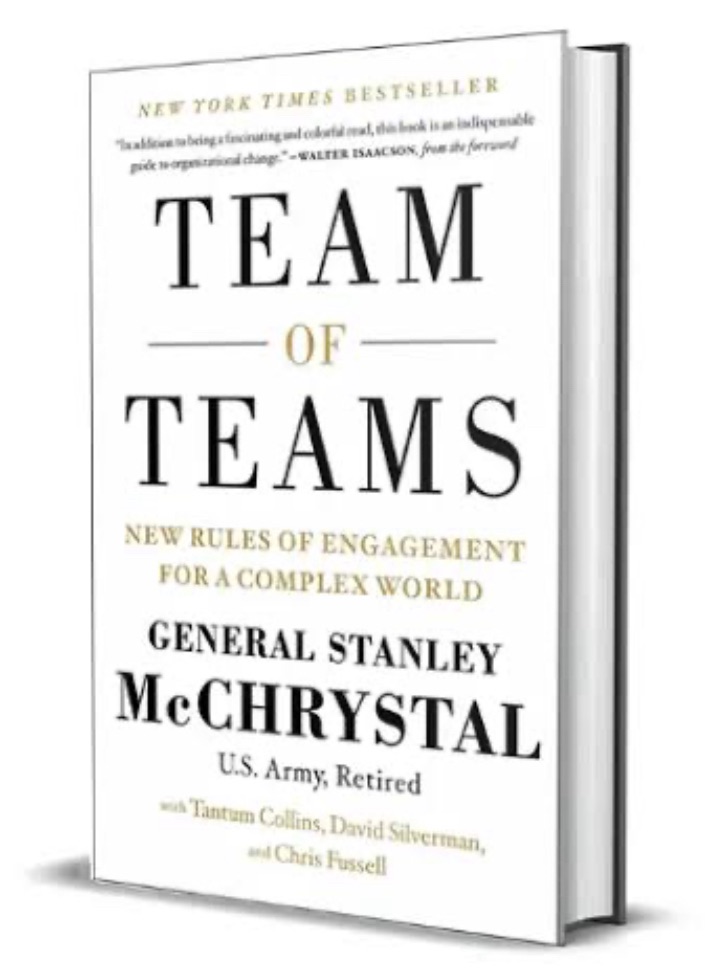
📚 Book Review: Team of Teams by General Stanley McChrystal

After six blissful days sailing through the Caribbean, I found not just a sun-soaked escape but also leadership insights in Team of Teams—a book that could prove to be impactful in the application of sales management and leadership.

General Stanley McChrystal’s Team of Teams is a thoughtful exploration of leadership, adaptability, and organizational transformation. Drawing from his experience leading U.S. military operations in Iraq, McChrystal offers a compelling case for rethinking how we structure teams and lead people in an increasingly complex and interconnected world. While its military origins may seem distant from the sales profession, the lessons within are profoundly relevant for sales leaders grappling with change, competition, and unpredictability.

The book blends gripping storytelling with strategic insights, grounded in both military history and modern organizational theory. A combination that I have grown to be very fond of. McChrystal balances tactical anecdotes with high-level ideas, though at times, the military-centric framing may feel overextended for readers outside that context. Nonetheless, the lessons resonate well beyond the battlefield, particularly in sales and sales management where adaptability and collaboration are essential.

Important Takeaways for Sales and Sales Management

1. Adaptability Over Hierarchy

McChrystal argues that rigid hierarchies fail in fast-changing environments. In sales, where market dynamics, customer behavior, and technology evolve rapidly, traditional top-down management can be a bottleneck. Sales leaders can apply McChrystal’s concept of “empowered execution,” enabling front-line sales teams to make decisions autonomously while staying aligned with the broader organizational mission. This shift expedites responsiveness to customer needs and accelerates sales cycles.

“Efficiency remains important, but the ability to adapt to complexity and continual change has become an imperative.”

2. Shared Consciousness: Breaking Down Silos

The book emphasizes the power of a “shared consciousness,” where information flows freely across teams. In sales, this translates into cross-departmental collaboration, integrating marketing, operations, and customer support with the salesforce. Sales leaders can adopt tools like regular alignment meetings, shared dashboards, and real-time communication platforms to ensure everyone understands both the big picture and their role in achieving it.

“The role of the leader is no longer to command and control but to cultivate and coordinate the actions of others.”

3. Building a Resilient Culture

Team of Teams highlights the importance of trust and transparency. I have seen firsthand how leaders often focus on hitting quotas but may neglect the cultural foundation that drives long-term success. A resilient sales culture, as McChrystal describes, values experimentation, rewards collaboration, and accepts failure as part of growth. This mindset is particularly valuable in navigating high-pressure environments and fostering innovation in sales strategies.

4. Managing Complexity with Networks

In an interconnected world, the traditional approach of managing individual contributors can fall short. McChrystal’s vision of transforming hierarchical organizations into dynamic networks of teams is directly applicable to sales. By creating agile, specialized sales “pods”—such as a team dedicated to key accounts or a rapid-response group for product innovation —organizations can improve efficiency and adapt to customer demands with greater precision.

Applications to the Sales Profession

Sales professionals operate in a battlefield of their own—one marked by fierce competition, changing buyer behaviors, and complex decision-making processes. McChrystal’s lessons offer a guide for sales leaders looking to evolve their strategies:

Strategic Flexibility: Empower sales reps to pivot tactics in real-time without waiting for managerial approval.

Data-Driven Decisions: Foster transparency by ensuring teams have access to the same data and insights, minimizing misalignment.

Team Dynamics: Shift focus from individual performance to team effectiveness, emphasizing collaboration and shared success.

While Team of Teams is rich with insights, its heavy reliance on military analogies may alienate some readers looking for more direct business applications. Some of the concepts, like “shared consciousness,” while inspiring, are more aspirational than prescriptive, which left me to think through practical implementation on my own. Less experienced sales leaders may find themselves wishing for more concrete tools tailored to their specific challenges. Additionally, the book could explore the emotional and interpersonal dynamics of leadership more deeply, an area especially crucial in sales management.

My Final Verdict

Team of Teams is a thought-provoking and transformative read for sales professionals willing to embrace change and challenge traditional leadership norms. It’s a wake-up call for those clinging to outdated, hierarchical approaches and a blueprint for building resilient, high-performing sales teams. While not a step-by-step manual, the principles in the book—adaptability, trust, transparency, and collaboration—can be a paradigm shift in how sales leaders approach their teams and markets.

For those in the sales profession looking to future-proof their strategies and lead with agility, Team of Teams can be a playbook for the new era of leadership.

P.S.

I did enjoy many other aspects of my vacation but this isn’t a travel blog 😃

Looking out over St. Thomas

Essential Resources for Building Resilience and Grit in Sales

Books

1. Grit: The Power of Passion and Perseverance

Author: Angela Duckworth

Angela Duckworth’s “Grit”

Duckworth’s acclaimed book dives into the science of grit, a key driver for long-term success. In sales, where persistence often separates top performers from the rest, Duckworth’s insights offer actionable steps for developing resilience. This book is packed with case studies and research that reinforces why passion and perseverance can elevate one’s career trajectory, making it an indispensable read for sales professionals who want to push past challenges and consistently close deals.

2. Mindset: The New Psychology of Success

Author: Carol S. Dweck 

Carol S. Dweck’s “Mindset”

Success in sales hinges on adaptability and a positive mindset. Dweck’s “Mindset” explains how shifting from a fixed mindset to a growth mindset can be transformational, especially when handling rejection or navigating challenging quotas. Her approach empowers salespeople to see setbacks as opportunities for growth, fostering an outlook that drives performance under pressure.

3. Navigating Through the Valleys of Success: A Perspective in Perseverance

Author: Cleon Joseph 

Cleon Joseph’s “Navigating Through the Valleys of Success”

Sales professionals often encounter obstacles that test their perseverance. Cleon Joseph’s book provides strategies for managing setbacks and maintaining focus during tough times. It’s a guide for any salesperson striving to develop mental resilience and maintain their drive, regardless of external challenges. Joseph’s perspective is a valuable resource for those aiming to maintain momentum in high-stakes environments.

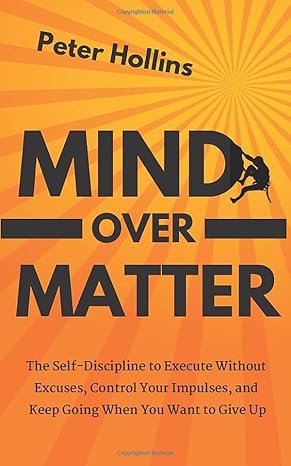
4. Mind Over Matter: The Self-Discipline to Execute Without Excuses

Author: Peter Hollins 

Peter Hollins’s Mind-Over-Matter-Self-Discipline

Self-discipline is at the heart of sales success. Hollins’ concise book on building self-discipline equips sales professionals with the tools to stay focused, control impulses, and push forward even when the pressure is high. With practical exercises and clear strategies, this book is a quick yet powerful read for anyone who wants to enhance their productivity and close deals consistently.

5. An Astronaut’s Guide to Life on Earth

Author: Chris Hadfield 

Chris Hadfield’s Astronauts-Guide-Life-Earth

Chris Hadfield’s experience as an astronaut offers unique insights into the importance of preparation and determination. Sales managers and team leaders will appreciate Hadfield’s lessons on staying calm under pressure, a skill as relevant in space as it is in the sales field. His book encourages sales professionals to adopt a meticulous approach to planning and to stay resilient when the stakes are high.

Videos

1. Grit: The Power of Passion and Perseverance | Angela Lee Duckworth

Angela Duckworth’s TED Talk breaks down the importance of grit in achieving long-term goals. For sales teams, this talk offers an inspiring reminder that sustained effort and resilience are often more critical than natural talent. It’s an excellent motivational tool for those facing demanding sales cycles.

2. Leadership – When It Matters Most: Courage Up! | John C. Maxwell

In this talk, leadership expert John C. Maxwell discusses the role of courage in high-pressure situations. Sales managers can use this to inspire their teams to tackle challenging quotas and pursue ambitious targets without fear, instilling a culture of resilience and boldness.

https://www.youtube.com/live/qLq87C7hWjY?si=M0IhEcSmSs2Zjzcl

3. Finding Your Resolve

This motivational video is designed to help viewers find their inner resolve. Sales professionals facing burnt-out or difficult market conditions can find encouragement here to persist and overcome, making it a valuable resource for anyone who needs a motivational boost.

4. Digging Deeper: How a Few Extra Moments Can Change Lives | Cody Coleman

Cody Coleman’s TEDx talk encourages taking that “extra moment” to make a difference, a principle highly relevant to sales. This talk is ideal for sales professionals who want to deepen their impact, build stronger relationships, and achieve lasting success through small, consistent efforts.

5. Pushing Through | Ruben Daniels

Ruben Daniels shares insights on perseverance, ideal for sales teams working in a high-pressure environment. This short talk is an excellent addition to any sales team meeting, reminding everyone that determination and a positive outlook are keys to success.

Articles and Blogs

1. The Power of Resolve

This article on resolve offers insights into how mental toughness can drive personal and professional success. Sales professionals can apply these principles to navigate competitive markets and stay focused on goals despite challenges.

https://www.psychologytoday.com/us/blog/happiness-in-world/200911/the-power-resolve

2. Finding Strength: How to Overcome Anything

Description: Sales success often requires overcoming significant obstacles. This article discusses strategies to harness inner strength, making it a useful read for sales teams looking to build resilience and face high-pressure environments with confidence.

https://www.psychologytoday.com/us/articles/199805/finding-strength-how-overcome-anything

3. Grit: A Complete Guide on Being Mentally Tough 

In this comprehensive guide, James Clear outlines the essentials of mental toughness. Sales professionals will find this article especially relevant, as it covers grit’s role in achieving long-term goals and provides actionable strategies for building resilience.

https://jamesclear.com/grit

4. How to See Challenges as Opportunities

Description: This article reframes challenges as opportunities, an essential mindset shift for sales professionals. By adopting this perspective, salespeople can approach obstacles as chances to grow, making them better equipped to thrive in competitive environments.

https://www.psychologytoday.com/us/blog/what-doesnt-kill-us/201611/how-see-challenges-opportunities

5. How to Get Yourself Out of Rock Bottom

Description: For those facing a rough sales quarter, this article provides practical advice on overcoming tough periods. It’s an empowering read for any sales professional seeking to recharge and bounce back from difficult situations.

https://medium.com/swlh/how-to-get-yourself-out-of-rock-bottom-c005f899a66d

Discussion Questions for Sales Teams

How do you handle high-pressure deadlines?

Do you have strategies for “digging deep” when it counts?

Share a time when you overcame a challenging sales target. What kept you motivated, and what lessons did you learn?

What are your strategies for staying positive in the face of rejection?

Reflect on a past sales experience where preparation made a significant difference. What would you do differently today?


Ready to take your sales game to the next level? 🚀

Don’t miss out on more tips, insights, and strategies to boost your sales and sales leadership skills! Subscribe today and join a community of sales enthusiasts like yourself!

📩 Stay up-to-date with the latest blog posts, packed with practical advice and real-world examples that will help you close more deals and inspire your sales team. 💪

🔗 Want more valuable content? Check out the library of articles for a treasure trove of sales wisdom just waiting to be discovered. From prospecting techniques to negotiation tactics, I’ve got you covered!

👍 If you found this article helpful, give it a thumbs up and share it with your network. Help spread the word and empower others to achieve sales excellence!

Remember, success in sales starts with knowledge and continuous learning. Don’t miss out—subscribe, explore, and share today!

📢 Come along the journey! Subscribe now, explore more, and share the knowledge! 🌟

Navigating ‘The Dip’ with Sales Leadership

As a sales manager or leader, one of the most crucial roles you play is helping your team navigate “The Dip”—that tough period where progress stalls, motivation wanes, and the path to success feels steep. Seth Godin’s The Dip highlights how essential it is to recognize these moments in ourselves and others, making the choice to either persevere or pivot. For your team members, the Dip can often feel isolating, leading them to question their abilities. This is where leadership can make all the difference.

Encourage individuals by acknowledging their struggles and reinforcing their potential. Sometimes, simply knowing they’re heard and supported can help them renew their willingness to push through. But it’s equally important to recognize when a challenge has become a “cul-de-sac”—a dead end that leads nowhere. In these cases, guide team members to re-evaluate their path. If their efforts aren’t yielding meaningful progress or if the market or strategy has shifted significantly, it might be time to redirect their focus.

The key is to distinguish temporary obstacles from enduring roadblocks. For challenges that promise growth and learning, encourage grit and perseverance. But for those that offer little return on investment, be willing to support a graceful exit. Ultimately, your role is to help them identify worthwhile pursuits and see them through, turning any Dip into an opportunity for growth rather than frustration. Leading with clarity and empathy creates a resilient, focused team ready to achieve lasting success.


Personally, I love this story from John Krasinski. It illustrates the impact of encouragement and how success, luck, and opportunities lie on the other side of the dip.

Ready to take your sales game to the next level? 🚀

Don’t miss out on more tips, insights, and strategies to boost your sales and sales leadership skills! Subscribe and join a community of sales enthusiasts like yourself!

📩 Stay up-to-date with the latest blog posts, packed with practical advice and real-world examples that will help you close more deals and inspire your sales team. 💪

🔗 Want more valuable content? Check out the library of articles for a treasure trove of sales wisdom just waiting to be discovered. From prospecting techniques to negotiation tactics, I’ve got you covered!

👍 If you found this article helpful, give it a thumbs up and share it with your network. Help spread the word and empower others to achieve sales excellence!

Remember, success in sales starts with knowledge and continuous learning. Don’t miss out—subscribe, explore, and share today!

📢 Come along the journey! Subscribe, explore, and share the knowledge! 🌟

Mastering the Art of Perception: Understanding Contrast Bias in Sales and Sales Management”

Contrast bias is a cognitive bias in which our perception of something is influenced by a previous experience or exposure to a contrasting stimulus. This bias can lead to an exaggerated difference in our perception of two similar things due to the direct comparison between them.

Simple Example of the Contrast Effect

In sales and sales management, contrast bias can have significant implications. For example, when a salesperson presents a high-priced product after showing a series of even more expensive options, the customer may perceive the high-priced product as a good deal in comparison, even if it is still expensive in absolute terms. Conversely, if the salesperson presents the same high-priced product after showing a series of lower-priced options, the customer may perceive it as excessively expensive, despite its actual value. This demonstrates how the perception of value is heavily influenced by the context in which it is presented.

In sales management, contrast bias can affect performance evaluations. For instance, if a sales manager evaluates a salesperson who has been consistently meeting moderate targets after observing another salesperson exceed exceptionally high targets, they may perceive the first salesperson’s performance as subpar, despite it being objectively satisfactory in a different context. This can lead to unfair assessments and demotivation among the sales team.

To mitigate contrast bias in sales, salespeople can strategically present products in a consistent context to avoid exaggerated perceptions of value. Sales managers can reduce the impact of contrast bias by evaluating each salesperson’s performance based on individual targets and industry standards rather than direct comparisons with colleagues. By understanding and addressing contrast bias, sales professionals and managers can make more objective decisions and improve overall performance.


Here are 10 questions to help identify where the contrast effect may be present in your day-to-day. The contrast bias is not inherently bad or good. However, identifying where this bias may be contributing to both positive and negative outcomes can be important to achieving the results you want.

  1. Have you ever felt that a product was a great deal only after seeing a series of more expensive options?
  2. When making purchasing decisions, do you find that your perception of a product’s value is heavily influenced by the context in which it is presented?
  3. In a sales environment, have you noticed instances where a product appeared more or less appealing due to the way it was presented in comparison to other products?
  4. When evaluating performance in a professional setting, do you tend to compare individuals directly to one another, potentially leading to unfair assessments?
  5. Have you ever observed situations where a colleague’s performance was perceived as subpar, even though it met industry standards, simply because it was compared to exceptionally high achievements?
  6. Do you find that your perception of a product’s cost or value changes depending on the sequence in which it is presented alongside other options?
  7. Have you experienced situations where a salesperson’s performance evaluation seemed influenced by the performance of their peers rather than their individual achievements?
  8. When considering different options, do you feel that your perception of each option’s qualities is influenced by the qualities of the others?
  9. In a sales context, have you observed instances where a customer’s perception of a product’s value dramatically changed after seeing alternative options?
  10. When evaluating performance or making purchasing decisions, do you consciously consider how the context or comparisons may be influencing your perception of value or achievement?

Ready to take your sales game to the next level? 🚀

Don’t miss out on more tips, insights, and strategies to boost your sales and sales leadership skills! Subscribe today and join a community of sales enthusiasts like yourself!

📩 Stay up-to-date with the latest blog posts, packed with practical advice and real-world examples that will help you close more deals and inspire your sales team. 💪

🔗 Want more valuable content? Check out the library of articles for a treasure trove of sales wisdom just waiting to be discovered. From prospecting techniques to negotiation tactics, I’ve got you covered!

👍 If you found this article helpful, give it a thumbs up and share it with your network. Help spread the word and empower others to achieve sales excellence!

Remember, success in sales starts with knowledge and continuous learning. Don’t miss out—subscribe, explore, and share today!

📢 Come along the journey! Subscribe now, explore more, and share the knowledge! 🌟

Fueling Sales Leadership Success: Unleashing the Power of ‘Leaders Eat Last’ by Simon Sinek” 📚

Leadership protects an organization from the internal rivalries that can shatter a culture. When we have to protect ourselves from each other, the whole organization suffers. But when trust and cooperation thrive internally, we pull together and the organization grows stronger as a result.

Simon Sinek

In sales leadership and management, Simon Sinek’s “Leaders Eat Last” stands as a thought-provoking and insightful guide that challenges conventional notions of leadership and offers a fresh perspective on how it can impact a sales teams results. Through a blend of real-life stories, research-backed insights, and practical advice, Sinek took me on a journey to understand the true essence of leadership and its profound implications for success in the sales management profession.

One of the book’s central themes revolves around the idea that great leaders prioritize the well-being and success of their team members above all else. Sinek draws inspiration from the military, where leaders are taught to put the needs of their soldiers before their own. By exploring the concept of “leaders eating last,” Sinek emphasizes the importance of creating a supportive and nurturing environment within sales teams, where individuals feel valued, safe, and motivated to give their best.

Sinek’s writing is both informative and engaging, making it accessible to a wide range of aspiring and tenured leaders, including those outside the sales field. Sinek’s storytelling shines through as he weaves together anecdotes and research to drive home his message. From exploring the culture of trust and cooperation in the Marines to delving into the neurochemical basis of human behavior, Sinek combines personal narratives with scientific evidence, making the book a captivating and enlightening read.

For sales leaders and managers, “Leaders Eat Last” offers several important takeaways. Firstly, it underscores the significance of building a strong team culture based on trust, collaboration, and shared values. Sinek argues that when individuals feel a sense of belonging and safety within their team, they are more likely to take risks, innovate, and go the extra mile to achieve sales targets. By fostering a supportive environment, leaders can inspire their teams to reach new heights of performance and drive outstanding results.

Moreover, the book highlights the importance of servant leadership in the sales profession. Sinek emphasizes that leaders who prioritize the needs of their team members, providing the necessary resources, guidance, and support, create a sense of loyalty and commitment that directly impacts sales outcomes. By empowering their sales teams and removing obstacles, leaders can unleash their full potential and foster a culture of excellence.

While “Leaders Eat Last” offers valuable insights and practical applications for the sales profession, it is not without its limitations. Some may find the book overly idealistic, with Sinek painting a somewhat utopian picture of leadership. This where a readers experience with real-world challenges can provided concrete strategies for overcoming them. Additionally, the book’s focus on the military as a primary source of inspiration may not resonate with all readers, particularly those who are unfamiliar with or have reservations about military leadership models.

In conclusion, “Leaders Eat Last” is a compelling and thought-provoking book that has the potential to impact sales leadership and management results. By challenging traditional notions of leadership and emphasizing the importance of creating a supportive and nurturing environment, Simon Sinek offers practical insights and strategies that can transform sales teams and drive exceptional performance. While the book may have its idealistic moments and could benefit from a more diverse range of examples, it remains a valuable resource for sales professionals seeking to enhance their leadership skills and achieve outstanding results.


Here are 10 key leadership principles from “Leaders Eat Last” by Simon Sinek:

  1. Prioritize the needs of your team members above your own.
  2. Create a culture of trust, cooperation, and shared values within your team.
  3. Serve as a role model by embodying the qualities and behaviors you expect from your team.
  4. Empower your team members by providing them with the necessary resources, guidance, and support.
  5. Foster a sense of belonging and safety within your team to encourage risk-taking and innovation.
  6. Communicate openly and honestly, keeping your team informed and engaged.
  7. Practice active listening and show genuine interest in the ideas and concerns of your team members.
  8. Encourage collaboration and teamwork to leverage the collective intelligence and capabilities of your team.
  9. Recognize and appreciate the contributions and achievements of your team members.
  10. Continuously develop your own leadership skills and seek feedback to grow and improve.

Here are 10 reflection questions that readers can use as a complement to the book “Leaders Eat Last” by Simon Sinek:

  1. How can I prioritize the needs of my team members above my own in my current leadership role?
  2. What steps can I take to create a culture of trust, cooperation, and shared values within my team?
  3. In what ways can I serve as a role model for my team and embody the qualities and behaviors I expect from them?
  4. How can I empower my team members by providing them with the necessary resources, guidance, and support?
  5. What actions can I take to foster a sense of belonging and safety within my team, encouraging risk-taking and innovation?
  6. How can I improve my communication skills to ensure open and honest dialogue with my team members?
  7. What steps can I take to actively listen to and show genuine interest in the ideas and concerns of my team members?
  8. How can I promote collaboration and teamwork to leverage the collective intelligence and capabilities of my team?
  9. How can I better recognize and appreciate the contributions and achievements of my team members?
  10. What strategies can I implement to continuously develop my own leadership skills and seek feedback for personal growth and improvement?

By reflecting on these questions, you can deepen your understanding of the book’s concepts and apply them to their own leadership practices, ultimately enhancing their impact as sales leaders and managers.


Ready to take your sales game to the next level? 🚀

Don’t miss out on exclusive tips, insights, and strategies to boost your sales and sales leadership skills! Hit the subscribe button and join a community of sales enthusiasts like yourself!

📩 Stay up-to-date with the latest blog posts, packed with practical advice and real-world examples that will help you close more deals and inspire your sales team.

🔗 Want more valuable content? Check out the library of articles for a treasure trove of sales wisdom just waiting to be discovered. From prospecting techniques to negotiation tactics, I’ve got you covered!

👍 If you found this article helpful, give a thumbs up and share it with your network. Help spread the word and empower others to achieve sales excellence!

Remember, success in sales starts with knowledge and continuous learning. Don’t miss out-subscribe, explore, and share today!

Sales Leadership & Maslow’s Hammer

Maslow’s Hammer, also known as the Law of the Instrument, is a cognitive bias that refers to the tendency of individuals to rely on familiar tools or methods to solve problems, even when they may not be the most suitable or effective options. It is based on the idea that when you have a hammer, everything looks like a nail. In other words, people tend to use the tools or approaches they are most comfortable with, regardless of whether they are the best fit for the situation.

“It is tempting, if the only tool you have is a hammer, to treat everything as if it were a nail.”

Abraham Maslow

In the context of sales and sales management, Maslow’s Hammer can have several implications. Sales professionals may have a preferred sales technique or strategy that they rely on heavily, even if it may not be the most appropriate for a particular customer or situation. For example, a salesperson who excels at aggressive, high-pressure sales tactics may default to using those techniques in every sales interaction, even when a more consultative or relationship-building approach would be more effective.

Sales managers can also fall victim to Maslow’s Hammer by applying a one-size-fits-all approach to managing their sales team. They may have a preferred management style or set of performance metrics that they use for all salespeople, regardless of individual strengths and weaknesses. This can lead to missed opportunities for tailored coaching and development.

Below are just a few examples of Maslow’s Hammer that I have personally witnessed in sales and sales management:

  1. A salesperson who exclusively relies on cold calling and ignores other prospecting methods, such as social media or networking events, even when those alternatives could yield better results.
  2. A sales manager who uses a strict quota system to measure performance for all sales team members, without taking into account variations in territories, product lines, or individual skill sets.
  3. A salesperson who always follows a scripted sales pitch, without adapting or customizing it to address the specific needs or concerns of each customer.
  4. A sales manager who favors a particular Power dynamic (positional power for example) insists on using it for all sales team members, even when other forms of power may be better suited for specific situations or team members.

To overcome the bias of Maslow’s Hammer in sales and sales management, it is important to encourage flexibility, creativity, and a willingness to try new approaches. Sales professionals should be open to learning and adopting different sales techniques based on the unique requirements of each customer. Sales managers who strive to understand the individual strengths and weaknesses of their team members and tailor their coaching and performance management strategies accordingly will influence behavior over the long-term. By doing so, sales organizations can enhance their effectiveness and better meet the diverse needs of their customers.


Ready to take your sales game to the next level? 🚀

Don’t miss out on exclusive tips, insights, and strategies to boost your sales and sales leadership skills! Hit the subscribe button and join a community of sales enthusiasts like yourself!

📩 Stay up-to-date with the latest blog posts, packed with practical advice and real-world examples that will help you close more deals and inspire your sales team. 💪

🔗 Want more valuable content? Check out the library of articles for a treasure trove of sales wisdom just waiting to be discovered. From prospecting techniques to negotiation tactics, I’ve got you covered!

👍 If you found this article helpful, give a thumbs up and share it with your network. Help spread the word and empower others to achieve sales excellence!

Remember, success in sales starts with knowledge and continuous learning. Don’t miss out—subscribe, explore, and share today!

Leadership: Hanlon’s Razor

Hanlon’s Razor reminds us that a malicious world is not, in fact, out to get us. Our suffering is more likely due to someone else’s incompetence, ignorance or neglect.

Never attribute to malice that which can be explained by stupidity.

Robert Hanlon

Hanlon’s Razor is useful because, as humans, we are quick to blame. Customers are out to cause trouble, bosses are unfair or colleagues are spiteful.

But if we accept that even the smartest people make mistakes, an assumption of malicious intent can worsen the problem.

Hanlon’s Razor helps us to avoid unnecessary friction and escalation.

It allows us to make calmer, more reasoned decisions by focusing on logic rather than emotion. Finally, it forces us to confront biases that may cloud our judgment.

What is a razor?

In philosophical debate a razor is a rule of thumb that infers that unlikely predictions, or explanations, are to be “shaved off” in an effort to find a more probable solution.

Tech Tello

While Hanlon’s Razor is commonly applied to interpersonal situations, it can also be relevant in the context of sales and sales management. Below I have outlined a few way’s Hanlon’s Razor can apply to sales and sales management:

  1. Understanding Customer Behavior: When customers exhibit challenging or frustrating behavior, sales professionals can apply Hanlon’s Razor by assuming that the customers’ actions are due to ignorance or misunderstanding rather than intentional malice. For instance, if a customer repeatedly asks the same questions or provides contradictory information, it is more productive to assume they lack knowledge or understanding rather than assuming ill intentions.
  2. Dealing with Sales Performance: Sales managers can apply Hanlon’s Razor when evaluating the performance of their sales team. Instead of jumping to conclusions about a salesperson’s lack of effort or dedication, they can consider the possibility that underperformance might stem from a lack of training, unclear expectations, or insufficient resources. By assuming incompetence instead of malice, managers can take a more constructive approach to address the issues.
  3. Addressing Customer Complaints: When confronted with customer complaints or negative feedback, sales professionals should approach the situation with Hanlon’s Razor in mind. Rather than assuming customers are intentionally trying to harm the business or being unreasonable, it is more productive to assume that their dissatisfaction is rooted in a lack of information, miscommunication, or misunderstanding. This mindset enables salespeople to empathize, address concerns, and find solutions more effectively.
  4. Resolving Internal Conflict: Hanlon’s Razor can also guide sales managers in resolving internal conflicts among team members. Instead of assuming personal vendettas or malicious intent, they can investigate whether misunderstandings, miscommunications, or incompetence might be contributing to the conflict. By providing opportunities for open dialogue and assuming good intentions, managers can foster a more collaborative and supportive work environment.

By understanding Hanlon’s Razor in the context of sales and sales management, professionals can cultivate a more empathetic and constructive approach towards understanding and resolving challenges. It encourages a mindset that favors facilitating open dialogue over attributing malicious intent, leading to more productive relationships with customers and within the sales team.

Leadership vs. Management: The Differences to Know for Driving Results

Leadership and management are two terms that are often used interchangeably, but in reality, they are two distinct concepts. While both are essential for driving results in any organization, they require different skills, approaches, and mindsets. Understanding the differences between leadership and management is crucial for anyone who wants to succeed in a leadership role. In this article, we will explore the key differences between leadership and management and explain why both are essential for success.

What is Leadership?

Leadership is a process of influencing people to achieve a common goal. A leader is someone who inspires, motivates, and guides others towards a shared vision. Leadership is about creating a sense of purpose and direction, and inspiring people to work towards a common goal. Leadership is not just about giving orders or making decisions. It is about creating a vision, setting a direction, and inspiring others to follow it.

What is Management?

Management is the process of planning, organizing, controlling, and directing resources to achieve organizational goals. A manager is someone who plans, organizes, and controls resources to achieve specific objectives. Management is about making decisions, allocating resources, and ensuring that the organization’s goals are met efficiently and effectively. Management is not just about giving orders or delegating tasks. It is about taking responsibility for the success of the organization and ensuring that everything runs smoothly.

The Differences between Leadership and Management

While both leadership and management are essential for driving results, they require different skills, approaches, and mindsets. Here are some of the key differences between leadership and management:

1. Vision vs. Execution

Leadership is about creating a vision and inspiring others to follow it. A leader sets the direction and inspires others to work towards a common goal. Leaders are focused on the big picture and are always looking for ways to improve and innovate. They are creative, visionary, and inspiring.

Management, on the other hand, is about executing the vision. A manager takes the vision and breaks it down into actionable steps. They are focused on the details and are always looking for ways to improve efficiency and productivity. Managers are practical, analytical, and results-oriented.

2. People vs. Processes

Leadership is about people. A leader understands that people are the most important asset of any organization and that their success depends on the people they lead. Leaders are empathetic, communicative, and supportive.

Management, on the other hand, is about processes. A manager understands that processes are essential for achieving organizational goals and that their success depends on efficient processes. Managers are organized, structured, and process-oriented.

3. Inspiration vs. Control

Leadership is about inspiring others to achieve their full potential. A leader motivates and encourages others to be their best selves. Leaders empower their team members to take ownership of their work and to make decisions that benefit the organization as a whole.

Management, on the other hand, is about control. A manager ensures that everything runs smoothly and that everyone is following the rules and procedures. Managers provide direction, set expectations, and hold people accountable for their actions.

4. Long-term vs. Short-term Focus

Leadership is focused on long-term goals. A leader creates a vision of where the organization needs to be in the future and works towards achieving that vision. Leaders are strategic, forward-thinking, and patient.

Management, on the other hand, is focused on short-term goals. A manager is responsible for meeting deadlines, achieving targets, and ensuring that everything runs smoothly on a day-to-day basis. Managers are tactical, detail-oriented, and focused on immediate results.

5. Creativity vs. Efficiency

Leadership is about creativity and innovation. A leader is always looking for ways to improve and innovate. They encourage their team members to think outside the box and to come up with new ideas. Leaders are open-minded, flexible, and adaptable.

Management, on the other hand, is about efficiency and productivity. A manager is focused on getting things done quickly and efficiently. They ensure that resources are allocated effectively and that everyone is working towards the same goal. Managers are organized, systematic, and process-oriented.

Why Both Leadership and Management are Essential for Success

While there are distinct differences between leadership and management, both are essential for success in any organization. Here’s why:

1. You Need a Vision and a Plan

Leadership provides the vision for the organization, while management provides the plan to achieve that vision. Without a vision, the organization lacks direction and purpose. Without a plan, the vision remains a dream.

2. You Need Inspiration and Execution

Leadership inspires people to work towards a common goal, while management ensures that the work gets done efficiently and effectively. Without inspiration, people lack motivation and passion. Without execution, the vision remains just an idea.

3. You Need Creativity and Efficiency

Leadership encourages creativity and innovation, while management ensures that resources are allocated effectively and that everything runs smoothly. Without creativity, the organization becomes stagnant and lacks innovation. Without efficiency, the organization becomes chaotic and unproductive.

4. You Need Long-term and Short-term Focus

Leadership provides the long-term vision for the organization, while management ensures that short-term goals are met and that everything runs smoothly on a day-to-day basis. Without a long-term focus, the organization lacks direction and purpose. Without a short-term focus, the organization becomes disorganized and unproductive.

FAQs

Q1. Can someone be a leader and a manager at the same time?

Yes, someone can be a leader and a manager at the same time. In fact, many successful leaders are also great managers. The key is to understand the differences between leadership and management and to know when to switch between the two roles.

Q2. Can someone be a manager without being a leader?

Yes, someone can be a manager without being a leader. While leadership and management are closely related, they are not the same thing. A manager can be focused on processes and efficiency without inspiring or motivating their team members.

Q3. Can someone be a leader without being a manager?

Yes, someone can be a leader without being a manager. Leadership is about inspiring and motivating others towards a common goal, regardless of whether or not the person has formal authority.


Leadership and management are two distinct concepts that are both essential for driving results in any organization. While there are differences between the two, they are not mutually exclusive. Successful organizations require effective leaders who can inspire and motivate their teams to achieve goals, as well as skilled managers who can plan, organize, and execute those goals efficiently. Leaders and managers must work together to create a cohesive vision and strategy that aligns with the organization’s objectives and values. In short, the key to success lies in striking a balance between leadership and management, leveraging the strengths of both to achieve optimal results. By understanding the differences between the two and recognizing their complementary nature, organizations can cultivate a strong culture of excellence and drive sustainable growth over the long term.

Coaching Beyond the Metrics

My approach to coaching, which I use in my role as a sales manager who works with top salespeople, is based on three essential pillars: caring, focus, and listening. In this article, I will share, what I believe to be, the significance of these pillars and offer some suggestions for how sales coaches might make good use of them to assist their sales reps in achieving the goals they have set.

Pillar #1: a sincere concern for the individual

While Stephen Stills sang it first, it is a common refrain in sales to, “love the one your with”. This is a great reminder when working with customers, but what about when it comes to working with your salespeople? How often have you sat with a manager only to be stuck in a whirlwind of someone who’s multitasking?  To be an effective coach, you must first demonstrate a profound concern for the individual you are working with and that begins with scheduling uninterrupted time with your reps. If you want to be a good coach, you need to sincerely care about the people you’re mentoring and the progress they make.  You have to work to build a connection with them that is founded on trust, respect, and empathy. You must be willing to devote both time and effort into comprehending their (what’s perceived) one-of-a-kind circumstance. If the person you are coaching has the impression that you care about them on a personal level, they will be more receptive to the advice you give and more likely to put it into practice. 

Listed below are some examples of questions that might be asked when delivering on this pillar:

  • What do you perceive to be your most significant obstacles at the moment, and how may I assist you in overcoming them?
  • What is it that drives you to succeed, and how can I help you work toward attaining the objectives that you have set for yourself?
  • What are some of your personal as well as professional objectives, and how may I assist you in accomplishing those objectives?

Questions to gain commitment on future activities:

  • In order to get past your difficulties, what actions are you prepared to take?
  • In order to accomplish what you have set out to do, how can you best utilize your strengths?
  • What are some concrete steps you can take this week to go closer to achieving the objectives you’ve set for yourself?

Pillar #2: the ability to concentrate on the goals of another person

If you want to be a good coach, you have to put the needs and goals of your reps ahead of your own. It is your responsibility to assist them in recognizing and achieving their objectives. After 15 years of coaching sales professionals it is no surprise to me when a sales rep comes to a coaching session without defined goals and objectives. I’m talking about the things that are beyond quota, minimums, and income expectations. Too often we get caught up doing what we are doing today because it is the same thing we did yesterday. To really challenge your reps you need to have excellent listening skills and be able to ask probing questions that assist them in gaining clarity, insight, and perspective. You have a duty to help them in exploring a variety of possibilities and solutions, and you must also encourage them to take accountability of their actions and choices. You know you are doing this well if the conversation becomes uncomfortable. If achieving goals were easy they aren’t really goals and this requires you to stretch someone beyond what they may believe they are capable of doing. 

Listed below are some examples of questions that might be asked when you are delivering on this pillar:

  • What are some goals that you wish to accomplish in the next six to twelve months, and why is accomplishing these goals important to you?
  • What are your greatest areas of strength and where do you feel you need the most growth, and how can you best utilize those areas to reach the objectives you have set for yourself?
  • What are some possible problems or roadblocks that you could run across, and how can you get beyond them?

Questions to gain commitment on future activities:

  • What specific actions are you going to take, and by when, in order to get closer to the achievement of your goals?
  • How can you make the most of your resources and network to move toward your objectives?
  • In order to keep moving forward with your goals, what kind of assistance or responsibility do you require from me?

Pillar #3: a willingness to actively listen and dive deeper

Active listening is essential to effective coaching, as is providing your rep with encouragement to investigate their own thoughts, feelings, and beliefs. Too often I see both reps and managers listen with the goal to respond rather than to understand. The irony of these situations is that, as managers, don’t we want our sales people to listen to understand the customer rather than to product dump? Of course! This is our opportunity to display this skillset. It is necessary for you to ask open-ended questions that will assist your reps in revealing their values, ambitions, and priorities. You also need to be willing to confront their assumptions and beliefs and assist them in overcoming any self-doubt or limiting ideas that may be holding them back from reaching their full potential.

Listed below are some examples of questions that might be asked regarding this pillar:

  • What are some of your biggest worries or doubts, and how do you plan to get through them?
  • Which of the following views or narratives would you take into consideration that would serve you better?
  • What is the primary motive or reason behind your goals, and how can you best align them with the things that are most important to you?

Questions to gain commitment on future activities:

  • How can you evaluate your growth and improve based on the lessons you’ve gained from your experiences?
  • What kinds of assistance or resources do you require so that you can keep expanding and improving?
  • What are some measurable goals that you aim to reach, and how will you know when you’ve achieved them when you get there?

In a nutshell, in order to be a good coach, you need to have a profound sense of care, focus on the needs and agenda of your reps, engage in active listening, and encourage your reps to think critically. The use of these three pillars allows coaches/managers to not only form good connections with your reps but also to assist them in achieving their goals, as well as to empower them to continue developing and becoming more successful.

Source: HBR.org