Building Sales Through Relationships and Humor

I recently caught a clip of Chris Rock riffing on relationships. His message? “It’s about serving each other.” That got me thinking: isn’t sales really just a (hilarious and sometimes complicated) relationship, too?

In sales, we all know it’s rarely about who has the best product or the slickest pitch; it’s about building relationships and showing up for each other. Here’s how great sales mirrors great relationships:

  1. Be a Great Listener: Just like in relationships, it’s not about what you say—it’s about what you hear. If your client says, “We’re looking for solutions,” don’t respond with “Here’s the Ferrari of features.” Understand their needs, or as Rock might say, “Read the room!”
  2. Show Up Consistently: Relationships don’t work if you’re only attentive when you want something. Check in without an agenda. Sometimes, a quick call to say “Hey, how’s business?” goes a long way in showing you’re in it for the long haul—not just this month’s quota.
  3. Find the Win-Win: Serving each other isn’t just a relationship rule; it’s how you make real partnerships in sales. It’s not just about the sale; it’s about crafting solutions that genuinely help them succeed. Make it mutually beneficial, and you’ve got a client for life.
  4. Have a Little Humor: Chris Rock knows it, and so do we: humor can make tough conversations easier. When a deal’s stalled or a prospect’s hesitant, a well-timed laugh can be the reset button you need.

At the end of the day, great salespeople know their role isn’t just to sell but to serve. Build the trust, understand their goals, and—yes—make them laugh. That’s how relationships last, and we could all use a good laugh right now.

Essential Resources for Building Resilience and Grit in Sales

Books

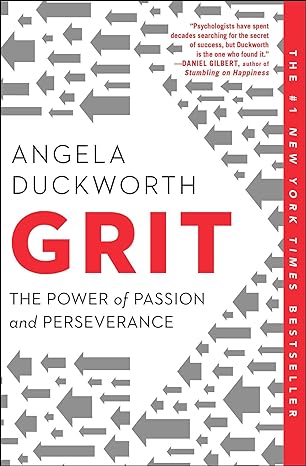
1. Grit: The Power of Passion and Perseverance

Author: Angela Duckworth

Angela Duckworth’s “Grit”

Duckworth’s acclaimed book dives into the science of grit, a key driver for long-term success. In sales, where persistence often separates top performers from the rest, Duckworth’s insights offer actionable steps for developing resilience. This book is packed with case studies and research that reinforces why passion and perseverance can elevate one’s career trajectory, making it an indispensable read for sales professionals who want to push past challenges and consistently close deals.

2. Mindset: The New Psychology of Success

Author: Carol S. Dweck 

Carol S. Dweck’s “Mindset”

Success in sales hinges on adaptability and a positive mindset. Dweck’s “Mindset” explains how shifting from a fixed mindset to a growth mindset can be transformational, especially when handling rejection or navigating challenging quotas. Her approach empowers salespeople to see setbacks as opportunities for growth, fostering an outlook that drives performance under pressure.

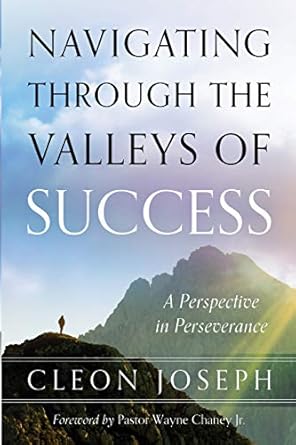
3. Navigating Through the Valleys of Success: A Perspective in Perseverance

Author: Cleon Joseph 

Cleon Joseph’s “Navigating Through the Valleys of Success”

Sales professionals often encounter obstacles that test their perseverance. Cleon Joseph’s book provides strategies for managing setbacks and maintaining focus during tough times. It’s a guide for any salesperson striving to develop mental resilience and maintain their drive, regardless of external challenges. Joseph’s perspective is a valuable resource for those aiming to maintain momentum in high-stakes environments.

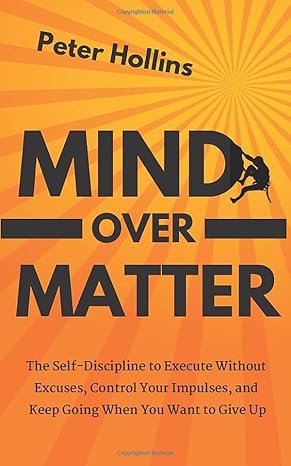
4. Mind Over Matter: The Self-Discipline to Execute Without Excuses

Author: Peter Hollins 

Peter Hollins’s Mind-Over-Matter-Self-Discipline

Self-discipline is at the heart of sales success. Hollins’ concise book on building self-discipline equips sales professionals with the tools to stay focused, control impulses, and push forward even when the pressure is high. With practical exercises and clear strategies, this book is a quick yet powerful read for anyone who wants to enhance their productivity and close deals consistently.

5. An Astronaut’s Guide to Life on Earth

Author: Chris Hadfield 

Chris Hadfield’s Astronauts-Guide-Life-Earth

Chris Hadfield’s experience as an astronaut offers unique insights into the importance of preparation and determination. Sales managers and team leaders will appreciate Hadfield’s lessons on staying calm under pressure, a skill as relevant in space as it is in the sales field. His book encourages sales professionals to adopt a meticulous approach to planning and to stay resilient when the stakes are high.

Videos

1. Grit: The Power of Passion and Perseverance | Angela Lee Duckworth

Angela Duckworth’s TED Talk breaks down the importance of grit in achieving long-term goals. For sales teams, this talk offers an inspiring reminder that sustained effort and resilience are often more critical than natural talent. It’s an excellent motivational tool for those facing demanding sales cycles.

2. Leadership – When It Matters Most: Courage Up! | John C. Maxwell

In this talk, leadership expert John C. Maxwell discusses the role of courage in high-pressure situations. Sales managers can use this to inspire their teams to tackle challenging quotas and pursue ambitious targets without fear, instilling a culture of resilience and boldness.

https://www.youtube.com/live/qLq87C7hWjY?si=M0IhEcSmSs2Zjzcl

3. Finding Your Resolve

This motivational video is designed to help viewers find their inner resolve. Sales professionals facing burnt-out or difficult market conditions can find encouragement here to persist and overcome, making it a valuable resource for anyone who needs a motivational boost.

4. Digging Deeper: How a Few Extra Moments Can Change Lives | Cody Coleman

Cody Coleman’s TEDx talk encourages taking that “extra moment” to make a difference, a principle highly relevant to sales. This talk is ideal for sales professionals who want to deepen their impact, build stronger relationships, and achieve lasting success through small, consistent efforts.

5. Pushing Through | Ruben Daniels

Ruben Daniels shares insights on perseverance, ideal for sales teams working in a high-pressure environment. This short talk is an excellent addition to any sales team meeting, reminding everyone that determination and a positive outlook are keys to success.

Articles and Blogs

1. The Power of Resolve

This article on resolve offers insights into how mental toughness can drive personal and professional success. Sales professionals can apply these principles to navigate competitive markets and stay focused on goals despite challenges.

https://www.psychologytoday.com/us/blog/happiness-in-world/200911/the-power-resolve

2. Finding Strength: How to Overcome Anything

Description: Sales success often requires overcoming significant obstacles. This article discusses strategies to harness inner strength, making it a useful read for sales teams looking to build resilience and face high-pressure environments with confidence.

https://www.psychologytoday.com/us/articles/199805/finding-strength-how-overcome-anything

3. Grit: A Complete Guide on Being Mentally Tough 

In this comprehensive guide, James Clear outlines the essentials of mental toughness. Sales professionals will find this article especially relevant, as it covers grit’s role in achieving long-term goals and provides actionable strategies for building resilience.

https://jamesclear.com/grit

4. How to See Challenges as Opportunities

Description: This article reframes challenges as opportunities, an essential mindset shift for sales professionals. By adopting this perspective, salespeople can approach obstacles as chances to grow, making them better equipped to thrive in competitive environments.

https://www.psychologytoday.com/us/blog/what-doesnt-kill-us/201611/how-see-challenges-opportunities

5. How to Get Yourself Out of Rock Bottom

Description: For those facing a rough sales quarter, this article provides practical advice on overcoming tough periods. It’s an empowering read for any sales professional seeking to recharge and bounce back from difficult situations.

https://medium.com/swlh/how-to-get-yourself-out-of-rock-bottom-c005f899a66d

Discussion Questions for Sales Teams

How do you handle high-pressure deadlines?

Do you have strategies for “digging deep” when it counts?

Share a time when you overcame a challenging sales target. What kept you motivated, and what lessons did you learn?

What are your strategies for staying positive in the face of rejection?

Reflect on a past sales experience where preparation made a significant difference. What would you do differently today?


Ready to take your sales game to the next level? 🚀

Don’t miss out on more tips, insights, and strategies to boost your sales and sales leadership skills! Subscribe today and join a community of sales enthusiasts like yourself!

📩 Stay up-to-date with the latest blog posts, packed with practical advice and real-world examples that will help you close more deals and inspire your sales team. 💪

🔗 Want more valuable content? Check out the library of articles for a treasure trove of sales wisdom just waiting to be discovered. From prospecting techniques to negotiation tactics, I’ve got you covered!

👍 If you found this article helpful, give it a thumbs up and share it with your network. Help spread the word and empower others to achieve sales excellence!

Remember, success in sales starts with knowledge and continuous learning. Don’t miss out—subscribe, explore, and share today!

📢 Come along the journey! Subscribe now, explore more, and share the knowledge! 🌟

Memorial Day 🫡 🇺🇸

Reflecting on the lessons learned from those who have served & how those lessons have served me.

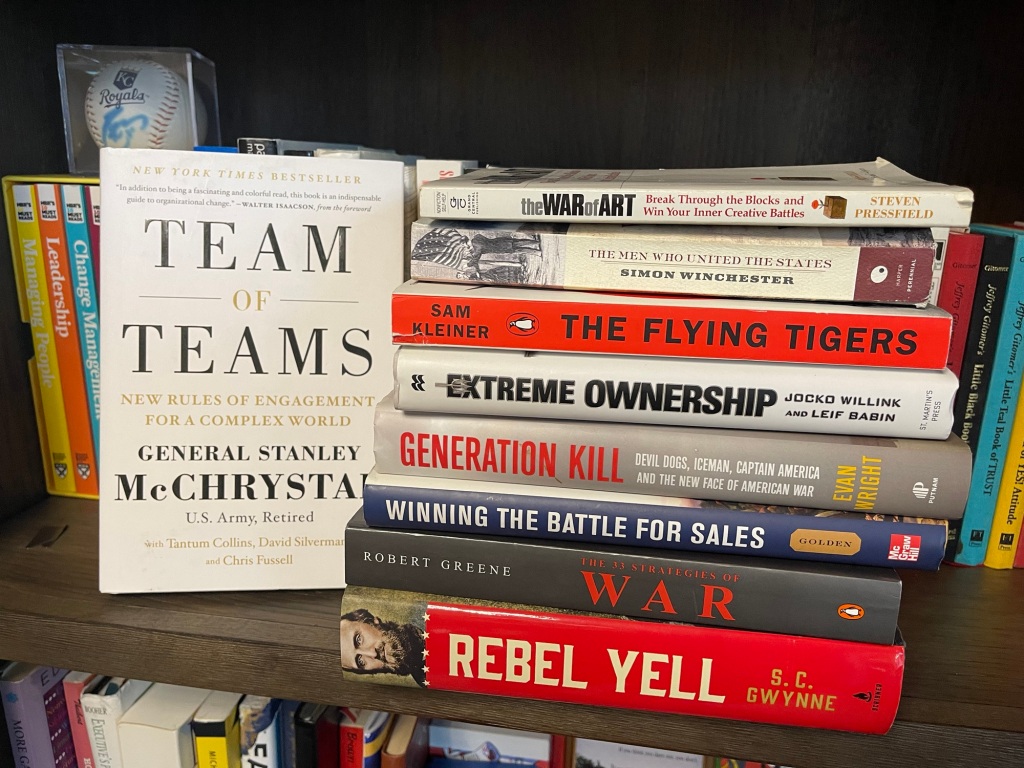
I’m excited to crack open another lesson this weekend with General Stanley McChrystal. Undoubtedly, I’m afforded this luxury due to men & women like him.

Book review coming soon…

What’s on your reading list this Memorial Day weekend?

Book Review 📚 Objections: The Ultimate Guide for Mastering the Art and Science of Getting Past No.

“While most salespeople cringe at the sound of objections, top performers see objections as a roadmap to close deals. They embrace objections, knowing that the path to success is paved with them.”

Jeb Blount

In Jeb Blount’s “Objections: The Ultimate Guide for Mastering the Art and Science of Getting Past No,” you’ll be taken on a journey through the challenging yet essential world of sales objections. Blount, a popular sales expert, delves into the art and science of handling objections, equipping sales professionals with the tools they need to overcome obstacles and achieve greater success.

One of the most striking aspects of this book is its emphasis on the importance of mindset and attitude in the face of objections. Blount highlights that objections are not roadblocks but rather opportunities for growth and understanding. By shifting our perspective, objections can be seen as gateways to building stronger relationships and closing more deals. This theme resonates throughout the book, reminding readers to approach objections with curiosity, empathy, and a determination to find common ground.

Blount’s writing style is conversational and accessible, making it easy for both seasoned sales professionals and newcomers to grasp the concepts presented. He combines real-life anecdotes, practical tips, and psychological insights, creating a comprehensive guide that covers a wide range of objection scenarios. From common objections like price and competition to more complex ones involving trust and credibility, Blount leaves no stone unturned.

One of the crucial takeaways from “Objections” is the concept of active listening. Blount emphasizes the significance of truly understanding the objections raised by prospects instead of merely reacting to them. By actively listening, paraphrasing, and asking clarifying questions, salespeople can uncover the underlying concerns behind objections and address them effectively. This approach not only builds trust but also enables sales professionals to tailor their responses to meet the specific needs of their prospects.

I can attest to the impact “Objections” has had on me as a sales professional, sales trainer, and sales manager. Many, who I’ve shared these insights with, have developed an enhanced ability to navigate objections, resulting in increased closing rates and improved customer relationships. By applying the techniques outlined in the book, my sales teams have been able to build stronger connections with their prospects, understand their pain points, and find mutually beneficial solutions.

Jebs work is a valuable resource for sales professionals seeking to refine their objection handling skills. Blount’s emphasis on mindset, active listening, and empathy sets this book apart, offering a fresh perspective on how to approach objections in the sales process. By internalizing and deploying the concepts presented, sales professionals can expect to see positive results in their interactions with prospects.


Here are ten reflection questions based on the main concepts of the book:

  1. How has your mindset and attitude towards objections evolved after reading this book? Are you now more inclined to view objections as opportunities for growth and understanding?
  2. Reflect on a recent objection you encountered in your sales interactions. How did you approach it before reading the book, and how would you approach it differently now, considering the techniques and strategies outlined by Blount?
  3. In what ways has your active listening skills improved since applying the principles discussed in the book? Can you recall a specific instance where active listening helped you uncover the true concerns behind an objection?
  4. How has your ability to paraphrase objections and ask clarifying questions impacted your sales conversations? Have you noticed a difference in how prospects respond when they feel genuinely understood?
  5. Reflect on a challenging objection you faced that was related to trust or credibility. What steps did you take to address it, and how did it compare to the techniques suggested by Blount in the book? Did you achieve a positive outcome?
  6. Has your approach to objection handling changed based on the different objection scenarios discussed in the book, such as price objections or objections related to competition? How have you adapted your responses to these specific scenarios?
  7. Consider your previous strategies for dealing with objections. How have you adjusted your mindset to see objections as valuable information rather than obstacles? How has this shift impacted your overall sales approach?
  8. Reflect on a recent sales opportunity where you successfully got past a “no” and closed the deal. Which specific techniques or strategies from the book did you apply in that situation, and how did they contribute to your success?
  9. Have you noticed any improvements in your ability to build trust with prospects through objection handling? How has this impacted your overall sales results and customer relationships?
  10. How can you continue to apply the concepts discussed in the book in your future sales interactions? What steps will you take to reinforce and expand upon the skills you have acquired to become even more effective at getting past objections?

These reflection questions can help you deepen your understanding of the book’s concepts and prompt you to consider how you can apply them to your own sales practice.

Book Review 📚 First, Break All the Rules: What the World’s Greatest Managers Do Differentlyby Marcus Buckingham, Curt Coffman

“Great managers don’t try to help everyone do everything. They pick a few priorities and help everyone see how these priorities relate to their own work.”

Marcus Buckingham

First, Break All the Rules by Marcus Buckingham and Curt Coffman is a refreshing and insightful read that offers valuable lessons for anyone in a sales management role. I have often recommended this book to other managers and have used for management book club(s). The book is based on a study conducted by the authors, in which they analyzed the best practices of successful managers and identified the key traits that set them apart from others.

One of the book’s standout themes is the importance of breaking traditional rules in order to achieve success. The authors argue that the most effective managers don’t conform to conventional wisdom, but instead create their own rules based on their unique circumstances and strengths. This idea is particularly relevant to the sales management, where the ability to think creatively and outside the box is essential for success.

The following are a few conventional wisdoms that the authors encourage managers to rethink:

  • “Treat everyone the same”: The book argues that effective managers do not treat everyone the same, but instead tailor their management style to the unique needs and strengths of each individual employee.
  • “Focus on fixing weaknesses”: The book suggests that the traditional approach of focusing on improving weaknesses is not the most effective way to achieve success. Instead, the authors argue that focusing on building and leveraging strengths is a more productive strategy.
  • “Follow the rules”: The book’s title itself challenges the conventional wisdom of blindly following rules and instead encourages readers to think creatively and break rules when necessary to achieve success. The authors argue that the best managers do not simply follow conventional wisdom, but instead create their own rules based on their unique circumstances and strengths.

Another important takeaway from the book is the emphasis on employee engagement. The authors emphasize the importance of understanding each employee’s unique talents and needs, and tailoring management styles accordingly. This approach can be applied to sales teams by recognizing each team member’s strengths and weaknesses, and leveraging those strengths to optimize team performance.

The writing style is engaging and accessible, making it an easy and enjoyable read. The authors use real-world examples to illustrate their points, and their insights are backed up by solid research. However, one potential criticism of the book is that it can be overly simplistic at times, and may not offer enough practical advice for managers and sales professionals looking to implement the ideas presented.

Personally, I have found First, Break All the Rules to be highly impactful in my sales management career. The book’s emphasis on employee engagement has helped me to better understand my team members and to tailor my management style to their individual needs. Additionally, the concept of breaking traditional rules has encouraged me to think creatively when approaching sales challenges, and has led to some of my most successful sales campaigns.

Overall, I highly recommend First, Break All the Rules to anyone in a management or sales role. While it may not offer all the answers, it provides valuable insights that can help you to think differently and achieve greater success in your career.


Reflection questions

  • How can I apply the concept of breaking traditional rules to my sales approach?
  • What are some specific ways I can tailor my management style to better engage and motivate my team members?
  • How can I identify and leverage the unique strengths of each member of my sales team?
  • How can I encourage creativity and outside-the-box thinking within my sales team?
  • In what ways can I measure employee engagement and adjust my approach accordingly?
  • How can I identify when I am relying too heavily on conventional wisdom and need to break the rules?
  • What are some specific examples of successful managers who have broken traditional rules to achieve success?
  • What are some potential drawbacks of breaking traditional rules, and how can I mitigate those risks?
  • How can I balance the need to break rules with the need for consistency and structure in my sales approach?
  • What are some key takeaways from the book that I can implement right away to improve my sales results?

Want to connect on Goodreads?

Book Review 📚 Triggers: Creating Behaviors that Last, by Marshal Goldsmith

Triggers: Creating Behaviors That Last – Becoming the Person You Want to Be by Marshall Goldsmith is a powerful book that delves deeply into the psychology of behavior change. Goldsmith, a renowned executive coach, shares his insights on how to create lasting change in our lives and become the person we want to be.

One of the key themes of the book is that behavior change requires a conscious effort on our part. Goldsmith explains that our environment and the people around us can trigger certain behaviors, both positive and negative. He uses the term “triggers” to describe these environmental cues that can influence our behavior. By becoming aware of our triggers and taking action to modify them, we can create new habits and behaviors that will serve us better.

Outside of our environment, our internal beliefs that can stop change. An awareness of these beliefs, along with self-reflection, can turn these beliefs into positive triggers for success. These beliefs include:

  1. “I have willpower and won’t give in to my triggers.” This belief can be problematic because it assumes that willpower alone is enough to overcome triggers and change behavior, when in reality willpower is a limited resource that can be depleted quickly.
  2. “I’m right and others are wrong.” This belief can prevent us from being open to feedback and new ideas, and can make it difficult to make changes in our behavior.
  3. “I’m a victim of my environment.” This belief can make us feel powerless to change our circumstances, and can prevent us from taking action to modify our environment and our behavior.
  4. “I’m too busy and don’t have time to change.” This belief can be a convenient excuse for avoiding the hard work of behavior change, and can prevent us from making progress toward our goals.
  5. “I’ve tried before and failed, so why bother trying again?” This belief can be a self-fulfilling prophecy that prevents us from making new attempts at behavior change and can keep us stuck in unhelpful patterns.

Goldsmith suggests that these beliefs can be overcome by adopting a growth mindset, being open to feedback and new ideas, and developing a sense of accountability to ourselves and to others. By doing so, we can create lasting change and become the person we want to be.

The writing style of the book is direct and practical, with Goldsmith offering a wealth of actionable advice and exercises that help to implement his ideas. He also emphasizes the importance of accountability, both to ourselves and to others, in order to stay on track and achieve our goals.

A tip that Goldsmith suggests to drive personal accountability is to ask the five questions below at the end of each day. He offers some interesting research data (although anecdotal at best) conveying the efficacy of these questions and goal achievement.

  1. Did I do my best to set clear goals today?
  2. Did I do my best to make progress toward my goals today?
  3. Did I do my best to find meaning and purpose in my work today?
  4. Did I do my best to be happy today?
  5. Did I do my best to be fully engaged in my interactions with others today?

As a sales professional, I found this book to be incredibly valuable. Sales is a highly competitive field, and success often requires a combination of skill, discipline, and perseverance. Goldsmith’s insights on behavior change are directly applicable to the sales profession, as we constantly face challenges and opportunities that can trigger positive or negative behaviors. By developing greater awareness of our triggers and consciously modifying our behavior, we can become more effective salespeople and achieve greater success.

One important takeaway from the book is the importance of setting achievable goals. Goldsmith emphasizes that small, incremental changes can lead to significant improvements over time. By setting specific, measurable goals and tracking our progress, we can build momentum and create lasting change in our behavior.

Another key lesson from the book is the importance of humility and openness to feedback. Goldsmith encourages readers to seek out constructive feedback from others and to be open to criticism. By doing so, we can identify areas for improvement and make the necessary changes to become better versions of ourselves.

Overall, I highly recommend Triggers: Creating Behaviors That Last – Becoming the Person You Want to Be to anyone looking to create positive change in their lives. While the book is not without its flaws, particularly in its somewhat repetitive structure, the insights and advice it offers are invaluable. As a sales professional, I have found the concepts and strategies outlined in the book to be directly applicable to my work, and have seen tangible improvements in my sales results as a result of implementing Goldsmith’s advice.


Following are ten reflection questions based on my reading. These questions are designed to facilitate reflection on the key concepts and strategies outlined in the book, and to help you apply them to your own professional development and career goals.

  1. What triggers have I identified in my own life that influence my behavior, both positively and negatively?
  2. How can I modify my environment to support positive behavior change and eliminate triggers that lead to negative behavior?
  3. What specific, measurable goals can I set for myself to create lasting change in my behavior?
  4. How can I hold myself accountable to these goals and monitor my progress?
  5. What is my mindset toward feedback, and how can I become more open to constructive criticism and suggestions for improvement?
  6. How can I develop a sense of humility and acknowledge that I don’t have all the answers?
  7. How can I cultivate a growth mindset and approach behavior change as an opportunity for learning and development?
  8. How can I build stronger connections with others and seek out support and guidance in my behavior change efforts?
  9. What role does urgency play in my behavior, and how can I manage it more effectively?
  10. How can I find meaning and purpose in my work, and use it as a source of motivation and inspiration for behavior change?

Want to join me on Goodreads?

Leadership vs. Management: The Differences to Know for Driving Results

Leadership and management are two terms that are often used interchangeably, but in reality, they are two distinct concepts. While both are essential for driving results in any organization, they require different skills, approaches, and mindsets. Understanding the differences between leadership and management is crucial for anyone who wants to succeed in a leadership role. In this article, we will explore the key differences between leadership and management and explain why both are essential for success.

What is Leadership?

Leadership is a process of influencing people to achieve a common goal. A leader is someone who inspires, motivates, and guides others towards a shared vision. Leadership is about creating a sense of purpose and direction, and inspiring people to work towards a common goal. Leadership is not just about giving orders or making decisions. It is about creating a vision, setting a direction, and inspiring others to follow it.

What is Management?

Management is the process of planning, organizing, controlling, and directing resources to achieve organizational goals. A manager is someone who plans, organizes, and controls resources to achieve specific objectives. Management is about making decisions, allocating resources, and ensuring that the organization’s goals are met efficiently and effectively. Management is not just about giving orders or delegating tasks. It is about taking responsibility for the success of the organization and ensuring that everything runs smoothly.

The Differences between Leadership and Management

While both leadership and management are essential for driving results, they require different skills, approaches, and mindsets. Here are some of the key differences between leadership and management:

1. Vision vs. Execution

Leadership is about creating a vision and inspiring others to follow it. A leader sets the direction and inspires others to work towards a common goal. Leaders are focused on the big picture and are always looking for ways to improve and innovate. They are creative, visionary, and inspiring.

Management, on the other hand, is about executing the vision. A manager takes the vision and breaks it down into actionable steps. They are focused on the details and are always looking for ways to improve efficiency and productivity. Managers are practical, analytical, and results-oriented.

2. People vs. Processes

Leadership is about people. A leader understands that people are the most important asset of any organization and that their success depends on the people they lead. Leaders are empathetic, communicative, and supportive.

Management, on the other hand, is about processes. A manager understands that processes are essential for achieving organizational goals and that their success depends on efficient processes. Managers are organized, structured, and process-oriented.

3. Inspiration vs. Control

Leadership is about inspiring others to achieve their full potential. A leader motivates and encourages others to be their best selves. Leaders empower their team members to take ownership of their work and to make decisions that benefit the organization as a whole.

Management, on the other hand, is about control. A manager ensures that everything runs smoothly and that everyone is following the rules and procedures. Managers provide direction, set expectations, and hold people accountable for their actions.

4. Long-term vs. Short-term Focus

Leadership is focused on long-term goals. A leader creates a vision of where the organization needs to be in the future and works towards achieving that vision. Leaders are strategic, forward-thinking, and patient.

Management, on the other hand, is focused on short-term goals. A manager is responsible for meeting deadlines, achieving targets, and ensuring that everything runs smoothly on a day-to-day basis. Managers are tactical, detail-oriented, and focused on immediate results.

5. Creativity vs. Efficiency

Leadership is about creativity and innovation. A leader is always looking for ways to improve and innovate. They encourage their team members to think outside the box and to come up with new ideas. Leaders are open-minded, flexible, and adaptable.

Management, on the other hand, is about efficiency and productivity. A manager is focused on getting things done quickly and efficiently. They ensure that resources are allocated effectively and that everyone is working towards the same goal. Managers are organized, systematic, and process-oriented.

Why Both Leadership and Management are Essential for Success

While there are distinct differences between leadership and management, both are essential for success in any organization. Here’s why:

1. You Need a Vision and a Plan

Leadership provides the vision for the organization, while management provides the plan to achieve that vision. Without a vision, the organization lacks direction and purpose. Without a plan, the vision remains a dream.

2. You Need Inspiration and Execution

Leadership inspires people to work towards a common goal, while management ensures that the work gets done efficiently and effectively. Without inspiration, people lack motivation and passion. Without execution, the vision remains just an idea.

3. You Need Creativity and Efficiency

Leadership encourages creativity and innovation, while management ensures that resources are allocated effectively and that everything runs smoothly. Without creativity, the organization becomes stagnant and lacks innovation. Without efficiency, the organization becomes chaotic and unproductive.

4. You Need Long-term and Short-term Focus

Leadership provides the long-term vision for the organization, while management ensures that short-term goals are met and that everything runs smoothly on a day-to-day basis. Without a long-term focus, the organization lacks direction and purpose. Without a short-term focus, the organization becomes disorganized and unproductive.

FAQs

Q1. Can someone be a leader and a manager at the same time?

Yes, someone can be a leader and a manager at the same time. In fact, many successful leaders are also great managers. The key is to understand the differences between leadership and management and to know when to switch between the two roles.

Q2. Can someone be a manager without being a leader?

Yes, someone can be a manager without being a leader. While leadership and management are closely related, they are not the same thing. A manager can be focused on processes and efficiency without inspiring or motivating their team members.

Q3. Can someone be a leader without being a manager?

Yes, someone can be a leader without being a manager. Leadership is about inspiring and motivating others towards a common goal, regardless of whether or not the person has formal authority.


Leadership and management are two distinct concepts that are both essential for driving results in any organization. While there are differences between the two, they are not mutually exclusive. Successful organizations require effective leaders who can inspire and motivate their teams to achieve goals, as well as skilled managers who can plan, organize, and execute those goals efficiently. Leaders and managers must work together to create a cohesive vision and strategy that aligns with the organization’s objectives and values. In short, the key to success lies in striking a balance between leadership and management, leveraging the strengths of both to achieve optimal results. By understanding the differences between the two and recognizing their complementary nature, organizations can cultivate a strong culture of excellence and drive sustainable growth over the long term.
Question Prompts for Great Goal Setting

GREAT Goals are

Outcome focused: Once you understand your WHY (and it’s an enthusiastic why) you’re 90% there!

In line with your values: The more a goal aligns with our inner or core values—the EASIER it is to achieve. Yes, we can achieve goals that don’t align with our values but it’s harder to do and less satisfying.

Stated in the positive: ie. I want to make healthy food choice rather than I want to stop eating Oreos.

and SMART

  • Specific—so you know exactly what you’re trying to achieve
  • Measurable—so you’ll know when you’ve achieved it!
  • Actionable (by you)—so you are in control and can get it done
  • Realistic—so it is achievable
  • Time-Bound—has a deadline

Focusing on the Outcomes

What is it that you really, REALLY want? Dig deep…

What is the SPECIFIC outcome you’re looking for?

What is the PAIN for you of NOT achieving your goal?

Aligning with your Values

Is this goal in line with your life vision/overall life-plan? If you don’t know, what does your gut tell you?

Is this goal in line with your values? Unsure? First ask yourself what’s REALLY important to you in life, then ask if this goal will help you achieve more of that?

Are your goals something YOU truly want, or are they something you think you SHOULD have or SHOULD be doing? Tip: If it’s a SHOULD, this may be an outdated goal or someone else’s dream…

When you think about your goal does it give you a sense of deep contentment or ‘rightness’, happiness and/or excitement? If so, these are good signs that it’s a healthy goal.

If you could have this goal RIGHT NOW, would you take it? If not, why not? What issues are there?

How does this goal fit into your life/lifestyle? Time/effort/commitments/who else might be impacted?

Identifying Obstacles

Can you start—and maintain—the action necessary to achieve this goal?

How will making this change affect other aspects of your life? ie. What might you need to deal with in order to achieve this goal?

What’s good about your CURRENT situation? ie. What’s the benefit of staying right where you are? Then ask, how can I keep those good aspects while STILL making this change?

WHAT might you have to give up/stop doing to achieve this goal? Essentially, what’s the price of making this change—and are you willing to pay it?

If there was something important around achieving this goal (to help you succeed, or that could get in the way) that you haven’t mentioned yet, what would it be?

WHO will you have to BE to achieve this goal?

Goal Sizing

Is your goal the right size to be working on? Too big? Break down into smaller goals. Too small or uninspiring? Make it into a larger or stretch goal.

What would be the MINIMUM/Super-Easy level of goal to achieve?

What would be your TARGET level of goal to achieve?

What would be your EXTRAORDINARY level of goal to achieve?

Resources: Get Moving

  • What RESOURCES do you already have to help you achieve your goal? Make a list! eg. things, support from people, contacts, personal qualities, knowledge, skills, money, time etc.
  • What RESOURCES do you NEED to help you achieve your goal? Make a list!

IMPORTANT: REMEMBER that GOALS are there to INSPIRE YOU, not to beat yourself up with!