Sales Leadership & Maslowโ€™s Hammer

Maslow’s Hammer, also known as the Law of the Instrument, is a cognitive bias that refers to the tendency of individuals to rely on familiar tools or methods to solve problems, even when they may not be the most suitable or effective options. It is based on the idea that when you have a hammer, everything looks like a nail. In other words, people tend to use the tools or approaches they are most comfortable with, regardless of whether they are the best fit for the situation.

โ€œIt is tempting, if the only tool you have is a hammer, to treat everything as if it were a nail.โ€

Abraham Maslow

In the context of sales and sales management, Maslow’s Hammer can have several implications. Sales professionals may have a preferred sales technique or strategy that they rely on heavily, even if it may not be the most appropriate for a particular customer or situation. For example, a salesperson who excels at aggressive, high-pressure sales tactics may default to using those techniques in every sales interaction, even when a more consultative or relationship-building approach would be more effective.

Sales managers can also fall victim to Maslow’s Hammer by applying a one-size-fits-all approach to managing their sales team. They may have a preferred management style or set of performance metrics that they use for all salespeople, regardless of individual strengths and weaknesses. This can lead to missed opportunities for tailored coaching and development.

Below are just a few examples of Maslow’s Hammer that I have personally witnessed in sales and sales management:

  1. A salesperson who exclusively relies on cold calling and ignores other prospecting methods, such as social media or networking events, even when those alternatives could yield better results.
  2. A sales manager who uses a strict quota system to measure performance for all sales team members, without taking into account variations in territories, product lines, or individual skill sets.
  3. A salesperson who always follows a scripted sales pitch, without adapting or customizing it to address the specific needs or concerns of each customer.
  4. A sales manager who favors a particular Power dynamic (positional power for example) insists on using it for all sales team members, even when other forms of power may be better suited for specific situations or team members.

To overcome the bias of Maslow’s Hammer in sales and sales management, it is important to encourage flexibility, creativity, and a willingness to try new approaches. Sales professionals should be open to learning and adopting different sales techniques based on the unique requirements of each customer. Sales managers who strive to understand the individual strengths and weaknesses of their team members and tailor their coaching and performance management strategies accordingly will influence behavior over the long-term. By doing so, sales organizations can enhance their effectiveness and better meet the diverse needs of their customers.


Ready to take your sales game to the next level? ๐Ÿš€

Don’t miss out on exclusive tips, insights, and strategies to boost your sales and sales leadership skills! Hit the subscribe button and join a community of sales enthusiasts like yourself!

๐Ÿ“ฉ Stay up-to-date with the latest blog posts, packed with practical advice and real-world examples that will help you close more deals and inspire your sales team. ๐Ÿ’ช

๐Ÿ”— Want more valuable content? Check out the library of articles for a treasure trove of sales wisdom just waiting to be discovered. From prospecting techniques to negotiation tactics, I’ve got you covered!

๐Ÿ‘ If you found this article helpful, give a thumbs up and share it with your network. Help spread the word and empower others to achieve sales excellence!

Remember, success in sales starts with knowledge and continuous learning. Don’t miss outโ€”subscribe, explore, and share today!

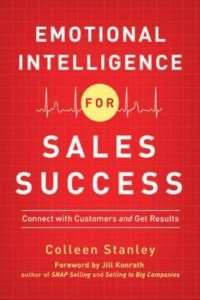
Book Review ๐Ÿ“š Emotional Intelligence for Sales Success: Connect with Customers and Get Results by Colleen Stanley

Emotional Intelligence (EI) for Sales Success by Colleen Stanley is a must-read for anyone in the sales profession. This book is a comprehensive guide that offers valuable insights and strategies to help salespeople connect with customers on a deeper level and achieve better results.


“Sales success is not about being the best at selling; it’s about being the best at connecting.”- Colleen Stanley

One of the key themes of the book is the importance of emotional intelligence in sales. Stanley emphasizes that sales success is not just about having the right product or service, but also about understanding and connecting with the emotions of your customers. By developing emotional intelligence, salespeople can build stronger relationships, establish trust, and ultimately close more deals.

The writing style is engaging and conversational, making it easy to read and understand. Stanley provides real-life examples and practical advice that can be applied in any sales situation. I found her to be relatable and down-to-earth, making it easy to connect with the material.

One of the most important takeaways from the book is the concept of “empathetic listening.” Stanley explains that this involves not just hearing what your customers are saying, but truly understanding their needs, concerns, and emotions. By practicing empathetic listening, salespeople can build trust and establish themselves as trusted advisors, rather than just another salesperson pushing a product.

Another important aspect of the book is its direct application to the sales profession, whereas other EI materials can seem abstract. Stanley provides practical strategies for applying emotional intelligence in a sales context, such as how to handle objections, build rapport, and close deals. She also provides tips for managing stress and maintaining a positive attitude in the face of rejection and setbacks.

As a sales professional myself, I can attest to the impact that this book has had on my sales results. By applying the strategies and techniques outlined in Emotional Intelligence for Sales Success, I have been able to build stronger relationships with my customers, close more deals, and ultimately achieve greater success in my sales career. This is a book that I share will all of my sales teams.

While the book is certainly a valuable resource, there are a few areas where it falls short. For example, some of the concepts and strategies presented in the book may be familiar to those who have already studied emotional intelligence or sales techniques. Additionally, the book focuses primarily on business-to-business (B2B) sales, so those in other types of sales roles may perceive some of the advice inapplicable. Having done both B2B and B2C, I didnโ€™t find it too difficult to connect the dots across various roles.

Overall, Emotional Intelligence for Sales Success is a valuable resource for anyone in the sales profession. By focusing on the importance of emotional intelligence and providing practical strategies for applying it in a sales context, Colleen Stanley has created a book that is both informative and engaging. Whether you are a seasoned sales professional or just starting out in your sales career, this book is definitely worth a read.


Below are 10 reflection questions based on the insights from Emotional Intelligence for Sales Success:

  1. What are some examples of situations where you have demonstrated empathy in your sales interactions? How did it impact the outcome?
  2. How do you typically handle objections from customers? How could you apply the concept of empathetic listening to improve your approach?
  3. Reflect on a recent sales interaction where you felt you could have done better. What emotional intelligence strategies could you have applied in that situation?
  4. How do you typically manage stress in your sales role? What techniques have worked well for you, and what could you improve on?
  5. Reflect on your current sales goals. How could developing your emotional intelligence help you achieve these goals?
  6. What are some examples of times when you may have made assumptions about a customer’s needs or emotions? How could you have used empathetic listening to better understand their perspective?
  7. Think about a sales interaction where you felt you established a strong rapport with a customer. What strategies did you use to build that connection?
  8. How do you typically follow up with customers after a sale? How could you use emotional intelligence to strengthen those customer relationships?
  9. Reflect on a recent rejection or setback in your sales career. How could you apply emotional intelligence to maintain a positive attitude and keep moving forward?
  10. What are some examples of ways you could apply the strategies and techniques from this book in your day-to-day sales interactions? How could you measure the impact of these efforts?

Want to connect on Goodread ?

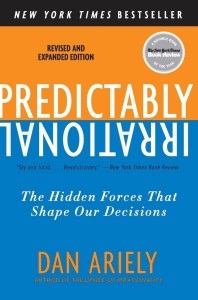
Book Review: Predictably Irrational-How Hidden Forces Shape Our Decisions by Dan Ariely

“We are not as rational as we think we are, but we are rational enough to think we are rational.” -Dan Ariely

Predictably Irrational by Dan Ariely is a thought-provoking book that delves into the realm of behavioral economics and the irrationality of human decision-making. Ariely, a professor of psychology and behavioral economics, provides an engaging and informative book that explores the various ways in which people make decisions, often in ways that are not rational or logical.

The chapters are divided into different aspects of human behavior. Ariely uses a combination of personal anecdotes, experiments, and studies to illustrate his points, making the book an easy and thought-provoking read.

One of the key themes of Predictably Irrational is the idea that people often act against their own best interests. Ariely argues that people make decisions based on emotions and biases rather than rational thought, resulting in poor decision-making and negative outcomes. For example, he highlights the concept of “anchoring,” where people rely too heavily on the first piece of information they receive when making a decision, even if it’s irrelevant or inaccurate.

Another important theme of the book is the idea that people are highly influenced by social norms and peer pressure. Ariely explains how our desire to fit in and be accepted can lead us to make irrational decisions, such as conforming to group norms even when they go against our own beliefs.

The style of the book is informative and engaging, with Ariely’s examples making complex concepts easy to understand. However, it’s worth noting that Predictably Irrational is not a book that provides easy answers or quick fixes. Instead, it challenged me to rethink my assumptions about human behavior and the decision-making process.

As a sales professional, I found the insights in Predictably Irrational to be incredibly applicable. The book helped me understand the ways in which customers make decisions, and how I can use this knowledge to deliver a more customer centric sales approach. For example, by understanding the concept of anchoring, I can present my products and services in a way that sets a positive first impression and reduces resistance.

Dan Ariely provides several insights around pricing and purchasing behavior. One key insight is that people’s perception of value is often influenced by the price of a product or service. For example, Ariely found that people are more likely to perceive a wine as tasting better if they are told that it is more expensive, even if the wine is actually the same as a cheaper option.

Another insight is that people are often willing to pay more for a product or service if they feel that they are getting a “deal”. Ariely found that people are more likely to buy a product that has a higher price with a discount than a lower-priced product with no discount, even if the actual price paid is the same.

Ariely also argues that people are more likely to make a purchase if they have an emotional connection with the product or service. For example, people are more likely to buy a product if it is presented in a way that appeals to their emotions or personal values.

Ariely’s insights around pricing and purchasing behavior suggest that people’s decision-making when it comes to buying products and services is often influenced by emotions, biases, and perceptions of value. Understanding these factors can help businesses and sales professionals to develop more effective pricing and marketing strategies.

Overall, Predictably Irrational is a must-read for anyone interested in behavioral economics, psychology, or human decision-making. While it’s not a book that provides easy answers or guarantees success, it’s a fascinating exploration of the science behind our choices and a valuable tool for anyone looking to improve their sales results. My only criticism of the book is that it occasionally feels repetitive, with some of the concepts being revisited multiple times. However, this is a minor quibble in an otherwise excellent read.


Here are 10 reflection questions to use while reading “Predictably Irrational” by Dan Ariely:

  1. What are some examples from your own life where you’ve made irrational decisions based on emotions or biases?
  2. How can understanding the concept of anchoring help you make better decisions in your personal or professional life?
  3. In what ways do social norms and peer pressure influence your decision-making?
  4. How can you apply the insights from the book to improve your sales approach or marketing strategies?
  5. What impact does the concept of “fairness” have on your decision-making?
  6. How can you use the insights from the book to make better financial decisions, such as saving money or investing?
  7. Have you ever been influenced by the perceived value of a product or service? How can you avoid being swayed by this in the future?
  8. In what situations do you find yourself making decisions based on incomplete or inaccurate information? How can you improve this?
  9. How can you use the insights from the book to improve your personal relationships or communication with others?
  10. What are some practical steps you can take to overcome your own biases and make more rational decisions in the future?