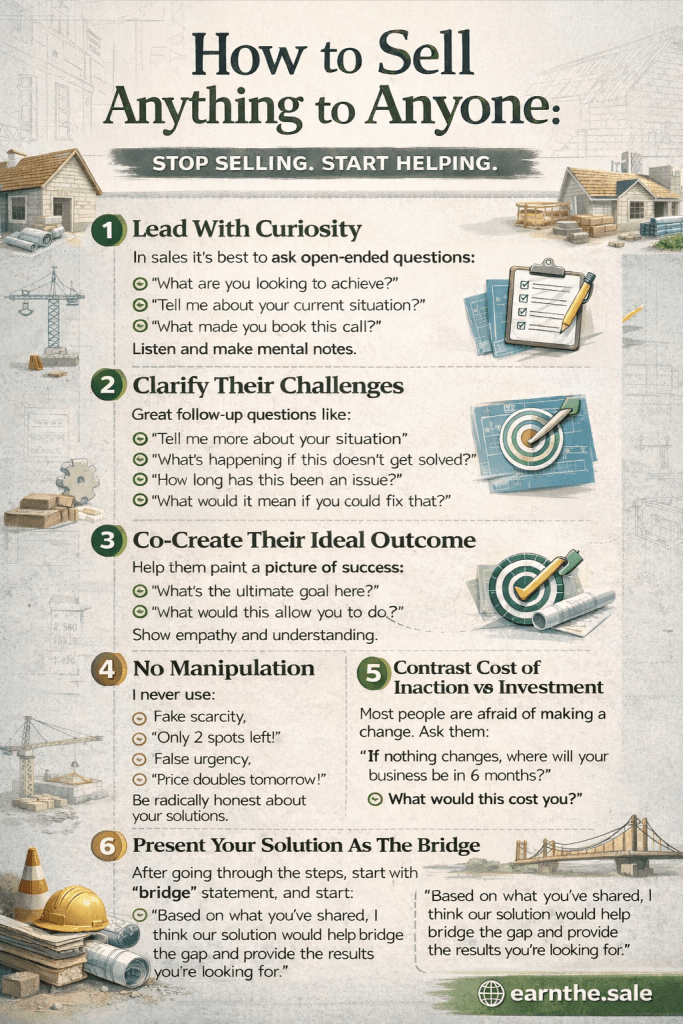
6-Step Consultative Process

“While most salespeople cringe at the sound of objections, top performers see objections as a roadmap to close deals. They embrace objections, knowing that the path to success is paved with them.”
Jeb Blount
In Jeb Blount’s “Objections: The Ultimate Guide for Mastering the Art and Science of Getting Past No,” you’ll be taken on a journey through the challenging yet essential world of sales objections. Blount, a popular sales expert, delves into the art and science of handling objections, equipping sales professionals with the tools they need to overcome obstacles and achieve greater success.
One of the most striking aspects of this book is its emphasis on the importance of mindset and attitude in the face of objections. Blount highlights that objections are not roadblocks but rather opportunities for growth and understanding. By shifting our perspective, objections can be seen as gateways to building stronger relationships and closing more deals. This theme resonates throughout the book, reminding readers to approach objections with curiosity, empathy, and a determination to find common ground.
Blount’s writing style is conversational and accessible, making it easy for both seasoned sales professionals and newcomers to grasp the concepts presented. He combines real-life anecdotes, practical tips, and psychological insights, creating a comprehensive guide that covers a wide range of objection scenarios. From common objections like price and competition to more complex ones involving trust and credibility, Blount leaves no stone unturned.
One of the crucial takeaways from “Objections” is the concept of active listening. Blount emphasizes the significance of truly understanding the objections raised by prospects instead of merely reacting to them. By actively listening, paraphrasing, and asking clarifying questions, salespeople can uncover the underlying concerns behind objections and address them effectively. This approach not only builds trust but also enables sales professionals to tailor their responses to meet the specific needs of their prospects.
I can attest to the impact “Objections” has had on me as a sales professional, sales trainer, and sales manager. Many, who I’ve shared these insights with, have developed an enhanced ability to navigate objections, resulting in increased closing rates and improved customer relationships. By applying the techniques outlined in the book, my sales teams have been able to build stronger connections with their prospects, understand their pain points, and find mutually beneficial solutions.
Jebs work is a valuable resource for sales professionals seeking to refine their objection handling skills. Blount’s emphasis on mindset, active listening, and empathy sets this book apart, offering a fresh perspective on how to approach objections in the sales process. By internalizing and deploying the concepts presented, sales professionals can expect to see positive results in their interactions with prospects.
Here are ten reflection questions based on the main concepts of the book:
These reflection questions can help you deepen your understanding of the book’s concepts and prompt you to consider how you can apply them to your own sales practice.

Here’s an interesting thought: Everything in business comes back to selling. Think about that for a second. The economy revolves around sales…. every business regardless of what they do, they have to sell. On the daily every person in business sells. To your co-workers you sell your favorite movies, favorite books, favorite restaurants, favorite shoes. You even sell yourself on ideas and thoughts.
Here’s another interesting thought: Most people hate the very idea of being “salesy”, yet we all fall under that category in one fashion or another
The question is: How do I embrace my inner salesperson?
Acknowledge that you sell on a continuous basis in your day to day life.
Admit it. You do it. You just don’t think of it as selling. You would probably say “I’m just sharing my favorite_____________with so and so.
Hmmmm – Sharing. Replace the word selling with sharing. There. That feels better doesn’t it? Isn’t it funny how changing a word can alter your perspective? When it was selling, you shuddered. Now that it’s sharing, you feel all warm and fuzzy. We all like to share – we like to share our things, our thoughts, our ideas, our favorites, ourselves. Stop and think about that for a moment….. It’s the same thing.
Choose a new thought
When you choose to think of selling as sharing, it shifts the way you feel about it. When you feel empowered by something you will be more successful at it. For all of you who own businesses or work for a business (that would be everyone), this is vital.
-What thoughts do you entertain around selling?
-What new thought might you choose instead?
-What is one thing that you can do today to embrace your new thought?
“People don’t care about what you have to say until you care about what they have to say”
How true is that? Think about that for a moment – It is part of our nature as humans to want to be heard. Most people go through life just trying to be understood and when we are around someone who truly listens to us it is a breath of fresh air. And, what do we want to do? We want to be around those people as much as possible. Be part of their inner circle. We talk about them to everyone we know because they are the most genuine authentic people. They really hear us.
When we own a business or represent a business, we need to truly be in touch with what our clients need. We need to know what their challenges are, what they are excited about, who they are, so that we know how to best serve them. The only way to do this is to listen.
Listening is one of the best ways to sell. If you are in touch with your potential customer/client you will know how to work with them and create a win-win situation.
Be In Service of Others
Building on listening, let’s go into service. I’m not just talking about excellent service on the part of us, our business/product, I’m talking about being IN service of others.
When meeting another person for the first time, do you screen them for potential customer status? That’s a given. What about if they do not have a remote chance of being in need of you or your product? Do you write them off and move on to the next one?
What would happen if you looked at each person in terms of what you can do for them instead of what they can do for you?
Think of the people that you really like to do business with.
-What characteristics do they embody?
-How much of their success do you feel is in direct proportion to their ability to listen and really help you?
My challenge to you:
Practice really listening to everyone you connect with this week and find one way that you can be in service of them that exceeds their expectations.
 Catalyst Consulting