Break Through in 2022!

Through any self-development journey, it becomes clear that your greatest adversary is often yourself. Between your limiting beliefs and bad habits, you’re the only one standing in your way. We frequently set unrealistic expectations for ourselves and question our potential to thrive in the future based on our past failures. These methods can help you in breaking through your self-imposed barriers:

1. Decide what you are no longer willing to put up with from yourself. You’ve had to put up with a lot. Not planning out your day r, procrastination, and finding excuses for not doing the “necessary work” on a regular basis are likely to be regular occurrences. You receive terrible outcomes when you tolerate lousy behavior. Make a list of everything you won’t do or tolerate in this new year. It’s critical to eliminate attitudes and practices that hold you back from reaching new heights.

2. Establish your goals. Set greater and better goals for yourself and stick to them. Consider the worst parts of your job and begin there. It’s the low-rated parts of your job that set your boundaries and suffocate your joy. Maintain perspective, low and high performing individuals share one common thread, there is always parts of the job that they don’t like. 

  • Raise your expectations. The majority of individuals create unrealistic ambitions. Set higher goals for yourself and then figure out how to achieve them faster. You can accomplish a lot in a short amount of time if you have a decent enough strategy and work hard.

3. Identify the five most critical habits for your future success. What five things can you do every day to change your experience? Look to your goals for direction. Here are a few examples: 

  • Make at least 20 cold calls or emails to potential prospects before noon each day. 
  • Begin asking for referrals in each customer interaction. 
  • Complete additional product trainings. 
  • Introduce yourself to one new person who might be a prospective customers.  
  • Practice a product pitch for at least 30 minutes.

What you do every day matters. It’s easy to see why some feel helpless in their work. Our day is made of rituals and you can begin to see how people feel and the results they get if you look at your typical day. What can you do every day to ensure that this year will be incredible?

4. Look for a good mentor. It might be difficult to locate good mentors, yet it is one of the most effective strategies to getting better results. 

  • You believe you are aware of your flaws, but you are only aware of a few of them. Your ego is keeping them hidden from you. There can be a few things you believe you’re good at but aren’t. A mentor will be able to see what is really going on.

5. Make a written assessment of each day. Make a list of the things you performed well and those you did poorly at the end of the day. Make a commitment to yourself to do fewer bad things and more good ones in the future.

6. Educate yourself. Make a list of the three things you need to learn this year in order to have a successful year. What are you missing? What talents do you wish to hone or improve? You should constantly be learning something, but make sure it’s the most important thing.

7. Improve your capacity to concentrate. You won’t be able to do anything if you can’t concentrate. Use a timer, learn to meditate, write lists, or try a different approach. Use calendar blocking that’s dedicated to focused concentration on your most important tasks. It takes time to develop the capacity to concentrate.

We want to believe there’s an easy formula for success, a fast fix that will make our goals more easily achievable. The truth, on the other hand, is ugly. It’s critical to examine your weaknesses and begin improving them yourself. Start by raising your personal standards and expectations. Evaluate yourself on a daily basis and seek assistance from a mentor. You are your own worst foe. Break through your self-imposed barriers, and you’ll be on your way to experiencing a new level of joy and success in what you do. 
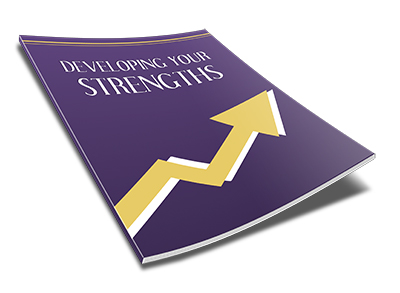
If you would like to take a deeper-dive into developing your strengths you can get a FREE 29-Page Report. This report covers:

  • Goal Setting
  • Finding Your Passions
  • Visualization
  • Positive Affirmations
  • Daily Evaluation
  • Intentional Practice

Simply leave a comment below and I’ll provide you the download link!

8 Reasons Staying in Your Comfort Zone is Bad Idea

Photo by Dillon Shook on Unsplash

Why do we choose to live in our comfort zone? Because we are accustomed to a stress-free existence in our comfort zone. It’s what you’re used to. It’s also the point in our lives that we’re the most miserable. Organizational studies suggest that most workers are un-engaged in what they do, yet most continue to stay within their comfort zone and bare the misery. These same individuals who identify as being “un-engaged” could stretch themselves outside of their self-imposed comfort zone could begin to experience a new sense of excitement in what they do.  

We force ourselves to remain stagnant when we stay in our comfort zone. We’re terrified of what may happen if we change. Our brains are wired to keep us secure, so we prefer to stay in our familiar surroundings rather than face the unexpected.

However, staying in our comfort zones might lead to other problems. Here are eight reasons why staying in your comfort zone is a bad idea.

1. You are not achieving your goals. If you stay in your comfort zone, you are less likely to achieve your goals. You are preventing yourself from achieving your goals because of fear, procrastination, and self-doubt.

2. A lack of development. Staying in your comfort zone will almost certainly prevent you from reaching your full potential. You’ll constantly be stagnant, never progressing, never developing and growing. You may fail to meet your goals because you insist on doing things the same way you’ve always done them, even though you’re not seeing any results. You don’t go outside your comfort zone to see what you’re capable of or what you can achieve. 

3. Loss of passion. Staying in your comfort zone makes it more difficult to discover your passions. Outside of your comfort zone is where you’ll find your passion.

4. A sense of being ignored. When you stay in your comfort zone, you will feel as though you are falling behind your coworkers and anyone with whom you interact. They may have been behind you in terms of results or tenure, but they have passed you by because they ventured outside of their comfort zone.

5. Making do with less. You force yourself to settle for less than you want by continuing to live in your comfort zone. You set aside your passions or things you like.

6. Your self-confidence is low. You won’t have the confidence you need to grow and take on new challenges if you don’t get out of your comfort zone.

7. Your health is harmed. When you don’t step outside of your comfort zone, you aren’t always taking care of your health. Stress often stems from a fear of having a long-overdue difficult conversation, a reluctance to modify your habits, or a reluctance to go to the gym for fear of being judged or attempting something new.

8. You’ll be caught off guard by changes. When you cling within your comfort zone, you become rigid and fixed in your ways. Life may be challenging, sending a variety of challenges your way. Even if you don’t want to, things might happen that force you out of your comfort zone. You can’t be open to new possibilities if you stay in your comfort zone.

The same reasons we stay in our comfort zones are the exact reasons we should use to break out of them. Staying in your comfort zone may feel safe, but settling for mediocrity is a mistake.

Where you find your best-self!

There’s a mysterious place that many people are afraid to go. They hear about this place and how treacherous it can be, and only know stories of people who’ve gone there before and have failed. What is this place? It’s the unknown and it’s the single destination that traps careers and stifles potential. 

“You never change your life until you step out of your comfort zone; change begins at the end of your comfort zone,” – Roy T. Bennet

It’s true that when you venture out of your comfort zone, you get a glimpse of who you truly are. A personal trainer once told me that it’s so much more interesting finding out what you cannot do, rather than what you can do. She was right, it was a personal challenge to re-define what I felt my limitations were. Taking a journey into the unknown. The unknown I s about confronting our anxieties and pursuing our passions.

We frequently have sentiments like “I can’t,” “I don’t want to,” or “it’s too difficult” that keep us stagnant and miserable in our lives. It is only when we realize that we can find our true self when we stop allowing our negative thoughts to control us.

Taking a step into the unknown, the place just beyond where we can see the outcome, is terrifying. That’s the part that makes our hearts race and causes us to break out in a cold sweat, but we still want to see what’s there.

Staying in our comfort zones prevents us from taking that first step into the unknown. It ensures our safety and security. Your current life is based on your comfort zone. It’s the way you define who and what you are right now.

But what if you pushed yourself beyond that comfort zone? Would something bad happen? Or would you suddenly become fascinated with idea of experiencing something completely new?

How do you know if you should take a chance on something new? Begin by making a list of ten activities that don’t terrify you and that you do frequently. This might include activities like taking public transportation or delivering a public speech, or whatever else does not frighten you. Because we all have various comfort zones, it will be different for each person.

Describe how it feels to be in your comfort zone. Use as many feeling words as possible to provide as much information as feasible. What does it feel like to be in your own mind, and your life?

Then consider the following questions:

  1. Do you have any goals you’d like to accomplish but haven’t yet?
  2. Do you find yourself unsatisfied with your everyday routine?
  3. Do you wish to make a major difference in your community?
  4. Are your ambitions and passions constantly nagging at you?
  5. Do you have any material or intangible goals that you don’t have?
  6. Do you have trouble finding significance in your life?
  7. Do you find yourself envious of those who have accomplished or done something you secretly desire?

After you’ve answered these questions, consider what’s preventing you from pursuing your goals. What makes you feel uneasy? Is it apprehension? Are you afraid to try new things or take risks?

Make a list of ten things that scare you.

Now imagine how you’d feel if you were forced to live outside of your comfort zone. Provide as much information as possible. Describe how it feels, what you see, hear, and where you are in detail. To assist you a great exercise is to construct a vision board

Take your time when completing these tasks. Once you’ve identified what’s preventing you from venturing into the unknown, you may start taking modest steps outside of your comfort zone to get there.

Once you venture into the unknown and discover your best self, your career may be as fulfilling and exciting as you wish.

Will Your Comfort Zone Be Holding You Back in 22′?

We start hearing a lot about stepping out of our comfort zones at the beginning of every new year. Have you ever considered why you should? After all, it’s in our comfort zone that we feel in charge and stable. It’s where we can easily envision what will happen and how we will feel in the future. It’s the spot where there won’t be any unexpected events that we won’t be able to handle.

So, why would you feel driven to leave your comfort zone, or even want to? You must do it because stepping outside of your comfort zone is essential for personal development and fulfillment. Getting out of your comfort zone can help you boost your self-esteem and improve your self-image.

Is your comfort zone preventing you from living your best life and progressing in your career?

Yes, it is. You are preventing yourself from realizing and achieving your goals by remaining in your comfort zone. You won’t be pushed if you stay in your comfort zone, and you won’t have to rise to new challenges. There’s a typical self-delusion that when faced with a problem, we’ll instinctively believe we’ll be able to rise to the occasion; yet, studies show that we’ll default to our highest level of training. Getting out of your comfort zone accomplishes just that; it’s the training that prepares you to meet challenges that arise. 

Here are three ways that being in your comfort zone is preventing you from developing.

1. It prevents you from developing as a person. When you’re afraid of something, staying in your comfort zone allows you to avoid confronting it. Then you suffer for the rest of your life, or until you finally confront it. You avoid circumstances that force you to confront your fear in order to conquer it.

For example, despite the fact that it is a step up on your professional ladder, your fear of public speaking prevents you from embracing the challenge of conducting meetings among your peers.

2. You are unable to be happy because you are trapped in your comfort zone. Perhaps you have challenges with self-esteem and self-image. These issues will only become worse until you take measures outside of your comfort zone to solve them. Getting out of your comfort zone can help you gain self-confidence and see yourself in a new light.

You will be happy if you are confident and have a positive self-image. If you’re not confident in your talents, for example, you’re more likely to stay in your comfort zone rather than attempt anything new. This lowers your self-esteem, makes you feel inept, and makes you powerless.

3. Remaining in your comfort zone can make you feel trapped and cause you to become more stressed. Fear keeps us in harmful behaviors while we’re in our comfort zone. You may want to become more active, run a marathon, experience fewer aches and pains, and embark on new adventures. To achieve any of these things, though, you must go outside of your comfort zone.

4. Let’s say you want to run a 5k race. You’ve always wanted to do it, but you put it off and create reasons for why you can’t. You’re not in good enough shape. You are pressed for time. You’re past your prime. But the true reason is that you’re hesitant to go out of your comfort zone and start working with a personal trainer. As a result, you continue to eat unhealthy foods, gain weight, lose muscle mass, and put your dream on hold until your health becomes a serious issue.

When we stay in our comfort zones, we prevent ourselves from experiencing greater joy, happiness, and growth. We eventually succumb to our worries and settle for mediocrity.

The #1 Thing Standing In Your Way In 2022

“Only when we are no longer afraid do we begin to live.”

Dorothy Thompson
Photo by Simon Watkinson on Unsplash

Imagine this: you are sitting on the phone as it rings your most sought-after prospect. They could be worth millions in business to your company and landing them would garner you a lot of attention in the office. Not only do you have the best product for them, but you will legitimately solve real problems for them and their business.

Now imagine what the reality is: You’re envisioning of landing this top client, shaking hands on a hard-fought deal. But instead of implementing the steps to get you closer to your dream client, you feel fear. You begin to feel ill-prepared, what if they ask you a question you don’t know the answer to? You begin to hope it goes to voicemail (again) so you’re not faced with any challenges. When asked again by your manager of the progress on this dream client, you can respond again “Called again today, didn’t answer so left them a voicemail”. What if they call you back? What would happen if you stumbled on your words? What if…?

Living in fear, keeps us form taking the risks and chances to go for what we truly desire. It keeps us from finding reaching our full potential and enjoying more from our efforts and work.

Happiness isn’t defined by what you have; where you live; where you go; or the people you love. True happiness is a feeling. It’s something you feel deep inside about yourself and believe yourself to be. But to find it you must face the fears keeping you paralyzed.

When we have fears, we feel unsafe, we feel unsure, we lack confidence. Facing our fears and getting out of our comfort zone is hard because of how our brains are naturally hard wired to expect the worst-case scenario. Our brains naturally send us negative information because it is trying to keep you safe.

So how can you approach work in a way free of fear and be truly happy?

Every salesperson has fears. It’s normal. It’s how we react to them that makes the difference in how we feel. But you might find yourself weighed down with too much fear that’s preventing you from being truly happy. If that’s the case, it’s time to get familiar with your fears and find ways to work through them.

Here are 4 common fears and ideas to help you deal with them.

  1. Fear of failure. This is a common fear, often stemming from our childhood. Fear of failing a test, for example. This fear brings on the feeling of being judged or embarrassed. In reality, failing is part of success. Overcome this fear by not worrying about the outcome and only focusing on the process of getting to success. At the end of the day, you don’t DO a result. Results come from following a process so by switching your focus from results to process helps avoid some of the fears associated with failure.
  2. Fear of success. This fear stems from many different fears: fear of change, responsibilities, attention, vulnerability, and many others. The best way to overcome this fear is to focus on one step at a time while moving forward.
  3. Fear of rejection. First off, if you’re in sales and you have a healthy fear of rejection you’ve picked a very interesting career. The fear of being rejected is a reaction to our innate need for belonging. It can include fears of being judged, not being liked, or being alone. To overcome this fear put yourself out there, reminding yourself that the right people will respond to you favorably. Detaching yourself from the outcome and focusing on the process also helps with the fear of rejection.
  4. Fear of not being good enough. This fear is rooted in how we feel about ourselves. Our low self-esteem keeps us from not trying because of a lack of confidence. You can overcome this fear by starting small with things you know you can accomplish. Keep doing more steps to build your self-confidence. By consistently challenging yourself that when you feel this fear, and do it any way, you begin to build a resiliency to the fear of not being good enough.

We all have fears of some kind. They may seem rational to us but appear irrational to others. To overcome your fears, you need to understand why you have them and then work on facing them so you can begin to experience more joy in the work you do.

Hey Leaders! Are you guided by intuition or ego?

Photo by Orkun Azap

When you are a new leader or manager it’s not always easy to tell if your choices are coming from the right place. Experience and time will bring insights, but how can you speed up the learning process and ultimately make better decisions? Learning from others is one way to shorten the learning curve. As a leader, learning the difference in how I have used intuition or ego in my decision making process has provided me a mental roadmap. Following your gut might be easier for some, but could lead to bad results and without examination there is no process to prevent the same results from happening again. Follow your ego and you might be successful in many ways, but you’re likely to find yourself wondering why you’re not as happy and ultimately not as effective as you could be as a leader. 

Learning how to determine whether my decisions were guided by intuition or ego has made a huge difference in my approach to decision making. While there are no hard and fast rules to make the distinction, there are tendencies that I have personally found that can serve as a guide.

First let me start by stating, fear is the single biggest obstruction to the ahievement of anything.You must first start with this understanding. 

Consider these differences:

1. Ego-based decisions are grounded in fear and self-preservation. If you decide to go into management or leadership primarily for reasons of financial security, that’s ego. If you decide to not engage in a new coaching process out of fear of looking unauthetic, that’s ego.

2. Ego-based decisions typically have emotion connected to them. A choice made from a place of intuition just feels “right” and often comes out of left field. You might be in the middle of a Netflix series and are hit with the realization that you should be spending time with your reps in the field. The resulting battle in your head is your ego fighting back.

3. Ego-based decisions consider external results. Are you leading a sales meeting in order to establish control, or are you leading a sales meeting because you’re fascinated with the idea of inpsiring, teaching, and motivating people? Are you taking an action to gain certain results, or does the action itself provide sufficient satisfaction?

4. Ego-based decisions involve rationalization. Your ego is wonderful at convincing you that its choice is the right one. “I’ll never get that job. Imagine how disappointed I’ll feel when it doesn’t work out. People like me are destined to only be supervisors, but there’s nothing wrong with that. I can still have a decent life.” 

* It’s really just a rationalization based on fear – fear of success or fear of failure. ((not convinced there’s a real fear of success? See the Icarus Deception))

* The ego tries to justify itself with facts, figures, and logic. Intuition doesn’t require these tricks to compel you. If you’re using logic to convince yourself of a course of action, you can bet that’s your ego squawking. 

5. Intuition doesn’t judge. A thought or decision arising from intuition doesn’t involve judgment statements about right or wrong, good or bad. Intuitive thoughts feel calm, relaxed, and peaceful. There’s a universal truth to an idea that arises from intuition.

6. Is the expected gratification coming from within or is it external. Would you make the same choice if no one would ever know? Would you purchase that BMW if no one ever knew you owned it? Or do you simply love German automobiles and love the idea of owning a precision car? Are you driven by money and admiration or by personal satisfaction in up-lifting others?

A mentor of mine told me a story that I think illustrates this point. He shared with me; there was an armored truck full of money that flipped over making a sharp turn while going too fast. As the truck tipped over all of the money that was loaded in the back blew across the streets. On the sidewalks stood groups of individuals. One group went running to grab up as much money as they could hold. Another group rushed to the truck to provide aid to the drivers, while others stood back and called 911. As he finished the story- he asked; which group would you be in and how long would it have taken you to decide?

While the ego can be very limiting, that doesn’t necessarily mean that it’s wrong. Remember that the ego’s motivation is largely based on self-preservation. Your ego believes that it has your best interests at heart. Ignoring the ego can be challenging. It uses fear to influence you. It’s only natural to avoid fear and seek comfort.

The trick is to realize when fear is holding you back from something bigger and better. As a leader not only is that fear holding you back, but it is also indirectly holding back those that you lead. Think before choosing which voice to follow: use these tips to help you make a decision that will bring you more joy, bring better results, and make an impact on those you lead.

6 Simple Steps to Get More Out of Your Day

Photo by Glenn Carstens-Peters

Let’s face it – time is probably our greatest resource. We never seem to have enough of it and it seems to pass so quickly. Well we won’t get any more of it and we can’t slow it down.

What we can do is make the most of the time we have. Here are some simple steps you can take to get the most out of your day.

  1. Plan your day the night before – At the end of each day write out all the things you need to do the following day to achieve your goals. Pull together all the information you’ll need, phone numbers and relevant paperwork.  
  2. Prioritise the list – Number each item and do the harder jobs first. There’s always the temptation to do the easy jobs first. However, think how the thought of doing the hard jobs hangs over you as you do the easy stuff. Think how good you’ll feel when the nasties are out of the way and how motivated you’ll feel.
  3. Stick to your list – Check off each item as you go and avoid distractions. You don’t need to answer every email/text as they come in. Set a schedule to check your email/notifications once every hour, or whatever works best for you.
  4. Remember the Three “D’s” – Do it, Delegate it or Dump it. Handle each piece of paper only once. Either do something about it now, delegate it to someone else or throw it in the trash. And remember – “Only do it if only you can do it.”
  5. Don’t procrastinate – Procrastination really is the “Thief of Time” It’s so easy to put things off till another time or till “I’ve had time to think about it.” DO IT NOW!
  6. Plan your leisure time – Schedule out time for you to relax, workout, go shopping, whatever it is that you enjoy.

Be honest with yourself – Keep asking – “Is what I’m doing now getting me to where I want to get to?” if the answer is “no,” change what you’re doing

Finding Your Purpose: Questions to Ask Yourself

Photo by Jackson Simmer

There have been a lot of headlines lately about the “Great Resignation” of 2021. Many pundits have been pontificating about the root problems motivationg people to leave their jobs. Many may have forgotten that this resignation has been happening for years- especially in the sales profession. Studies show that upwards of 80% of sales reps miss their quotas every year and the average tenure of sales reps and sales managers is just under two years. So for those who have any experience in sales knows that this resignation isn’t unique to 2021.

I would add that those who have “resigned” are simply resigning to the fact that they haven’t truly found purpose in their career. Social media would lead you to believe it’s managers, leadership, lack of training, culture, etc. The list is endless really. What you don’t see are individuals taking responsiblity for wasting resources, time, company investments, overestimating their ability and abdicating their personal responsibility in growing their skills through personal development. So the question becomes; do you know how to find your purpose? If you posed that question to several people, the majority would likely answer no. There is a world of possibilities. People are afraid to try something new out of fear of the unknown. They often don’t know how to go about looking for what they should be doing.

First, ask yourself if what you are doing now is satisfying. Put aside the bills and your paycheck for a moment. Do you get a charge out of getting up every morning and going to work? How do you feel on Sunday evenings, assuming you start up work on Mondays? Do you dread having to get up in the morning on Monday, or does it excite you?

Another problem is you may feel stuck doing something in which you don’t believe in. While on the surface it may be the product or company vision- but when examined more closely it’s an easy narrative that absolves you from the fact that you simply don’t believe in your ability. There’s a lack of confidence, desire, and commitment. You need to ask yourself if you can continue to work in an environment which doesn’t fit well with you. It may not be that “sales” doesn’t fit you- it’s your approach in how you go about doing the work.

You will also need to ask yourself what will it take to make changes to get out of your current situation and into something you enjoy that aligns with your abilities. It may require going back to school or at least, training courses online. Luckily, there are several options available, and many of them are cheap or free.

If you find that the path is well laid out, ask yourself, are you willing to put in the time and make an effort? If not, you haven’t truly found your purpose. You either need to re-commit to what you are doing or find another path. Keep doing this until you are willing to put forth the effort. Not putting in the required effort only worsens your current psychological state, but it’s also limiting available resources for someone who’s looking for the opportunity that you’re currently in.

Finding and igniting your purpose may not mean “resigning”. You should explore your current situation and determine if you can change up your routine. For instance, ask your leadership if there are other opportunities within the organization that you can explore. If there are, they may ask you to serve two roles (your old position and your new one) while transitioning. Crosstraining roles gives you some options to explore your purpose while building new skillsets that could increase your value in the workplace.